Event organisers are always looking for new and interesting ways to engage with and keep their attendees engaged during and after their event. From the increasing variety of vendors, dedicated areas to network, and recognizable speakers, to modern event attendee tracking technology and digital rewards. In this article explore the tools and strategies used to attract and engage event attendees so they return year after year and are motivated to get their peers involved.
The Importance of Event Engagement
Without engagement, events are doomed to fail. It may not be straight away but over time the audience dwindles, tickets fail to sell, and organisers can no longer fund the event. Many events have gone this way over the years as organisers fail to prioritise their attendees. Attendees expect more from today’s events. They are over the excitement of returning to in-person events after several years of hybrid and virtual events and are experiencing increased costs for travel and accommodation. This is why attendees and their employers need assurance that the event they attend will be providing value for their time.
How Technology Improves Event Engagement
Technology is woven into events. Organisers use tools and technology to streamline the administration behind the event, from selling tickets to onboarding vendors, to analysing results. Some of this technology is already being utilised to engage event attendees. Ticket platforms provide information, agendas, maps, and more for attendees to familiarise themselves before turning up to the event. Visual technology like screens, projectors, and speakers are used around the venue to show attendees where to go, what’s going on, or what sessions are coming up. Aside from the common technology used in events, organisers also benefit from the use of QR codes, footfall data, digital awards, and live translations.
QR Codes
QR codes are a fantastic technology that almost slipped by the world without much attention. Fortunately in the last few years they have drastically grown in popularity and many organisations are using QR codes in different ways. Restaurants use them to replace and supplement physical menus, advertisers use them on billboards, and estate agents feature them on ‘For Sale’ signs. Users scan the QR code with their smartphone to access information, register interest, watch videos, and more.
Event organisers can utilise QR codes in several ways; featured on the event ticket linking to exclusive attendee offers, at entry points to streamline checkline, and on vendor booths to measure interest. The use of QR codes also helps to reduce physical touch points which is in keeping with the latest health guidelines and reduces the risk of illnesses spreading. QR codes are cheap to create and maintain, easy to use, and can be designed with imagery and brand colours. With an efficient QR code generator, event organisers can quickly produce custom codes tailored to their needs. They are an ideal technology for event organisers to explore as a way of engaging their attendees.
Footfall Data
Foot traffic data or footfall data are the metrics tracked from real-world footfall; the movement and behaviour of individuals and groups. Metrics can be tracked in several ways, by aggregate visits to a location, individual visits to a location, characteristics of visitors at a location, and comparisons of visitors to a location. The data comes from different sources depending on the application. For example, geospatial/location data is gathered from mobile devices that can be set-up in multiple locations. Sensory data is the data commonly collected by retail stores using physical sensors that are installed at the entrance. Purchase data are the metrics gathered from payments and purchases.
Event organisers can use geospatial/location data collected from devices placed around an event venue to understand what their attendees are interested in. Whether certain vendors were more popular, how long attendees spent at different vendors or stands, and how groups moved through the event. This provides actionable insights for attendee engagement. Based on the data, organisers can understand what sort of vendors best resonate with their audiences and whether stands need to be moved to improve attendee flow.
Digital Awards
Digital awards such as digital credentials, digital certificates, and digital badges are a popular method of rewarding and engaging learners, members, candidates, and attendees. They are extremely versatile and are used in a variety of environments including higher education, associations, professional certification, and events. Organisations issue digital awards to individuals to recognize effort and illustrate growth. Recipients then share their digital awards in celebration to social media platforms, add them to LinkedIn profiles and professional resumes, and embed them online and in email signatures.
Event organisers can use digital awards to recognize attendance, reward volunteers, and credit speakers. Attendees are issued digital badges that are fully portable meaning they can be uploaded to smartphone devices where they are used to streamline check-in. They share their attendance badges to social media increasing visibility for the event and creating discussion. The increased visibility helps to drive referrals, increasing future attendance, and keeping the event at the top of conversation for longer.
Live Translation
English is the most common language spoken at events, conferences, and tradeshows in the UK and the US, but international attendees also frequent events in these locations. Especially large, industry-leading events where there are plenty of opportunities to learn and network. Live translation are tools that enable real-time language interpreting for live streams and in-person presentations. The tools became readily available during the pandemic following the rise of virtual events and should be a must-have for all future events. In addition to live translation tools, using VPNs can enhance accessibility for remote attendees by bypassing geographic restrictions. For instance, sports fans who face location-based blackout policies can use VPNs to bypass NHL blackouts on ESPN, ensuring uninterrupted access to live broadcasts.
In Summary
Embracing technology in events to engage attendees is a must for organisers that want their event to succeed and stand out amongst competitors. This is especially important for organisers that intend to bring their event back year after year. They need to be prepared to understand, research, and explore the demands and expectations of their audience and ensure their needs are met and surpassed to keep them interested and returning. Through research, strategizing, and innovation, organisers can ensure that the technology used delivers a great user experience for themselves, the sponsors, the speakers, and most importantly, the attendees. Linkhouse.
Having spent the last several years in an industry that’s been in constant change, Tamoco has always tried to remain agile, forward-thinking, and adaptable to change. This has enabled us to build a brand synonymous with large-scale geospatial data capability.
Today, we are thrilled to announce the next step in this journey, one that promises to enhance who we are as a business and how we deliver value to our customers.
Some of Tamoco’s operational assets have been acquired by pass_by in a commitment to redefining Geospatial standards through AI-driven intelligence and ground truth verification.
This isn’t just an asset acquisition; it’s the coming together of two leaders in the geospatial landscape. Combining large scale geospatial engineering expertise with sophisticated AI and ML thinking.
The synergy?
A new type of geospatial data business. By integrating our strengths, we aim to not only provide granular, accurate data in all shapes and sizes, but also predictive insights that empower businesses to make informed, strategic decisions. This combination enhances our capability to deliver comprehensive solutions, marking a new day in our shared mission to equip businesses with state-of-the-art geospatial tools and insights.
GIS analysis uses geographic data to solve issues and make choices. It analyzes patterns and correlations using geography, computer science, and statistics. Geospatial data has affected environmental research, urban planning, public health, and transportation. However, the discourse community, the collection of individuals who share a language and purpose, can also influence geographical data discovery and growth.
Finding Opportunities
Funding and grants may help the discourse community shape geospatial analytic research. Varied organizations have different interests and aims, which might affect financing. With that being said, reading discourse community essay examples for college can be effective in understanding this matter. These articles are useful and informative for this niche enthusiasts. A public health discourse community may emphasize research on disease outbreak spatial distribution, whereas transportation discourse communities may favor transportation network optimization. These objectives affect research and methodologies.
The Role Of PGIS
Traditional PGIS uses paper maps, interviews and questionnaires to maintain spatial properties. Data is gathered to be searched and analyzed by computer GIS software and disseminated through computer-generated maps. Specialized knowledge and class- and gender-segregated local wisdom are used. It gathers various sets of participants from the community and non-governmental institutions. It is built on elevated levels of stakeholder engagement in the stages of spatial learning, judgment, and action. Technological agencies and politicians might debate concerns and exchange ideas here.
Influence On Certain Data
Geospatial analysis data and tools are affected by discourse organization. Data availability and accessibility vary per discourse community, as do data sources and formats. Geospatial analytic software and techniques may also vary by discourse community. Environmental research groups may choose open-source software, whereas urban planning teams may prefer software with a better visualization. And these are great examples of how certain data can influence discourse units.
Shaping The Guidelines
Discourse unity can play a role in shaping the standards and guidelines that are used in geospatial analysis. And that’s important for every student to remember. Varying communities have different data quality, accuracy, and precision expectations. And that might affect standards and recommendations. The discourse collective may also shape geographic data and analysis of best practices and ethics. Personal data utilization in spatial thinking may vary by discourse community.
Education And Practice Of Geospatial Analysis
Finally, professional organizations and certification programs may help the GIS community educate geospatial analytic experts. Professional groups may help members network and improve professionally, as well as set industry standards. Certification programs can assist geospatial analysts to show their expertise and create industry standards. They are based on prolific data that can bring positive results. People might work together alongside these courses. In the end, education is the core of success. And geospatial analysis is not an exception.
Sharing The Ideas
The discourse community sets research, communication, and cooperation standards that affect geospatial analysis. It may provide criteria for gathering and analyzing geographical data, standards for making maps and other visualizations, and methods for sharing and utilizing spatial information. It promotes geospatial analysis through sharing ideas, information, and skills. Discourse community members may exchange research results, debate new methods and technologies, and cooperate on projects via conferences, journal papers, and other means.
Setting Research Priorities And Providing Support
The discourse community can influence the direction of research in geospatial analysis by identifying and prioritizing important questions and issues that need to be addressed. This can help to ensure that research efforts are focused on areas of greatest importance and relevance. The discourse community can provide resources and support to professionals working in the field, such as access to data, software, and other tools. This can help to foster the development of new techniques and technologies and support the advancement of geospatial analysis.
Conclusion
The discourse community helps geospatial analysis evolve. It affects research paper topics, information transmission, and professional training. Geospatial analysis practitioners and scientists must interact with the discourse collective to remain abreast of field advancements and best practices. It’s all in them putting in enough effort.
Welcome to the wild and wonderful world of geospatial data visualization! If you’re anything like us, you find that maps just have a certain je ne sais quoi that makes them endlessly fascinating. But let’s be real, maps aren’t just for daydreaming about far-off places. They’re powerful tools for understanding and communicating information about the world around us. And that’s where geospatial data comes in.
At Tamoco,we’re used to map vizualizations with our cutting-edge data collection and analysis techniques. We’re providing high quality data that goes into creating those mesmerizing maps we all love so much.
But whether it’s our data or data from another source, what do you do with it? That’s where visualization comes in, and that’s exactly what we’re here to talk about today.
We’ve scoured the depths of the internet and consulted with experts in the field to bring you a comprehensive list of 20 different methods for visualizing geospatial data on a map. Whether you’re a data scientist, a GIS specialist, or just someone who appreciates a good map, we’ve got something for you.
Method 1: Heat Maps
Alright, a heat map is like a choropleth map’s cooler and more sophisticated cousin. Both use colours or shades to represent different values or value ranges, but where a choropleth map uses discrete cells constrained by geographical or political boundaries, a heat map presents them as a smooth and seamless spectrum.
This makes heat maps perfect for uncovering hot spots and low concentrations of a variable with more precision. But, just like anything worth doing, this precision comes with a price. Heat maps often require converting discrete data points into a continuous spectrum via algorithms, which can compromise on accuracy.
Use case: Smart Cities
Let’s say I’m looking to understand where to build a new cycle lane in a city. By generating commuting data and using it to build a heat map, I can identify hotspots where cyclists will cause a lot of disruption. Using this data, I can see the areas which need alleviating.
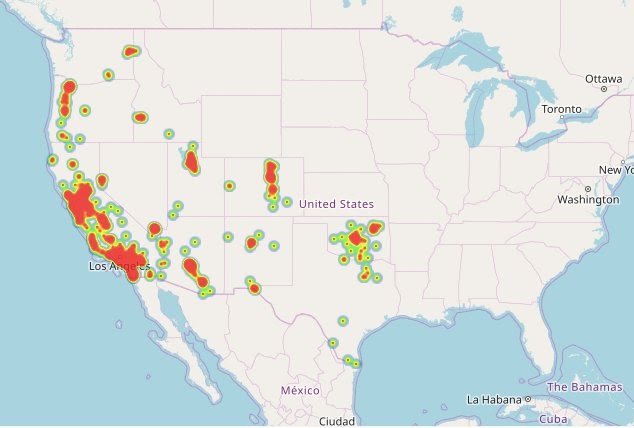
Example of heat maps
This is a great map of the distribution of restaurants across the US.
These maps use different shades of colour to represent different values or value ranges within geographical or political boundaries. So, in a nutshell, it’s like a colouring book for data nerds where each country, state, or region gets its own colour.
Creating a choropleth map is a piece of cake. You start with a base map, and then you use different shades of colour to represent different values or value ranges within geographical or political boundaries.
But before you get too excited, it’s important to remember that choropleth maps also have their limitations. They don’t give you any information about the magnitude of the variable, and they can be misleading if the geographical or political boundaries aren’t well-defined. But when used correctly, choropleth maps can be a powerful tool for understanding the distribution of a particular variable within geographical or political boundaries.
Use case: marketing
Let’s say you’re a marketer, and you want to see which states in the US have the highest sales of your product. You could use Tamoco’s data to create a choropleth map that shows the visits to your stores by state. The states with the highest sales would be coloured differently than the states with the lowest sales.
Example of a Choropleth map
The classic example which can be seen below is a population density map.
Up next on the geospatial data visualization train is the Proportional Symbol map. These maps use symbols, such as circles or squares, to represent different values or value ranges, and the size of the symbols is proportional to the value of the variable.
Use case: analysis
For example, let’s say you’re a scientist, and you want to see the distribution of a certain species of birds across a region.
You could use a dataset that shows this distribution to create a proportional symbol map that shows the number of sightings of the species by location. The locations with more sightings would have bigger symbols than the locations with fewer sightings.
Proportional symbol maps also have their limitations. They can be misleading if the symbols overlap and they don’t give you any information about the geographical distribution of the variable.
Example of a Proportional Symbol Map
Again it’s a political example where the breakdown of votes in each state are shown by using a pie chart as a symbol on this map of the US.
Let’s have a little look at the next visualization type in this post: the Dot Density Map. These maps are used to represent a variable within a certain area. The more dots within an area indicate that the variable is more abundant.
Use case: health
If you work in public health, then you might need to understand the distribution of a disease across a geographical region. You could use Tamoco’s data to create a dot density map that shows the number of cases of the disease by location. The locations with more cases would have more dots than the locations with fewer cases. In this example, The dots can be colour-coded to represent different types of cases, for example, severe or mild cases.
The limitations of this kind of map are usually that they can be misleading if you don’t have enough detail in the map. There is also no magnitude of the variable in a lot of cases.
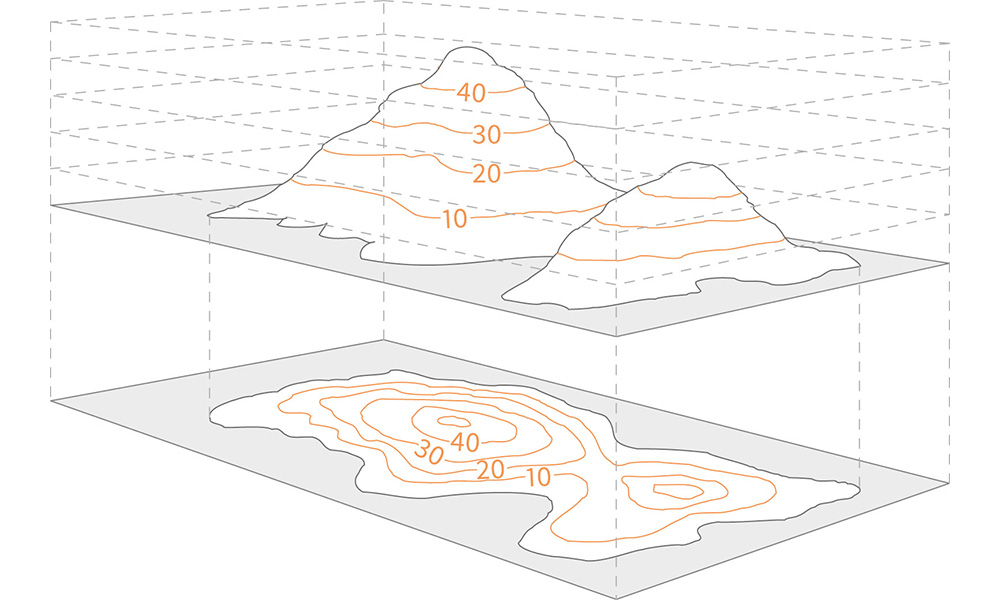
These maps are game changers. They take a little bit of everything and make it into a scrumptious feast for the eyes. It blends the beauty of contour lines with the detail of a choropleth map to give you an explosion of information. The lines represent equal values, and as they get closer, the values get higher. Think of it as a topographical map but more impressive.
Use case: meteorologist
Well, let us imagine you’re a meteorologist, and you want to study the precipitation patterns in your city. With an isarithmic map, you can show the rainfall distribution across the city in an easy-to-understand manner. The closer the lines, the higher the rainfall. It’s a visual representation of the data that brings it to life.
Not only do isarithmic maps make data more digestible, but they also add a touch of artistic flair to your presentations. No longer do you have to stare at boring bar graphs or pie charts. With an isarithmic map, you can show the world’s location or geospatial data in all its splendour.
Let’s take a look at a real-world example of flow maps in action. Say you’re the CEO of a large logistics company and you want to visualize the shipping patterns of your fleet of trucks. With a flow map, you can plot the origin and destination of each shipment, creating a web of lines that show the routes taken by your trucks. The thicker the line, the more shipments moved along that route. This allows you to easily see the busiest routes, where bottlenecks might be, and where your fleet is most efficiently moving goods.
Use case: logistics
Let’s take a look at a real-world example of flow maps in action. Say you’re the CEO of a large logistics company and you want to visualize the shipping patterns of your fleet of trucks. With a flow map, you can plot the origin and destination of each shipment, creating a web of lines that show the routes taken by your trucks. The thicker the line, the more shipments moved along that route. This allows you to easily see the busiest routes, where bottlenecks might be, and where your fleet is most efficiently moving goods.
Example of a flow map:
Method 7: Density-Equalizing Maps
Have you ever seen a map that looks like a distorted mess, leaving you feeling discombobulated? That’s where Density-Equalizing Maps come in to save the day! These maps make sure that regions with higher density are represented as larger in area, as opposed to just appearing larger because they’re closer to the center.
Use case: city planning
One classic use case of Density-Equalizing Maps is in the field of population demographics. By accurately visualizing areas with higher population density, policy makers and urban planners can make informed decisions about urban development, resource allocation, and emergency preparedness.
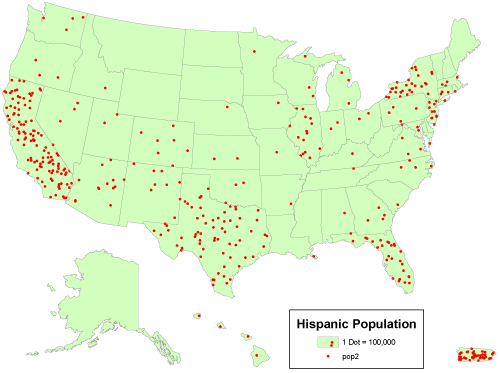
Dot maps are quite beautiful when you think about it. A great representation of multiple data points – that use dots to represent individual parts.
The density of dots in a single location represents the concentration of data points in that area. Each dot represents a single instance of data, so it’s a very, very effective way to visualize the distribution of data.
These maps are even more useful when you have huge amounts of data to understand and want to avoid excess clutter on your map. They are great for visualizing data over a large area, such as a city or country, as they allow you to see patterns and relationships that may not be immediately obvious with other mapping methods. They are also a fantastic way to visualize changes over time, as you can create a series of maps that show the evolution of the distribution of your data.
Use case: store planning (retail)
Let’s say you want to understand every Starbucks in your city. A dot map would be a great way of plotting this on a map. A single dot equals a single Starbucks. The more dots you see in an area, the higher the distribution of Starbucks in the area.
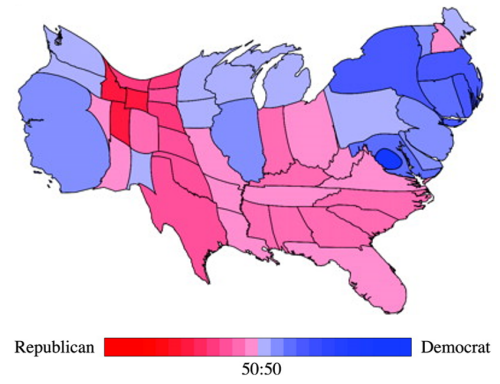
Cartograms are a phenomenal way to visually represent geographical data. Instead of using traditional maps, cartograms distort the size of geographic regions to reflect the magnitude of the data being displayed. Think of it as a funhouse mirror for geospatial/location data, where the size of each region is adjusted to reflect its importance in the data set.
Cartograms provide a unique and fun way to represent geographical data, while still being a powerful tool for visualizing and understanding complex data sets. Whether you’re a data analyst, geographer, or just someone who loves maps, cartograms are sure to add a new dimension to your understanding of the world around you.
Use case: government
An example of a use case for cartograms can be seen in the representation of population data. A population cartogram would adjust the size of each region to reflect the size of its population, with larger regions representing areas with higher populations. This type of representation can quickly bring attention to the areas of the world with the largest populations and help to identify the potential locations for targeted campaigns or resource allocation.
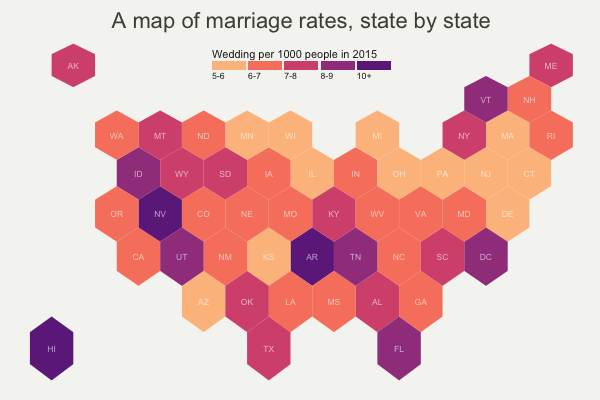
Now we arrive at the world of Hexbin Maps! Picture a world where data isn’t simply scattered like confetti on a map, but is instead grouped into beautiful, hexagonal shapes. That is the wonder of hexbin mapping.
Hexbin maps, as their name suggests, involve aggregating data into hexagonal bins. This is particularly useful when you have a large volume of data points to represent in a small space, and want to avoid clutter. The size of the hexagons represents the density of data points in a given area.
In a nutshell, hexbin maps are a way to take data overload and turn it into a chic and digestible form. They’re perfect for situations where you have large datasets and want to make quick and easy comparisons between areas
Use case: Tamoco
So, let’s take Tamoco for instance. We collect location data from millions of devices every day. Now, imagine if we had to display the data points for each device on a map. It would be a bit of a mess mess! But, with hexbin maps, we can aggregate the data into hexagons, effectively summarizing the data in a visually appealing and meaningful way.
Oh, now we’re getting into some serious geospatial magic. 3D maps take mapping to a whole new dimension (literally!) and can bring a level of realism to your data visualization that’s simply unmatched.
Think about it, with traditional 2D maps, you’re stuck with a flat representation of the world. But with 3D maps, you can now see buildings, terrain, and other features in their actual, three-dimensional form. This allows you to better understand the relationships between various elements and how they interact in the real world.
Use case: real estate
Let’s say you’re a real estate developer and you want to showcase your latest project to potential buyers. You could create a 3D map that allows people to explore the virtual city, walk down the streets, and see the buildings from all angles. This not only gives potential buyers a better sense of the project, but it also provides an immersive, interactive experience that’s simply not possible with 2D maps.
These maps allow you to explore and interact with data in a way that’s both intuitive and engaging. With interactive maps, you can drill down into the details, play with filters, and uncover hidden patterns and insights. It’s like having your very own personal geospatial detective ready and waiting to solve any mapping mystery.
This is exactly what we provide to many of our clients here at Tamoco. We take complex geospatial data and provide our customers with a detailed interactive map where they can filter and change the view depending on their current needs.
Use case: real estate
For example, imagine you’re a real estate agent with a portfolio of properties. You can use an interactive map to showcase your listings, highlight the best neighborhoods, and provide a wealth of information to potential buyers. With an interactive map, you can easily filter properties by price, location, square footage, and more. This helps you to tailor your pitch and demonstrate why your properties are the best investment. Your clients will love the ability to explore the data for themselves, and you’ll love how it streamlines the sales process.
This method uses graduated symbols to represent the dataset – it assigns different sizes of symbols to different values in the data. This size can be related to a metric of your choice in the datset itself.
These maps are a great way to visualize data that has a large range of values, such as population or income. By using different symbol sizes, you can effectively convey the information without overwhelming the viewer with too much detail.
Use case: government
An example of a use case for graduated symbol maps is to visualize population density in cities. By using graduated symbols, you can see which areas have the highest population density and which areas have the lowest population density. For example, in a city with a high population density, the symbols would be large, while in a city with a low population density, the symbols would be small.
It’s time to get a little bit fancy with our maps. Have you ever stumbled upon a choropleth map and thought to yourself, “Well this is nice, but it doesn’t quite capture the real deal”? Enter dasymetric mapping, the map lover’s answer to the choropleth’s limitations.
Dasymetric mapping, also known as “value-by-alpha mapping”, takes the idea of choropleth mapping and adds a little extra oomph by incorporating detailed boundary information to create more accurate and nuanced maps. This method allows you to control the boundaries of your map areas and assign data to specific areas within those boundaries.
At Tamoco, we’ve used dasymetric mapping to help companies better understand the distribution of their customer base. By mapping out population density and overlaying customer data, we’ve been able to identify areas with a high concentration of customers and make more informed decisions about where to open new locations.
Use case: population density
A prime example of where dasymetric mapping can come in handy is when mapping population density. In a typical choropleth map, population density may be portrayed on a large scale, with a single color representing the entire area of a city or even a whole country. But with dasymetric mapping, you can get down to the nitty-gritty by mapping population density at the block or even the building level!
The concept behind these maps is simple – these maps depict changes in elevation with contour lines, much like those you’d see on a topographic map. But why settle for 2D when you can have the whole shabang? With Contour Maps, you can visualize the changes in elevation as a 3D representation of the terrain.
Use case: agriculture
One stellar example of where Contour Maps can be a real game changer is in the world of agriculture. Picture this: you’re a farmer, and you want to maximize the yield of your crops. But, you don’t want to leave anything to chance, you want to know exactly how the elevation of your land affects the growth of your crops. Enter Contour Maps. These bad boys can help you determine the slope of your land, which in turn can help you determine the best irrigation and drainage strategies for your crops. You can even take it a step further and integrate satellite imagery with your Contour Map to get an even more accurate representation of your land.
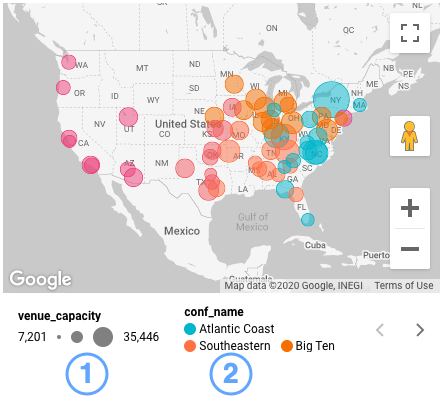
In a nutshell, bubble maps are maps that use bubbles (or circles) to represent data points. The size of the bubble is proportional to the magnitude of the data being represented, while the color and position of the bubble provide additional metadata or information.
Use case:
Bubble maps are an excellent way to showcase data that has both a geographical and a numerical component. For instance, let’s say you’re trying to visualize the distribution of billionaires across the world. You can use bubble maps to show not only where the billionaires are located, but also how many there are in each location. The bigger the bubble, the more billionaires in that area.
Well, that was fun, wasn’t it? A lot of maps for you to dig into, each with its own quirky strengths and charming quirks. But with so many options, how do you choose the right one for your geolocation data?
So let’s start by asking what you’re trying to accomplish. Are you simply looking to display raw location data, or do you want to do something related to footfall to visits? Do you want to highlight patterns and correlations, or are you more interested in conveying information through symbols and shapes?
Once you’ve got a handle on your end goal, consider the data you’re working with. Is it dense or spread out? Does it have many dimensions, or just a few? Do you need to represent change over time or just a snapshot in time?
And finally, think about your audience. Will they be looking at your map on a screen or holding a printout in their hands? Are they data experts, or will they need a little extra guidance to understand your message?
No matter what method you choose, the key is to ensure your map is visually appealing and easy to understand. After all, the most beautiful map in the world is useless if no one can figure out what it’s trying to say.
At Tamoco, we understand the importance of maps and the role they play in visualizing and communicating data. That’s why we offer a wide range of mapping options for you to choose from, each with its own unique style and capabilities.
So why not give Tamoco a try and see what amazing maps you can create with our data today?
Mastering the Art of Protecting Sensitive Information in the Digital Era
In an age where digital connectivity is ubiquitous, this article delves into the critical aspects of data privacy and security. It offers businesses actionable insights and strategies to safeguard sensitive information, with a special focus on complying with GDPR and other privacy regulations. The article also highlights how tools like our paystub generator adhere to stringent data security measures to ensure the protection of financial data.
Introduction:
The digital revolution has transformed the way businesses operate, leading to an era of unprecedented connectivity. While this hyper-connected world offers immense opportunities, it also presents significant challenges in terms of data privacy and security. Recent high-profile data breaches have brought these issues to the forefront, emphasizing the need for robust security measures. This article aims to provide a comprehensive guide for businesses seeking to navigate the complex landscape of data privacy and security. It will explore the implications of data breaches, the intricacies of GDPR and other privacy regulations, and present practical strategies for maintaining data integrity. Additionally, the article will illustrate how our paystub generator tool exemplifies a commitment to the highest standards of data security and privacy.
Understanding the Landscape of Data Breaches and Their Implications
In this hyper-connected digital age, data breaches have become a common headline, causing significant disruptions to businesses and consumers alike. Understanding the landscape of these breaches is crucial for companies to develop effective strategies to safeguard their sensitive data, including financial records managed by tools like paystubs generators.
1.1 The Rise of High-Profile Data Breaches:
Recent years have witnessed an alarming increase in high-profile data breaches. These incidents have affected organizations across various sectors, from retail giants to financial institutions, and even government agencies. For instance, a major credit bureau experienced a breach compromising the personal information of millions of consumers. These breaches not only result in the loss of sensitive data but also lead to financial losses and regulatory penalties.
1.2 Common Vulnerabilities Exploited:
Several factors contribute to the vulnerability of systems to data breaches. These include outdated security protocols, lack of employee training in cybersecurity, and weak points in third-party vendor systems. Often, breaches occur due to simple oversights, such as weak passwords or unpatched software vulnerabilities. Understanding these weak points is crucial for businesses to strengthen their defense mechanisms.
1.3 Consequences of Data Breaches:
The implications of data breaches extend far beyond the immediate financial losses. They significantly impact a company’s reputation, eroding customer trust and loyalty. The long-term damage to brand reputation can be far more costly than the initial financial loss. For instance, when customers entrust their personal and financial data to a service, such as a paystub generator, they expect the highest level of security. A breach in such services can lead to a substantial loss of trust, making it challenging for businesses to regain their clientele’s confidence.
1.4 Addressing the Challenge:
In light of these risks, businesses must prioritize data security. This involves not only implementing advanced technological defenses but also fostering a culture of security awareness among employees. Regular training and updates on security best practices are essential. Additionally, companies providing services like paystubs generators must ensure their tools are equipped with state-of-the-art security features to protect user data effectively.
In summary, understanding the landscape of data breaches is the first step in developing a comprehensive data protection strategy. Recognizing common vulnerabilities and the far-reaching consequences of breaches can guide businesses in strengthening their data privacy and security measures. As we proceed to the next section, we will delve deeper into the complexities of GDPR and global privacy regulations, and how businesses can navigate these to ensure compliance and safeguard their data.
GDPR and Global Privacy Regulations: Navigating Compliance
In the current digital landscape, compliance with data protection regulations such as the General Data Protection Regulation (GDPR) has become a cornerstone for businesses, especially those handling sensitive financial data like paystubs generators. This section explores the intricacies of GDPR and other global privacy laws, and outlines strategies for ensuring compliance.
2.1 Understanding GDPR:
The GDPR, implemented in 2018 by the European Union, represents one of the most stringent privacy and security laws in the world. It imposes obligations onto organizations anywhere, so long as they target or collect data related to people in the EU. The regulation is designed to give individuals more control over their personal data and to unify data protection laws across Europe. Non-compliance can result in hefty fines, making it imperative for businesses, including those operating paystubs generators, to adhere strictly to its guidelines.
2.2 Global Privacy Regulations:
Apart from the GDPR, numerous countries and regions have introduced their own data protection laws. For example, the California Consumer Privacy Act (CCPA) in the United States offers similar rights to consumers as the GDPR. Businesses must stay informed about these laws, especially if they operate internationally or handle data from overseas customers.
2.3 Strategies for Compliance:
Compliance with these regulations requires a proactive approach. Key strategies include:
– Conducting regular data protection impact assessments to identify and mitigate risks.
– Implementing privacy-by-design principles, ensuring that data protection is an integral part of system design and operation.
– Regularly updating policies and procedures in line with evolving regulations.
2.4 Role of Paystub Generators in Compliance:
Paystub generators, which handle sensitive financial information, must demonstrate a high level of compliance with these regulations. This includes incorporating features like data encryption, access controls, and regular audits to ensure data integrity and security. By doing so, they not only comply with legal requirements but also build trust with their users.
Navigating GDPR and global privacy regulations is a complex but essential task for modern businesses. By understanding these laws and implementing robust compliance strategies, businesses can protect themselves from legal repercussions and build a foundation of trust with their customers. In the following section, we will delve into the best practices for data privacy and security, offering practical advice on how businesses can safeguard their data in this challenging environment.
Section 3: Best Practices for Data Privacy and Security in Businesses
In a world where data breaches are increasingly common, it is essential for businesses, particularly those handling sensitive information like paystubs generators, to adopt best practices for data privacy and security. This section outlines key strategies and approaches that can help businesses protect their data and maintain customer trust.
3.1 Establishing Robust Data Security Protocols:
The foundation of any data security strategy is the establishment of robust protocols. This includes:
– Implementing strong encryption methods to protect data both in transit and at rest.
– Regularly updating and patching software to protect against known vulnerabilities.
– Utilizing secure network architectures, including firewalls and intrusion detection systems.
3.2 Employee Training and Awareness:
Human error remains one of the leading causes of data breaches. To mitigate this risk, businesses should:
– Conduct regular training sessions to educate employees about the importance of data security.
– Foster a culture of security awareness, where employees are encouraged to report suspicious activities.
– Implement clear policies for handling sensitive data, including guidelines for using paystubs generators and other financial tools.
3.3 Technological Solutions for Data Protection:
Advancements in technology offer additional layers of security. Businesses should consider:
– Utilizing cloud services with robust security measures for data storage and processing.
– Implementing two-factor authentication to add an extra layer of security to access controls.
– Using advanced threat detection tools to identify and respond to security incidents promptly.
3.4 Regular Audits and Compliance Checks:
To ensure ongoing protection, businesses should:
– Conduct regular security audits to identify and rectify potential vulnerabilities.
– Perform compliance checks to ensure adherence to data protection regulations.
– Continuously evaluate and update security practices in response to new threats and regulatory changes.
For businesses using or providing paystubs generators, adhering to these best practices is not just about compliance; it’s about building and maintaining a reputation as a trustworthy entity in the financial sector. By implementing these strategies, businesses can significantly reduce their risk of data breaches and ensure the security of sensitive information.
In the next section, we will explore the specific role of tools like paystub generators in maintaining data integrity, discussing the security features that are integral to these tools and how they contribute to overall data protection efforts.
Section 4: The Role of Tools like Paystub Generators in Maintaining Data Integrity
In the realm of financial data management, tools like paystub generators play a pivotal role in maintaining data integrity and security. This section highlights how these tools are designed to uphold the highest standards of data protection, providing peace of mind for both businesses and their employees.
4.1 Prioritizing Data Security in Paystub Generators:
Paystub generators handle sensitive financial information, making security a top priority. These tools are typically equipped with advanced security features such as:
– End-to-end encryption to safeguard data from unauthorized access.
– Secure login protocols and multi-factor authentication to ensure that only authorized users can access the data.
– Regular security updates and patches to protect against emerging threats and vulnerabilities.
4.2 Compliance with Regulations:
Paystub generators are not just tools for convenience; they are also bound by legal and regulatory standards pertaining to data protection. Compliance features include:
– Adherence to GDPR, CCPA, and other relevant data protection regulations.
– Regular audits and compliance checks to ensure ongoing adherence to legal standards.
– Features that allow users to control their data, in line with privacy laws.
4.3 Building Trust with Advanced Security Features:
To build and maintain trust with users, paystub generators often incorporate several advanced security measures, such as:
– Data anonymization techniques to protect personal information.
– Role-based access controls to ensure that only individuals with the necessary permissions can view or modify sensitive data.
– Continuous monitoring systems to detect and respond to any unusual activity or potential breaches.
4.4 Case Studies and Testimonials:
The effectiveness of these security measures is often reflected in positive user feedback and case studies. Businesses using these tools can provide testimonials about how the security features of the paystub generator have enhanced their data protection practices, contributing to an overall stronger security posture.
In conclusion, tools like paystub generators are more than just a convenience; they are a critical component in the data security framework of modern businesses. By integrating robust security measures and ensuring compliance with data protection regulations, these tools play a crucial role in safeguarding sensitive financial information.
This comprehensive exploration of data privacy and security in a hyper-connected world underscores the importance of adopting effective strategies and utilizing secure tools like paystub generators. By doing so, businesses can navigate the challenges of this digital era with confidence, ensuring the protection of their data and the trust of their stakeholders.
Conclusion
In conclusion, the journey through the landscape of data privacy and security in a hyper-connected world is both challenging and essential. As this article has highlighted, understanding the nature and implications of data breaches, navigating complex global privacy regulations like GDPR, implementing best practices for data security, and recognizing the critical role of tools like paystub generators in maintaining data integrity are key steps in this journey.
Data breaches have shown us the vulnerabilities in modern digital systems and the profound impact they can have on businesses and individuals. Regulations like GDPR have set a new standard for data protection, demanding diligence and compliance from organizations worldwide. Best practices in data security, from establishing robust protocols to ensuring employee training and awareness, are no longer optional but a necessity. Furthermore, tools like paystub generators exemplify the commitment to data security in the handling of sensitive financial information, playing a vital role in upholding data integrity.
This comprehensive approach to data privacy and security is not just about avoiding penalties or preventing financial loss; it is about fostering trust and reliability in an era where data is a valuable asset. Businesses that embrace these practices and tools will not only safeguard their own interests and those of their customers, but they will also position themselves as responsible and forward-thinking entities in the digital landscape.
As we continue to navigate through this ever-evolving domain, the principles and strategies discussed in this article will serve as a guide, helping businesses and individuals alike to remain vigilant, compliant, and secure in a world where data is both an opportunity and a responsibility.
As you may already know, credit cards allow you to finance purchases while providing rewards like cashback and miles. These benefits can make owning a credit card seem like gaining the upper hand on your finances, yet this can only be true if you know how to use your card to your advantage.
Beyond opting for a no annual fee credit card or choosing a card with a good set of perks, like one from Maya Bank, you should be aware of how your every action can impact not just your credit score but also your overall financial health. Among the most crucial things you need to understand as a credit card user is what carrying a balance on your card involves and how it shapes long-term outcomes. Let’s get into a few lesser-known insights about carrying a balance on your credit card so you can make informed choices and protect your financial well-being.
1) Interest Costs Grow Faster Than Many Realize
Your credit card balance refers to the amount of money you currently owe to the credit card company. Any remaining balance at the end of one billing cycle is carried over to the next, and this unpaid portion incurs interest. This interest is usually calculated daily or monthly and added to your balance. Over time, this can create compounding effects, where you are paying interest not only on what you originally owed but also on interest charges already added.
In practice, this could mean that if you only pay the minimum amount due each billing period, most of your payment may go toward the interest, leaving only a small portion of your payment to reduce the principal. Hence, your balance decreases slowly, and over months or years, you may end up paying far more than the initial purchase price.
As a cardholder, you might be focused on due dates alone. However, it’s equally important to understand how interest works so you can avoid surprises and manage your finances effectively. With this in mind, the goal should be to pay more than the minimum amount due or to pay the balance in full, so you avoid the accumulation of these added costs.
2) Credit Utilization Ratio Matters More Than Many Think
Credit utilization compares how much credit you’re using with how much is available. Having a balance that makes up a large portion of your credit limit results in a ratio that can look risky to lenders, since this signals that you’re relying heavily on borrowed funds. That can reduce your credit score, which may make it more difficult or more expensive for you to qualify for loans in the future.
With that in mind, you must ensure that your balances are well below the available credit, so you can secure your credit profile and access to ensure better borrowing opportunities. While it isn’t a hard rule, a credit utilization ratio of 30% or lower is often held to be a healthy benchmark.
3) Minimum Payments Can Trap You in Debt Much Longer
Many cardholders pay only the minimum amount due each month, thinking that this practice carries no consequences. However, doing so extends the time it takes to fully pay off what you owe. Furthermore, minimum payments often cover mostly interest plus a small principal component only, thus slowing down debt reduction. This results in interest accruing over time, making the total cost significantly higher than if you had paid more each month.
Rather than paying just the bare minimum per billing cycle, aim to pay in full or at least an additional amount every month. Even when it isn’t possible to cover the balance in one payment, you’ll find that paying extra each time can make a big difference in how quickly you can escape the cycle of revolving debt.
4) Rewards and Perks May Not Outweigh the Cost of Carrying a Balance
Credit cards offer more than just a financial lifeline; they also come with attractive rewards like cashback and travel miles, as well as other useful perks. While these rewards can feel like free money, their value diminishes when you carry a balance.
For example, the cost of interest on unpaid balances can exceed what you gain from rewards. If you use your card a lot for reward-earning purchases but don’t pay balances in full, you may pay more in interest than you receive in benefits. Instead of prioritizing perks over paying your balances, consider matching your rewards strategy with a repayment plan. Ideally, this means using rewards while also ensuring that you don’t allow interest charges to balloon.
5) Carrying a Balance Can Weaken Financial Flexibility
Allocating a portion of your budget toward interest and prolonged repayment means less flexibility to devote to savings, investments, or unexpected costs. A persistent balance may create a strain through higher monthly payments and a reduced ability to deal with emergencies, leaving you with even less opportunity to build wealth.
Just as importantly, carrying a balance may affect your ability to qualify for favorable borrowing in the future. Lenders often look at both your payment history and your existing credit obligations. And whether you seek a loan, a mortgage, or another credit card with better terms, having a lower debt load and a strong credit history can lead to better chances of approval as well as access to better terms.
Paying in Full Protects Your Financial Future
If there’s one thing credit cardholders must understand about balances, it’s that it’s always best to pay in full. Covering the minimum amount might appear to offer financial flexibility at the moment, but this habit comes with costly consequences, possibly even trapping you in a cycle of debt. Beyond being mindful of due dates, you must consider the impact of unpaid balances, all so that you can use your credit card and manage your money more intentionally and ensure that each step leads to a financially secure future.
Today’s public, college and workplace buildings increasingly use smart physical security technology to protect people. By working in a connected environment, security managers and operators have greater situational awareness to provide faster and more appropriate responses to any incident.
These smart buildings create safer places for workers, guests and the public. The addition of, or upgrading to, smart CCTV and connected command and control centres creates a more-capable, smarter response from health and safety, security and other operational teams.
Exploring Today’s Smarter, More Secure Buildings
Benefiting from technology such as smart CCTV, location-aware radios and “location data as a service” (DaaS), security teams can better understand where incidents are taking place and where responders are in relation to them.
From the simplest issue, like a large spillage on a walkway, to complex events like extreme weather hitting the location, these systems need to deliver the right advice and information to responders to protect and secure occupants.
DaaS supports these efforts by taking various signals, such as those from location-aware radios, WiFi, GPS, RFID and other sources, to create a live map of real-time information about workers, products, valuables, vehicles, alarm triggers and their movements.
For those looking for the latest security, these services provide a method to better manage crowd control at public events, deal with evacuations during a fire or other safety issues, as well as combat crime and anti-social behaviour.
You’ll see plenty of examples at this month’s The Security Event taking place in Birmingham. Where the likes of Motorola, Bosch and others will have the latest hardware and software solutions on show for visitors.
The Technology Behind Smart, Secure Buildings
The data these services and hardware deliver creates a joined-up picture for controllers at the command centre, with unified dashboards that show alerts and events in real-time. The AI cameras can spot unusual activity that might lead to a potential flashpoint, creating alerts earlier, and allowing operators to respond.
Those with location‑aware radios nearest to the issue can respond faster, while the control system highlights existing procedures and best practices for security or marshals to take in any situation. And in a dangerous situation, perhaps away from cameras, operators or lone workers can use the panic button to trigger a silent alarm, indicating a need for urgent support.
This information through audio on the radio, along with live video or images of key people or risks, sent to smartphones, can provide responders with the information they need to defuse or mitigate any issue. These smart ecosystems, around school or college campuses; valuable production lines or warehouses, as well as regular offices and retail spaces make use of the latest in law enforcement technology to create safer spaces to protect their staff, guests and premises.
How Smart Security and Data Location Work Together
Delivering stronger security responses and greater flexibility in the face of changing work or public needs, smart security helps improve the sense of safety for workers and visitors. Examples include:
When cameras detect a security event, they can pinpoint the location and provide accurate routes for security staff across large buildings and multi-building campuses. Cross-referencing with other maps and resources they can highlight the locations of fire-fighting equipment, safe exit points for people, and key business valuables that may need securing, depending on the type of event.
Able to see responder locations, security operators get a clear overview and can provide safety information to maintenance, cleaners or other roles depending on the event. In extreme cases, it might not be safe for one or two security staff to appear, so staff can be grouped out of sight to create a more forceful-looking response.
Or, in the case of a theft, staff can be placed ahead of their exit route to intercept the thief in the safest way possible. Away from other people, hazardous locations or other unsuitable areas, such as around stairwells.
All activity, including secondary effects during an event, can be recorded by the CCTV system to provide evidence for further enquiries. And to support insights for best practices as changes to response guidelines change over time, based on each outcome of an event.
In the long term, management can also view wider trends such as footfall, overcrowding, incident hotspots to better prepare their resources or make changes to deliver a safer environment.
Whatever the operation, smart security delivers a more efficient response, faster, for any type of incident. Security teams must work with IT security to ensure these systems’ data networks are protected, given redundancy to work during power outages and extreme events. They also need to be jam-proof and follow rules so that data flows are stored with privacy, GDPR and other compliance rules in mind.
All of which creates a comprehensive system for efficient and layered coverage, to protect those in the most active or traditional of office, public, industrial or educational environments.
Do you know what the most vulnerable point is in the entire digital relationship? The moment a customer reaches for their credit card. Even after researching your brand, comparing your prices, and deciding they want your product, they wonder if their data is safe.
And when doubt creeps in, customers don’t make a purchase but abandon the cart, and why not? Global losses from online payment fraud hit an estimated $44 billion in 2024, according to Statista’s latest e-commerce fraud data. That is what makes customers hesitant when making payments.
However, building trust is not as hard as you think. Simply prioritizing a secure payment experience can turn a hesitant shopper into a lifelong advocate.
Below, we’ll share how you can build customer trust with secure payment experiences.
#1 Adopt EMV Technology
Remember the big switch in 2015? That’s when the major card networks rolled out the EMV liability shift. EMV stands for Europay, Mastercard, and Visa.
Before that date, if a counterfeit card was used, the bank usually bore the loss. After October 1, 2015, the liability moved to whichever party hadn’t upgraded to chip technology.
Fast-forward to 2026, and EMV is still the global security standard for chip-based debit and credit card transactions. You don’t just dodge liability when you adopt it. But you also show your customers that you’re serious about their security.
EMV uses smart chips that create a unique, one-time code for every single transaction. Unlike the old swipe method that copied the full card number, the chip generates dynamic data that is useless to fraudsters even if they somehow steal it.
To get started without breaking the bank, you must audit your current setup. Not sure what you’re looking at? Reading any guide to chip cards can break down the hardware differences clearly.
If you’re still using swipe-only readers, upgrade to chip-and-PIN or contactless terminals. And integrate a gateway that supports EMV 3DS out of the box for online shopping. Test everything in a sandbox environment and communicate the upgrade to customers.
#2 Design the Checkout Experience to Signal Safety
Security is only half the battle. The other half is making sure your customers can see that you’re secure. That’s because trust is as much about perception as it is about reality.
You can lose sales if your checkout looks outdated or suspicious. Data backs this up. Around 69% of U.S. adults have abandoned their digital carts due to security concerns.
How do you signal safety? Go HTTPS everywhere. Without an SSL/TLS certificate, you can’t have HTTPS. That little green padlock in the browser bar and the “https://” in your URL tell browsers and customers that data is encrypted in transit. Display it proudly with an SSL trust badge from Norton, McAfee, or GeoTrust right next to the payment fields.
Add recognizable trust seals as well. Badges from PayPal, Visa, Mastercard, and the Better Business Bureau (BBB) are extremely effective at making customers feel safe enough to buy from you. Position them at the top of the checkout page and again right above the “Place Order” button.
Also, include a “Guaranteed Safe Checkout” badge with icons for all major cards, plus Apple Pay and Google Pay. It takes up almost no space but packs a huge psychological punch.
#3 Implement Authentication Without Creating Friction
The security measures that best protect your customers are often the ones most likely to frustrate them. Poorly implemented authentication is one of the top reasons for cart abandonment. But weak authentication is one of the top reasons for fraud. The goal is to find the middle path.
Modern protocols, specifically 3D Secure 2.0 (3DS2) and Passkeys, are designed to eliminate this friction while providing superior security against fraud.
3DS2 allows issuers to perform risk-based authentication in the background for most transactions, only stepping up to a full challenge when the risk is elevated.
Low-risk purchases are authenticated invisibly, while flagged transactions require only a quick check. This approach slashes fraud and false declines, which is a major win for both merchants and customers.
No wonder the 3DS2 market is growing rapidly. Experts predict it is set to nearly double, climbing from $1.65 billion in 2025 to $2.94 billion by 2029.
Meanwhile, passkeys are the biggest upgrade to online security since passwords were invented. Using a standard called Fast IDentity Online (FIDO), they replace shared secrets with secure digital keys that are nearly impossible for hackers to steal or guess.
Trust is Your Competitive Edge
Building a secure payment experience is the best investment a store can make. It fortifies your business against malicious actors while ensuring customers are fully protected from fraud. Most importantly, it builds the trust that makes a business grow for years to come.
So, adopt these practices today, and you’ll turn hesitant shoppers into confident buyers. When shoppers feel secure, they spend more, return often, and forgive the occasional hiccup. You’ll also enjoy fewer chargebacks and solidify your identity as a brand that genuinely values its customers’ safety.
Contactless payments, where you tap a card, phone, or wearable to pay, are becoming more common in stores. They make shopping quicker and easier, but their impact goes beyond just speed. Stores and shoppers are starting to interact differently because of them. This article looks at how contactless payments are changing the retail experience, showing practical effects for customers and businesses.
Faster Transactions and Shorter Wait Times
One of the main benefits of contactless payments is speed. Tapping a card, phone, or wearable is often quicker than inserting a card, entering a PIN, or counting cash. During busy hours, this small difference can add up, helping more customers move through the checkout line faster.
For shoppers, it means less waiting; for stores, it helps keep the flow steady and reduces long queues. Over time, even small improvements in transaction speed can make a noticeable difference in the overall shopping experience.
Convenience for Shoppers
Contactless payments make purchases quicker and easier for customers. Using a card, phone, or wearable, people can complete transactions in just a few steps, reducing the need for cash or PIN entry.
Some systems automatically track loyalty points or provide digital receipts, saving time and effort. This approach can encourage small or frequent buys without slowing down the experience.
Effects on Store Layout and Operations
Quicker transactions are influencing how stores organize their spaces. Retailers can make counters smaller and create more open areas for customers to browse comfortably. Some practical changes include:
Reducing long lines by spreading payment points across the store.
Rearranging terminals to improve staff workflow during busy periods.
These adjustments help manage traffic smoothly and make the store feel less crowded. Even small changes can improve the overall environment for visitors and employees.
Security and Reduced Cash Handling
Contactless payments can make transactions safer by limiting the need to handle cash. This reduces mistakes and lowers the risk of theft for both staff and customers. Key security features often include:
Encryption: Protects payment information during the transaction.
Tokenization: Replaces sensitive data with unique codes, making it harder for fraud to occur.
Less cash handling: Staff spend less time counting bills, which reduces errors and improves efficiency.
Overall, these measures provide a secure and reliable way to pay, giving peace of mind to everyone in the store.
Early Adoption of Digital Innovations
Contactless payments are helping shoppers and stores get used to new ways of paying. Beyond mobile wallets and wearables, crypto cards are emerging as a practical way to use digital currencies in everyday transactions.
These cards work like traditional debit or credit cards but draw from a crypto balance, offering familiar convenience while introducing new technology. For example, getting Litecoin on Kraken is one way consumers can start learning about cryptocurrencies. These tools show how payment habits are gradually evolving toward more flexible and digital-first options.
Observing and Measuring Usage
Stores can watch how often people use contactless payments and look for patterns in when and where they are used. Understanding these trends can help make daily operations smoother, such as adjusting staff or payment points during busier times. It also gives a basic idea of which payment methods people prefer.
Environmental and Practical Benefits
Contactless payments reduce the need for cash, so stores handle fewer bills and coins and make fewer mistakes. Many systems send digital receipts, cutting down on paper use and waste. These methods also speed up transactions, letting more customers complete purchases in less time and reducing long lines.
Staff spend less time counting cash or fixing payment errors, which frees them to focus on helping shoppers. Contactless payments also limit physical contact, improving hygiene and safety in stores.
Accessibility and Inclusivity
Contactless payments make shopping easier for a wider range of people. Customers with limited mobility, visual impairments, or other challenges can complete transactions quickly without handling cash or counting coins.
Older adults may also find tapping a card or phone simpler than entering a PIN. Some systems integrate with digital wallets or wearable devices, providing additional convenience for people with disabilities.
Endnote
Contactless payments are gradually changing how people shop and interact with stores. They create opportunities for new payment tools, such as crypto cards and other digital methods, to become part of everyday transactions.
As shoppers and retailers try these options, they can learn what works best for their needs. These small changes show how payment habits are evolving and suggest that stores will continue to adapt in practical and gradual ways to meet customer expectations.
The allure of online casinos has swept across Greece, captivating players with the promise of entertainment and fortune from the comfort of their homes. Amidst this digital gold rush, one platform, Slotshub 34, emerges as a prominent contender. Holding a Greek license, it distinguishes itself by providing live streams and a vast library of casino games.
But does Slotshub live up to the hype? This review dives deep into the heart of Slotshub, dissecting its features, game selection, user experience, and overall legitimacy. As seasoned experts in the iGaming landscape, we’re here to provide Greek players with an unbiased and comprehensive assessment, empowering them to make informed decisions. Join us as we explore whether Slotshub is the ultimate online casino destination or just another player in the crowded field.
What is Slotshub?
Slotshub is a unique platform in the world of online gaming. It’s not a traditional online casino where you directly wager money. Instead, Slotshub operates as a central hub for live streams originating from partner casinos. Imagine having a front-row seat to the action without placing a bet yourself – that’s essentially what Slotshub offers.
The core concept revolves around transparency and community. Users can watch experienced players navigate various online slots and casino games in real-time. This live streaming approach opens up opportunities to learn strategies, observe payout patterns, and familiarize oneself with different games before deciding to play for real. For example, during one stream, I noticed a player consistently increasing their bet after a series of small wins, ultimately leading to a larger payout. I used that strategy later and it paid off.
Slotshub fosters a sense of community among its users. Players can interact with streamers and each other, sharing tips, asking questions, and discussing game strategies. This collaborative environment sets Slotshub apart, making it a valuable resource for both novice and seasoned players looking to enhance their understanding of online slots and casino games.
Is Slotshub Legal and Safe?
The primary concern for any online gaming enthusiast is whether a platform is legal and safe. With Slotshub, several factors point towards its legitimacy, but it’s crucial to understand them to make an informed decision. Slotshub is owned by Black Jinx Gaming N.V., a company holding a license from Curacao. While a Curacao license provides a basic level of regulation, it’s the potential association with more stringent regulatory bodies that truly elevates confidence.
One key aspect to consider is the importance of operating under the regulations of the Hellenic Gaming Commission (HGC) for players based in Greece and those interested in platforms adhering to high standards. A Greek gambling license, overseen by the HGC, is a significant mark of quality, reflecting a commitment to fair play and player protection. Slotshub’s adherence to such regulations, if applicable, would demonstrate a serious approach to responsible gaming.
Beyond licensing, security measures are paramount. Slotshub employs various methods to protect user data and ensure fair play. These include encryption technology to safeguard sensitive information during transmission, robust data protection policies, and responsible gaming initiatives designed to prevent problem gambling. Furthermore, the presence of third-party audits and the use of Random Number Generators (RNGs) are essential for guaranteeing the fairness of games. These RNGs ensure that game outcomes are truly random and not manipulated in any way.
Prospective users can typically find licensing information displayed on Slotshub’s website, usually in the footer section. Verifying these details independently is always a good practice to ensure peace of mind.
The Role of the Hellenic Gaming Commission
The Hellenic Gaming Commission (HGC) plays a vital role in the Greek gambling market. The HGC is responsible for issuing licenses to gambling operators, ensuring that they meet strict standards of fairness, security, and responsible gaming. Beyond licensing, the HGC actively monitors operators to enforce regulations and protect consumers. This includes overseeing advertising practices to prevent misleading or deceptive promotions.
The HGC has a track record of intervening in cases where operators have violated regulations, demonstrating its commitment to creating a safe and transparent environment for players. Its actions have included imposing fines, revoking licenses, and requiring operators to implement corrective measures. These interventions highlight the HGC’s dedication to upholding the integrity of the Greek gambling market.
Deposits and Withdrawals
Funding your account and accessing your winnings involves understanding the deposit and withdrawal process. Operators typically offer a range of payment methods to cater to different preferences. These commonly include credit cards (like Visa and Mastercard), e-wallets, and sometimes even cryptocurrencies. Bank transfers are also a standard option for moving larger sums of money.
Before making a deposit, be aware of any minimum deposit amounts. When withdrawing funds, it’s crucial to understand potential fees, processing times, and withdrawal limits. These can vary depending on the operator and the chosen payment method. When selecting a payment method, consider factors like security, speed, and any associated fees. Selecting the convenient banking option ensures smooth transactions.
Exploring the Game Selection at Slotshub
Slotshub bursts onto the scene with a vibrant and expansive game selection, meticulously curated to satisfy the diverse tastes of Greek players. Whether someone is a seasoned gambler or just starting to explore the world of online casinos, Slotshub offers a thrilling adventure around every corner.
Online slots form the heart of Slotshub, featuring a dazzling array of options. Classic slots evoke a sense of nostalgia with their traditional fruit symbols and straightforward gameplay. Video slots, on the other hand, immerse players in captivating narratives, stunning visuals, and innovative bonus features. For those dreaming of hitting it big, jackpot slots offer the chance to win life-changing sums with a single spin.
Beyond the spinning reels, Slotshub boasts a comprehensive collection of casino games. Card sharks can test their skills at blackjack, while those who favor luck can place their bets on roulette. Baccarat provides a touch of sophistication, completing the trio of essential table games.
To elevate the excitement, Slotshub’s live casino brings the authentic casino atmosphere directly to the screen. Players can interact with professional live dealers in real-time while playing popular games like live blackjack, live roulette, and live baccarat. The live casino experience adds a social and interactive dimension, making every game feel like a special event.
Slotshub partners with some of the leading game providers in the industry, ensuring high-quality graphics, smooth gameplay, and fair outcomes. Names like NetEnt, Microgaming, and Playtech are just a few of the renowned studios whose games grace Slotshub’s virtual floors. Speaking of hidden gems, “Mystic Dreams” by Microgaming is a personal favorite – its atmospheric soundtrack and rewarding bonus rounds keep me coming back for more!
Bonus and Promotions: What to Expect
Casino bonuses and promotions add excitement and extra chances to win. A common offering is the welcome bonus, designed to attract new players with perks such as bonus funds matching a percentage of the initial deposit. But the incentives go far beyond that. Players can often find free spins to test their luck on slot games or deposit bonuses boosting their bankroll when they add funds to their accounts.
Loyalty programs reward consistent players. While incredibly tempting, it’s crucial to understand wagering requirements. These requirements—sometimes called the rollover—stipulate how many times you must bet the bonus amount before cashing out any winnings. Every promotion comes with terms and conditions, so it’s advisable to read them carefully. While promotions are fun it’s important to gamble responsibly and not chase losses with bonus funds. In the past, some bonuses were quite valuable, providing a significant edge, but today it’s more difficult to find such ones.
Why Slotshub Stands Out Among Greek Casinos
For Greek players seeking the best online casino experience, Slotshub emerges as a compelling choice, distinguished by a combination of legal compliance, diverse game selection, unique features, and a commitment to safe gaming. Slotshub isn’t just another online casino; it’s a platform designed to cater specifically to the preferences and needs of the Greek gaming community.
One of Slotshub’s most significant advantages lies in its unwavering adherence to Greek gaming regulations. This commitment provides players with the peace of mind that they are engaging in a safe and legal gaming environment. Beyond legality, Slotshub distinguishes itself through its extensive game selection. Whether you’re a fan of classic slot machines, modern video slots, or immersive table games, Slotshub offers a diverse range of options to satisfy every taste. The platform continuously updates its library with new and exciting titles, ensuring that players always have something fresh to explore.
What truly sets Slotshub apart is its unique live streaming experience. Players can immerse themselves in real-time casino action, interacting with professional dealers and fellow players, all from the comfort of their own homes. This feature bridges the gap between the virtual and physical casino worlds, creating an engaging and authentic atmosphere. Moreover, Slotshub entices Greek players with attractive bonuses and promotions. From generous welcome offers to ongoing rewards programs, Slotshub provides ample opportunities to boost your bankroll and enhance your gaming experience. These bonuses not only increase your chances of winning but also add an extra layer of excitement to every session.
In a landscape crowded with online casinos, Slotshub distinguishes itself by prioritizing the needs and preferences of Greek players, offering a legal, diverse, and engaging gaming environment that stands out from the competition.
Conclusion
Slotshub presents itself as a vibrant and engaging online casino platform, particularly appealing to Greek players. It offers a diverse selection of games, from classic slots to more immersive live casino experiences, aiming to cater to a wide variety of preferences. While the allure of potential winnings is undeniable, it is crucial to remember that online gambling, like any form of entertainment involving money, carries inherent risks.
Responsible gaming should always be the top priority. Set clear limits on your spending and playing time, and never gamble with money you cannot afford to lose. If you or someone you know is struggling with problem gambling, seek help. Resources are available to provide support and guidance. Should you choose to explore the world of online casinos, visit Slotshub and explore the platform for yourself, bearing in mind the principles of responsible gaming. Remember, the goal is to have fun, and that is only possible when gambling is kept under control.