Categories
Alternative Data & Finance

2025’s Best Mobile Payment Apps Designed for Gamers

Millions of players have helped make the mobile gaming industry a global powerhouse, earning billions yearly. Playing battle royale in PUBG or blackjack games at DraftKings is more than simply having fun; now, gaming involves immersing and interacting smoothly. The evolution depends greatly on mobile payment apps, making it all possible without much attention. Whether you want to purchase a fancy new weapon in Call of Duty or refill your game wallet at an online casino, apps from these stores are developed with you in mind. Because they provide simple, safe, and quick ways to operate, they are reinventing the online business and offering more excitement in gaming.

Apple Pay

Apple Pay shines for Apple fans since it is fully integrated with other Apple products. With Apple Pay, players can send or receive money with their friends (Apple Cash) and make credit purchases with an Apple Card. iPhones and Apple Watches can be used for fast and secure contactless payments with the help of NFC technology. Other than making payments, Apple Pay is a digital wallet for keeping things like gift cards and boarding passes. players are assured that their data is safe because the platform depends only on unique tokens for security and biometric scanning. Yet, some may find that Apple Pay is limited since it’s restricted to Apple gadgets and does not include features for splitting bills. However, Apple’s ease of use, strong security, and speed are why it appeals to its loyal consumers.

Google Wallet

For Android players, Google Wallet is the best option because it offers them a beneficial and straightforward mobile payment experience designed for their needs. Many Android phones come with this app that supports contactless payments in stores and online, ensuring that users can always pay easily. Apart from payments, Google Wallet can hold all necessary cards, tickets, and loyalty cards. In terms of safety, it uses tokenization and encryption to keep your data from being revealed while still being easy to access. However, since you cannot send money from your wallet to friends, you’ll have to find an alternative app. Still, Google Wallet is a favorite wallet app for players because it operates without problems on Android and gives access to useful functions.

PayPal

People prefer to use PayPal when shopping online because it is both secure and in high demand. Since people and companies can use PayPal everywhere and on most devices, it is popular for fast transactions worldwide. PayPal’s rewards program, the card used in stores and on the Internet, and the flexible Pay Later function enhance the purchasing process and add flexibility to your finances. The system offers encrypted transactions and follows strict privacy rules to shield your sensitive data while you make any purchase. PayPal does well online, but it isn’t present in as many point-of-sale systems in stores like some competitors, making it less usable to some. Still, its conveniences and many useful features are why plenty of shoppers pick it for online purchasing.

Samsung Wallet

Samsung Wallet is a convenient and handy digital wallet option for people using Samsung Galaxy phones. It is easy for Samsung Galaxy Buds owners to make contactless payments since they only need to tap their phones against payment devices. Apart from supporting financial transactions, Samsung Wallet stores critical digital items such as IDs, boarding passes, loyalty cards, and car keys in one convenient area. Ensuring that your data remains secure is very important, and you can do so by using fingerprint, PIN, or iris scan authentication. It also connects easily with Samsung Watches so that you can gain more control. Some may not find the service appealing since it is only offered on Samsung devices. Even so, Samsung Wallet provides Galaxy players extra convenience, safety, and multiple features.

Venmo

People use Venmo to handle sharing bills, requesting money, paying rent, or having dinner experiences with friends. Venmo differs from other apps because it has a feed where you can watch your friends’ payments and give them descriptions spiced with emojis. Sending or getting money from friends is simple since players can add their bank accounts or credit cards in a few clicks. Even though its transaction amount is restricted and fees apply for credit card payments, Venmo remains the top choice for easy online payments with friends and family.

Cash App

players looking to handle their finances smoothly and have extra features can choose Cash App. Because it’s so versatile, you can use the app to send and get money and buy things online and in stores with its debit card. Its most important features are the opportunity to invest in stocks and Bitcoin from your phone, attracting people interested in wealth or cryptocurrency. Since the app complies with PCI DSS Level 1, all transactions are guaranteed high-level security, comforting players. Other services on Cash App include filing taxes, paying bills, and applying for loans, making it a complete platform for managing finances.

Related: read more about location data for finance and investment.

Categories
Alternative Data & Finance

How to Manage Your Bank Account for a Seamless Experience

Whether it’s keeping track of your expenses or canceling automatic payments, managing your bank account can be challenging. 

Here are four things you can do to enhance your banking experience and ensure financial success:


  1. Keep an Eye on Your Account Balance

Checking your account balance frequently is a simple yet effective measure. It gives you a clear picture of your financial standing and helps you manage unexpected expenses. Spending more than what you have can lead to overdraft fees. Here’s how you can avoid unfortunate surprises:

  • Check your account balance at least two times a week. 
  • Set up alerts for transactions. 
  • Carefully review your monthly account statements to catch mistakes.
  • Check your banking app to spot any fraudulent activity. 

Experts recommend using a budgeting app and linking it with your savings account. This will help you track your spending against your financial goals. 


  1. Embrace Banking App

Research shows that nearly 90% of account holders use mobile banking applications to check their balances. A banking app can be used for more than just balance checking. It allows users to manage their finances from anywhere, eliminating the need to visit a physical branch. 

Other advantages of banking apps include:

  • Transfer funds between accounts quickly without waiting in line. 
  • Contact customer support directly through the app. 
  • Turn on/ off international spending and freeze cards with just a tap. 
  • Get notifications for pending bills and pay them instantly. 

Many banking apps offer budgeting tools and financial insights to help you reach your saving goals. 


  1. Take Security Measures

Cybercriminals have become a growing threat, finding sophisticated ways to steal personal information online. While reputable banks use stringent firewalls and advanced security protocols, here are some additional steps you can take to protect your funds:

  • Create a strong and unique password for your mobile bank application. Avoid using birthdays, pet names, or other identifiable information.
  • Don’t click on suspicious links through email or text. This is usually a phishing attempt and can retrieve your banking information. 
  • Use biometric security features, such as fingerprint scanning and facial recognition, for bank account login. 
  • If your credit or debit card has been stolen or misplaced, freeze the cards from your mobile app or call customer service. 

Precautionary measures can offer an interruption-free banking experience. 


  1. Stop Automatic Payments

From streaming services to gym memberships, it is common to use debit cards for automatic payments. But when you decide to cancel the subscription, the process might get complicated. Start by identifying recurring payments from your bank statement or mobile app. From here on, you can take several cancellation routes, such as:

  • Log into your online account and turn off the automatic payment setting.
  • Call the vendor or company charging you and cancel your subscription directly. 
  • Call your bank or credit union. Most often, you will be asked to fill out a form and attach relevant documents. 

Don’t forget to double-check your bank statement after cancellation. If charges continue, contact your bank customer care and acquire guidance for further steps. 

For further information, visit SoFi to read a detailed guide on how do I stop automatic payments from my bank account.


Related: read more about location data for finance and investment.

Categories
Alternative Data & Finance

5 Reasons Decentralized Finance Appeals to a Lot of People

Decentralized finance (DeFi) has revolutionized the way the world manages finances. By using emerging financial technologies, decentralized finance, as a process, allows users to perform financial transactions without the need for third parties and centralized institutions. However, with DeFi operating largely outside traditional regulations, it has made a lot of people skeptical of its credibility and place within the financial ecosystem. Nevertheless, the number of individuals who find DeFi’s offerings and features appealing is growing. Here are some of the reasons why:

It’s Accessible

Traditional financial systems often pose significant barriers to entry, such as stringent eligibility criteria, extensive paperwork, and geographic restrictions. In contrast, decentralized finance platforms are designed to be inclusive and universally accessible, enabling anyone with an internet connection and a digital wallet to participate. Leveraging blockchain technology, DeFi facilitates peer-to-peer transactions directly between users. Doing so doesn’t only streamline the transaction process, but it also makes financial services more accessible to a broader audience.

Moreover, DeFi platforms operate 24/7. This round-the-clock availability is particularly beneficial for individuals in different time zones and those who need to manage their finances outside conventional banking hours. It ensures that users can access financial services at any time, providing greater flexibility and convenience.

It’s Safe

While the decentralized nature of DeFi platforms may concern many individuals because there is no central authority to oversee and guarantee transactions, this unique feature actually significantly adds to their security. Traditional financial systems rely on centralized entities that can become single points of failure, vulnerable to hacking, fraud, or institutional malfeasance. In contrast, DeFi platforms operate on decentralized networks, distributing data and control across multiple nodes. This decentralization makes it exceedingly difficult for any single entity to compromise the system, thereby enhancing overall security.

Many decentralized finance applications also implement various robust security measures to keep their users’ private information and finances safe. Monero (XMR), for instance, uses advanced cryptographic techniques to provide XMR wallet users enhanced privacy. Unlike many other cryptocurrencies, where transaction details are publicly visible on the blockchain, Monero employs ring signatures, stealth addresses, and confidential transactions to obscure the identities of the sender and receiver, as well as the transaction amount. This level of privacy ensures that user transactions remain confidential and secure from prying eyes, providing a higher level of security compared to traditional financial systems and other cryptocurrencies.

Furthermore, DeFi protocols often incorporate smart contracts, which are self-executing contracts with the terms of the agreement directly written into code. These smart contracts are deployed on blockchain networks, ensuring that they’re immutable and tamper-proof.

It’s Transparent

Decentralized finance offers a level of openness that fosters trust and accountability among its users. All transactions conducted on a blockchain are recorded on a public ledger that is accessible to anyone. This means that any user can independently verify transactions, view the flow of funds, and audit the system’s integrity. This level of visibility is unprecedented in traditional finance, where financial transactions and institutional practices are typically hidden from public scrutiny.

The transparency of DeFi is not just limited to transactions. Even the underlying code and protocols that govern DeFi platforms are often open-source. Thus, the code is publicly available for anyone to inspect, review, and audit. This allows the community of developers and users to collaboratively identify and fix vulnerabilities, ensuring that the system remains robust and secure. This communal oversight helps to build trust, as users can see firsthand how the system operates and verify that it functions as intended.

Moreover, the transparency of DeFi platforms can lead to more informed decision-making by users. With access to comprehensive data and a clear view of how the system operates, users can make better-informed choices about where to invest, how to manage their assets, and which platforms to trust. This can lead to more efficient and effective financial management, benefiting users at all levels.

It Offers Low Fees and High Interest Rates

Decentralized finance platforms operate with significantly lower overhead costs because they eliminate the need for intermediaries. Transactions occur directly between users on the blockchain, which reduces the fees associated with middlemen. This efficiency translates into lower transaction costs for users, making financial services more affordable and accessible. In addition to low fees, DeFi platforms are known for offering high interest rates on savings and investments. Traditional banks typically offer minimal interest rates on savings accounts. DeFi, however, provides more lucrative opportunities through various financial products such as staking, yield farming, and liquidity provision. These products allow users to earn substantial returns on their digital assets, far surpassing the interest rates offered by traditional banks.

It’s Autonomous

Autonomy in decentralized finance means that users have full control over their assets. It enables them to hold and manage their assets directly through digital wallets. With control over their private keys, users are solely responsible for their funds, reducing the risks associated with third-party custody. Moreover, the autonomy of DeFi contributes to greater innovation and flexibility in financial products and services. Without the constraints of regulatory frameworks and institutional policies, DeFi developers can experiment with new financial instruments and create tailored solutions that meet the diverse needs of users. This open and dynamic environment fosters continuous improvement and adaptation, ensuring that DeFi platforms remain at the forefront of financial innovation.

Decentralized finance has emerged as a transformative force in the financial industry. It offers a plethora of benefits that appeal to a diverse range of users, from investors and traders to tech enthusiasts and developers. As DeFi continues to evolve and gain traction, its potential to democratize finance and foster greater financial inclusion remains promising.

Related: read more about location data for finance and investment.

Categories
Alternative Data & Finance

How Geospatial Data In Fintech Is Expected To Revolutionize The Way You Bank

With an estimated compound annual growth rate (CAGR) of 19.8%, the Global Fintech market will hit $332.5 billion by 2028. And there are no signs of slowing down in sight.

Deloitte says the second wave of fintech is right around the corner. And it involves partnering with technology companies to use data to gain access to new markets, understand their customers, and learn the “secret sauce” that powers innovation.

In a fast-paced industry that requires quick thinking to stay at the top, fintech companies are turning to geospatial data to help improve their offerings.

By using this information, businesses can understand their customers’ behaviors and use that knowledge to create products and services that meet their needs.

In this article, we’ll explore how geospatial data will revolutionize how you bank and participate in any other kind of financial transaction, for that matter.

Let’s dive in. 


What is geospatial data in fintech?

Geospatial data or location data is inherently dependent on location or organized so that it can be easily mapped to various locations.

And it’s becoming more and more common in fintech applications to help financial institutions better understand their customers.

For example, geospatial data helps track where people use mobile banking services or how often they visit their bank in person. Now banks can access powerful data that’s perfect for making data-backed decisions about which locations should receive new branches or ATMs based on customer demand and behavior patterns.

With the growing demand for geospatial data, financial institutions are rapidly investing in data center infrastructure. Fintech companies need the right technology to store and manage new data sources. Without it, they can’t keep up with a competitive industry that wants to serve its customers.

Let’s review some ways geospatial data in fintech is revolutionizing the banking industry. 


Increase location-based services

Location-based services are one of the most popular uses of geospatial data. These services use your phone’s GPS (or other location-based technology) to pinpoint your location and then deliver relevant information based on that location.

Take Starbucks, for example. As you drive or walk closer to a Starbucks brick-and-mortar location, your Starbucks card that’s stored in your Apple wallet suddenly appears on your smartphone’s lock screen. If you weren’t daydreaming of a pumpkin spice latte, you are now.

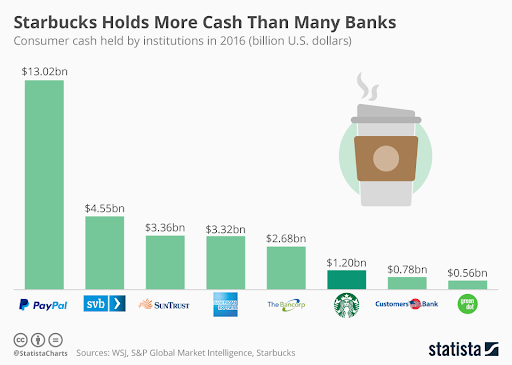
Banks can learn a thing or two from Starbucks. Starbucks holds more than $1 billion in deposits from gift card sales, both in the physical form and on their mobile app.  

(Image source)

Not only do they hold more cash than many banks, but they also put geospatial data to excellent use. The simple notification that you are near Starbucks plants a seed in the consumer’s mind. Now, they can’t pass up that pumpkin spice latte on a crisp fall afternoon.

According to a recent study by Capco, customers are highly interested in text alerts and notifications about opportunities to transact more efficiently.

Banks can use Starbucks’ location-based strategy to send a message to your phone when you are near an ATM. This alert is especially helpful if it’s been a while since your last visit, and you might need to restock your wallet with cash.

Or, if you enjoy the buy now, pay later option, you might receive alerts for all the stores that accept this payment method during your next shopping spree.


Improve customer experience with personalized services

The future of financial services is here and more personalized than ever.

In the past, you might have had a relationship with your bank that was mainly transactional: you’d go in, deposit checks, withdraw cash from an ATM, maybe get a loan, or apply for credit. That’s all well and good — but it doesn’t give you the kind of personalized experience that we’re seeing more and more in fintech these days.

Nowadays, banks are looking to improve their customer experience by offering tailored services based on where you live, what kind of lifestyle you lead, and your spending habits.

With this information, they can offer different products or services based on what would be most helpful to each client individually — and ultimately build a foundation of loyal customers.

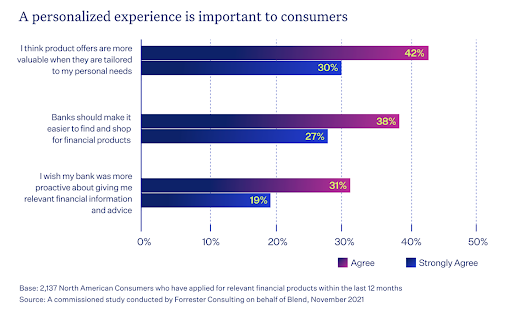
Consumers want an easy, streamlined experience with their bank. When customers receive offers for products that are contextually relevant, they’re more likely to engage with them. Regarding finding and shopping for financial products today, 65% of banking customers believe institutions should make it easier.

(Image source)

Geospatial data will become an integral part of customers’ experiences in the future as they interact with their financial institutions through mobile apps.

Fintech companies can use data about people and their assets to make better decisions about product development and deliver personalized marketing strategies.


Enhance fraud detection and prevention

With great power comes great responsibility. Fintech companies have access to a lot of data, and they’re using it in new ways to detect and prevent fraud.

For example, a bank uses geospatial data from its mobile app to determine the location of its customers. This data provides insight into how often customers use the app in certain areas, helping to indicate potential fraudulent activity.

So if someone is logging into their account from Moscow, Russia, instead of Los Angeles, California, for example, that could indicate a red flag — and adjustments are made to freeze the account until the transactions are approved or denied by the account holder.

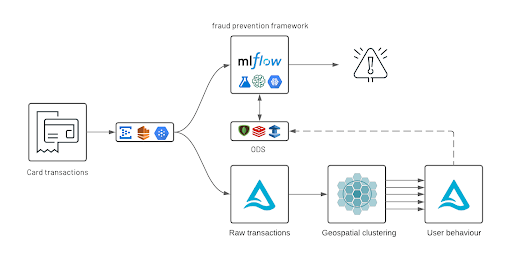
Other fintech companies are turning to the dynamic duo, geospatial data and artificial intelligence, to create algorithms that detect money laundering based on behavioral patterns found within financial transactions. 

(Image source)

Geospatial data helps them identify specific areas where this activity occurs (think casinos), allowing them to focus their attention on one area instead of wasting resources elsewhere.

Add in the power of machine learning, and a computer can learn to identify fraudulent schemes from previously identified patterns and then decide whether to approve an ongoing transaction.

Geospatial data has a lot of potential for fintech, but one of the most precise ways it’ll revolutionize the way you bank is by enhancing fraud detection and prevention.

Wrapping up

The wants and needs of consumers are constantly evolving and, frankly, only becoming more demanding. We all want transparency, simplicity, and convenience in every aspect of our lives, including how we manage our money.

Geospatial data will improve banking services and fraud detection by showing how consumers spend their money in real-time. Add in the power of artificial intelligence and machine learning, and you won’t even recognize the banking industry anymore.

It pays to be a mover and a shaker. 

Banks that quickly shift to investing in geographic information systems will set themselves apart from the crowd by creating a competitive advantage that’ll drive long-term business growth.

Categories
Alternative Data & Finance

The Role of Geospatial Data in Enhancing Investment App Strategies: How Location Intelligence Drives Better Financial Decisions 

Modern enterprises in various industries are essentially data-driven organizations. They gather vast volumes of business and consumer data for demand forecasting, advanced decision-making, strategic planning, supply chain management, service personalization, advertising campaigns, and whatnot.  

Fintech companies and banks are no exceptions to this across-the-board drive, utilizing data engineering and analytics in their basic workflows, such as fraud prevention, risk assessment, customer segmentation and retention, algorithmic trading, operational efficiency optimization, and more. 

As the competition in the niche becomes ever fiercer, forward-looking financial actors go beyond analyzing traditional data and tap alternative sources of information that can provide them with a deeper understanding of their target audience and additional insights into current market trends. Location intelligence is one of the alt data practices that allows financial organizations to hone their competitive edge. 

Traditional vs. alternative data in the financial sector: The difference made plain 

What information do financial firms conventionally employ in their pipeline routine? As a rule, these are records obtained from financial statements, earnings reports, press releases, SEC filings, macroeconomic summaries, industry digests, and other publicly available channels. While reliable and trustworthy, such traditional data can’t provide a comprehensive view of any shop floor area or entity.  

Financial enterprises increasingly involve alternative data from social media, product reviews, email receipts, web traffic, IoT devices and sensors, satellite images, jet tracking, credit card transactions, and more to complete the picture. 

After proper analysis and processing, this largely unstructured data allows financiers to fill in the gaps existing in traditional data, pinpoint risks, and identify growth opportunities that remained otherwise concealed. Currently, the alt-data market manifests a meteoritic spike, increasing from slightly above $1 billion three years ago to the expected $17.4 billion by 2027.  

Geospatial information is one of the crucial growth drivers in this field, predicted to account for a $1 billion-worth market within three years – an astounding surge from $154 million in 2021. Such an impressive rise explains the ubiquitous advent of location intelligence into financial business practices.  

Meet location intelligence 

Location intelligence uncovers patterns and derives insights by analyzing spatial and geographical data. In other words, it studies what happens on the surface of the earth to arrive at a comprehensive understanding of spatial dynamics and figure out the business implications of these developments.  


The most important data types location intelligence draws upon include: 

  • Demographic data – age, gender, ethnicity, educational level, marital status, address, and other population characteristics. 
  • Wealth data – information about income and economic status of people or households, pivotal for reaching out to affluent strata. 
  • Transaction data – everything related to consumer transactions employed for dissecting customer preferences, spending behavior, and sales performances. 
  • Retail outlets data – geographical locations of stores and other commercial establishments, instrumental in analyzing niche competition and market saturation.  
  • Points of interest data – positions of hospitals, schools, parks, and sports facilities that are the staple of urban planning and real estate assessment. 
  • Footfall data – information on the quantities of people passing through a certain place that can be instrumental in business site selection and choosing marketing initiatives. 
  • Administrative boundaries – geographic delineations of countries, states, provinces, cities, and districts, pivotal for market analysis and regulatory compliance. 

Where can you obtain this data? Satellite imagery, public statistics, and enterprises’ business records (like clientele addresses or store locations) are the typical sources of relevant location intelligence that can be accessed free of charge or bought from its owners. Besides, you can leverage cutting-edge technological tools (Geographic Information Systems (GIS), Internet of Things sensors and gadgets, cloud computing, etc.) to collect, process, and analyze geographic data.  

Yet, the most widespread and valuable source of location intelligence is GPS data pinged by people’s phones across cellular networks. With the advent of 5G and the increasing availability of mobile devices, this source of alternative data is likely to become the foundation of location intelligence for digitally driven enterprises.  

Given the multitude of channels and huge volumes of data to be searched, retrieved, and processed, location intelligence can’t be effective without the employment of state-of-the-art know-how, such as: 

  • Big Data. This technology excels at collecting and handling limitless datasets containing both historical and real-time data points. 
  • Artificial intelligence. Whatever insights are derived from geospatial data, AI can swiftly and accurately sift them through to forecast trends, detect anomalies, and automate complex workflow processes.  
  • Machine learning. Its algorithms enable high-precision data analysis and service personalization by learning from training data and enhancing software performance over time. 

Financial organizations can enjoy the boons location intelligence relying on geospatial data ushers in by applying it across multiple shop floor processes. Investment management is one of such areas where the perks of location intelligence are particularly evident. 

How to improve investment decisions with location intelligence 

The investment domain is a high-risk financial sphere where an imprudent step or wrong decision can cost you thousands and sometimes millions of wasted dollars. Modern fintech solutions (for instance, an investment application or an investment feature of a personal finance app) benefit greatly from harnessing the power of location intelligence, allowing individuals and organizations to maneuver their portfolios. What are the investment sectors where geospatial data can unlock hidden business value? 

Real estate 

Before investing in this kind of property, you should study geospatial data displaying its land topography, proximity to commercial and recreational amenities, public transportation, infrastructure, school districts, natural landscapes, historical landmarks, etc. 

Location intelligence can also supply such risk-related information as earthquake fault lines, flood areas, and wildfire zones. When you amplify it with other critical data (population’s income level, crime rates, demand for properties, and more), you will have a clear understanding of whether purchasing property in some areas is a sensible and safe investment.  

Agriculture 

Here, you should look for climate and weather-related insights (for instance, extreme temperatures, altitude, soil fertility characteristics, precipitation volume, probability of natural disasters, etc.) to determine the economic sensibility of investing in agricultural business initiatives in a specific location. 

Energy generation 

Weather conditions also play a mission-critical role for investment decisions in this field. Cold climates and long night hours condition more demand for energy, so investing in a power station in such places is worthwhile. 

Another investment-inviting development in this realm is geospatial data that registers many people moving to an area, which is indicative of the potential surge in economic activity and, consequently, a future increase in the local demand for energy. And when you discover that the number of sunny or windy days in an area is quite significant, you can consider financing the construction of a solar power plant or a wind farm there.  

Retail 

To predict whether a site for a retail outlet or an existing store is likely to bring profit (and therefore is worth investing), you should analyze such geospatial data as its proximity to residential areas, competitors’ presence, availability of public transportation routes, vehicle traffic intensity, foot traffic data (with typical movement patterns), visit attribution, and even parking lot fill rate. 

As a result, you will arrive at a ballpark figure of consumers who will patronize the mall in question and see whether the money they are likely to spend there is a satisfying ROI for you.  

Telecommunications 

By analyzing population density, foot traffic, and hotel booking dynamics, you can gauge the demand for internet consumption. 

If it proves sufficiently high, you can invest in telecommunications organizations that will set up Wi-Fi hotspots and develop digital infrastructure in such potentially income-generating neighborhoods.  

Key takeaways 

For any future-oriented business with big-time aspirations, analytics, and decision-making based on traditional data can’t provide a sharp competitive edge. To thrive and expand, they should tap alternative data sources, where location intelligence reigns supreme. The geospatial data it furnishes is highly instrumental in many verticals, the financial sector including. 

By taking any information from the physical world and mapping it onto your investment strategy in real estate, agriculture, retail, telecommunications, and other domains, you can revolutionize your investment decision-making and reposition your portfolio to let it bring maximum profit.  


Related: read more about location data for finance and investment.

Categories
Alternative Data & Finance

Business Investments in Educational Institutions: Risks and Benefits

Meta description. Risks associated with investing in educational institutions. How to prevent them. Benefits of cooperation between universities and business. Expert opinions. The success of student startups.


The modern world, and the business world in particular, requires quick decisions. Also, constantly search for new opportunities. Thus, businesses are constantly looking for them. In particular, opportunities for development and investment. As it turned out, one of the most promising areas is investing. Investing in educational institutions. In turn, this can bring both risks and significant benefits. Let’s take a closer look at this topic. Let’s look at the factors associated with business investment in educational institutions. We will also consider the opinions of experts. In particular, we provide information to support these opinions.


Benefits of Cooperation between Universities and Businesses.

Expert opinions


 Students studying at business-related institutions may learn advanced approaches to business management. They also learn how to apply them in practical tasks. While studying in business majors, students systematically perform various assignments. These include writing reports and research papers. The ability to express thoughts in writing has always been an indispensable skill in the business environment. Not everyone is able to do it perfectly at once. So, do not forget about college assignment help on specialized educational sources. Qualified specialists always provide the necessary help in education and business topics. The topics can be very diverse. They can use statistical or other data to further argue the validity of a particular theme.


For example, let’s look at the following. Forbes Business Development members discuss the important theme[1]. How collaboration with partners in higher education allows executives to grow successful businesses?


6 Reasons Why Business-University Collaboration is a Win-Win for Leaders
1.      Focus on the new technologies development and innovations Our company is a research organization. It develops an artificial intelligence, visual, and wireless technologies. These are licensed by most mobile phone manufacturers. We work with industry partners who provide us with a “compass” for what technologies we need to develop for certain markets. We also use strategic partnerships with universities as a “compass”. Compass for new and promising technologies. Donald Butts, InterDigital
2.      Opening new ways to provide support During the pandemic, we provided laptops and supply services. We developed hybrid classrooms and distributed modular furniture to modernize classrooms. The academic world has become not just an untapped market for us. It has become one of our core business areas. Stephen Mohan, Office Depot, Business Solutions Division
3.      Help in attracting new employees from the academic community Our employees’ connections with academia range. From teaching as a professor to   leading discussions on technical trends. We also have a program to recruit and hire new graduates from academia at all levels. George Earle, Thoughtworks Inc
4.      Mentoring for young data storytellers As an organization working at the forefront of technology, we must create the future of technology. Collaborating with scientists and researchers helps us do that. The recent Data Comicgen Awards is a great example. It encouraged young data storytellers to contribute to the data visualization landscape evolution. Sayantan Dasgupta, Gramener
5.      Combining theory with facts The academic perspective and the approach we take are woven into us. This has allowed us to combine theory with empirical data. Through surveys and research projеcts. Every year we research and update. Both theoretical and real-world developments in our industry. We do this to provide up-to-date business advice. Britta Lorenz, PDAgroup GmbH
6.      Creating a stable talent pipeline We currently work with technical colleges and universities in the different countries. This is to provide university graduates with a direct path to employment. During and after graduation. The dialog with these universitiеs is not only beneficial for both parties. It solves the financial problems of graduates. And also provides our company with a steady stream of new employees. Peter Schravemade, BoxBrownie.com

The Success of Student Startups 

Another advantage of business investment in educational institutions is the following. It is an opportunity to foster the development of students startups. Many universities and colleges actively support the entrepreneurial spirit among their students. They also provide resources and financial support for the realization of student ideas. Those can include the next ones.

  •         Providing office space.
  •         Access to business mentors.
  •         Opportunities to receive investment.

Student startups have the potential. The potential to become a source of innovative ideas and new technologies. The latter can be applied in various business sectors. Besides, the development of startups can help improve entrepreneurial skills among students. It can also teach them valuable project management (e.g., using Gantt charts), teamwork, and decision-making competencies.


Risks Associated with Business Investments in Educational Institutions

Ways to Mitigate Them

They may include such aspects as:

  •         uncertainty of results,
  •         financial losses,
  •         failure to achieve expected goals.

However, there are ways to avoid or mitigate these risks. These include,


Adequate evaluation

Before investing in an educational institution, investors should assess the potential for the project’s success. This is done by conducting

ü  detailed market research,

ü  competition analysis,

ü  studying the potential audience.

This way, you can get a clearer picture of possible risks and prospects.


Clear terms of the investment project

It is important to establish them. Also, to conclude an Agreement that defines the rights and obligations of each party. This will help ensure transparency and mutual understanding. The latter should be mandatory between the investor and the educational institution.


Diversification of the investment portfolio

It will reduce the impact of negative factors on the overall investment result.


Taking these recommendations into account will help investors reduce the risks. The risks associated with investing in educational institutions. Yet, it is worth remembering that each investment has its own characteristics. So, careful planning is recommended before making an investment decision.


Business investment in educational institutions can be a beneficial step for both parties. This will allow businesses to gain access to educational resources and new ideas. Students will gain skills, resources, and financial support to realize their innovative projects. Cooperation between businesses and universities has the potential to contribute to economic development. It can also help create competitive businesses in the future. Businesses can provide students with internship opportunities and work on real projects. It allows students to gain valuable practical experience. So, students bring fresh ideas and innovative approaches to business. It definitely becomes a source of innovation and improvement for companies.


[1] https://www.forbes.com/sites/forbesbusinessdevelopmentcouncil/2022/01/05/six-reasons-why-business-university-collaboration-is-a-win-for-leaders/?sh=370d53664517


Related: read more about location data for finance and investment.

Categories
Alternative Data & Finance

Joint Bank Accounts: All You and Yours Need to Know

For starters, a joint account is the one opened by two or more people or entities. These accounts are usually opened by close relatives, couples, or business partners who are running an unincorporated business. 

However, the most important application of these accounts is for couples and business partners who share the same responsibilities and decisions. If you are considering managing finances as a couple or business partners, joint bank accounts can be the best solution for you. 

To help you out with the decision, we have jotted down a brief guide so you can understand what these accounts are and what are the key considerations for opening one. 


What is a Joint Bank Account? 

A joint bank account is a financial account held by two or more individuals or business entities. These are usually partners, spouses, family members, or business partners. Each account holder has equal access and rights to manage the funds deposited into the account. 

This leads to shared financial management, which is important for both close relatives and business partners. 

These bank accounts work quite similarly as a standard account. All the owners of bank accounts can make transactions, write checks, and withdraw payments. 


Benefits of Joint Bank Accounts 

Joint bank accounts provide several benefits for both individuals and businesses. These benefits multiply when you have a joint bank account online with a reputed banking institution. Some of the notable benefits are mentioned here: 

  • Convenience in Managing Shared Expenses: Joint accounts ease the management of household or shared expenses, which enables direct contributions from both parties. 
  • Transparency and Shared Responsibility: These bank accounts can provide transparency regarding income, spending, and savings. This leads to shared financial responsibility and open communication about financial goals. 
  • Efficiency in Handling Expenses: With these accounts, you can simplify bill payments and shared expenses. This helps in avoiding the need for transferring money between individual accounts. 
  • Emergency Access to Funds: In case you have a financial emergency, you can get immediate access to funds. This allows both account holders to manage unforeseen expenses efficiently. 


Considerations before Opening a Joint Account 

While joint bank accounts provide you with many benefits and ease of operation, there are some considerations you will need to keep in mind before opening a joint bank account. With SoFi, their joint bank account has the features you need to help secure the financial future you want. 

The first and the foremost thing in opening a joint bank account is open and honest communication between account partners. Establish trust and discuss your financial habits and goals to make things easier for both of you. 

Another you will need to keep in mind is the financial compatibility and goals of both partners. Make sure you both have the same financial habits and attitudes towards spending and saving money. This will help you avoid conflicts. 

Additionally, communicate that both parties have equal rights and access to the account. This makes both of you accountable for managing finances. 


How to Open a Joint Bank Account? 

There are some defined steps you will need to follow to open a joint bank account. These steps start with choosing the right bank both of you agree on. Research and select a financial institution that offers joint accounts with favorable terms and conditions that suit your needs. 

Next up, both parties will need to provide identification and complete the required forms to open a joint account in a specific bank. While doing this, make sure to draft a written agreement that outlines the financial responsibilities, access to funds, and what happens in case of unforeseen circumstances. 

Maintaining open and regular communication regarding account activity, spending, and financial goals will ensure both parties are on the same page. 

Related: read more about location data for finance and investment.

Categories
Alternative Data & Finance

Payment Fraud Trends in 2026: What Businesses Need to Know

Payment card fraud losses worldwide reached $33.41 billion in 2024, according to The Nilson Report — a figure that actually dipped 1.2% on the prior year, even as the methods behind it grew more sophisticated. The geography is lopsided: the United States accounted for 26.31% of global card volume but 41.87% of the losses.


A falling headline number does not mean the problem is shrinking. It means volume is growing faster than losses, while the nature of the attacks keeps changing. Here is what businesses should know about payment fraud in 2026.


Read on to find out more.

Fraud Becoming More Frequent and Sophisticated

Fraud attempts are becoming more frequent and noticeably more sophisticated.


Fraud-as-a-Service is gaining traction. It involves criminals selling tools and services, making fraud more advanced and sophisticated.


Advanced generative AI has acted in two ways. It assists businesses with anti-fraud solutions, but criminals use it on a larger scale for attacks. For example, tools now known as ‘AI-native’ are used in phishing schemes to produce images of emails that look like they were composed by experienced professionals.


To handle threats, companies are now looking to adopt machine learning algorithms capable of sifting through large data sets and detecting anomalies within a very short period to prevent payment fraud.

The Growing Financial Impact of Payment Fraud


The loss connected with payment fraud continues to be massive, both in immediate cost and future losses to reputation.


The Nilson Report projects global card fraud losses of .06 billion by 2030 and .50 billion by 2034, with cumulative losses over the next decade totalling 7.60 billion. That, therefore, puts mid-level businesses in a very risky position, with some noting average losses of as high as 4.1% of their annual earnings from eCommerce.


One significant observation is the shift towards chargeback fraud, where customers unsuccessfully argue to get their money back for transactions they legitimately carried out. Companies seem to incur the costs of this approach, whether it takes advantage of poorly stated terms of return or unclearly phrased names for received payments.


To prevent this, companies prefer using 3D Secure authentication to reinforce the level of security on any transaction and automatic credit card chargeback.

Increasing Variety of Fraud Tactics


It is getting easier for fraudsters to operate as their methods increase in number and complexity.

These include:


  • The use of multiple fraudulent identities created using real and made-up details.
  • A scenario where hackers access and take over user accounts obtained through phishing or malware.
  • Contactless fraud that uses near-field technology. Something growing in adoption across mobile payments.


Looking into account takeovers, people see fraudsters utilizing social engineering to persuade users to provide some login details. They then make unauthorized purchases from within the accounts or steal the points. As we speak, synthetic identity fraud has become a massive issue in the unsecured lending industry, where it is tricky to ascertain illegal identities.

Leveraging Real-Time Risk Assessment


As expected, the most common trend in 2026 will be the attempt to prevent advanced persistent threats.


The traditional paradigm of passive fraud monitoring has been rendered obsolete due to recent changes. Organizations are now leveraging advanced analytics, AI, and machine learning-style risk models applied in real time.


These platforms constantly review transactions based on daily activities to identify possible risks and they are working well. For example, AI-fueled fraud prevention systems might refuse to execute an unusual transaction if the originating IP is from a dangerous country.


AI is also boosting the adoption of fraud orchestration tools, which allow businesses to consolidate information from various sources to create a unified risk assessment of a single transaction. That improves anti-fraud measures and curtails clients’ losses caused by erroneous acceptance of transactions.

Preparing for the Future of Payment Fraud

Fraud is increasingly omnipresent, meaning prevention should now be the primary focus for firms. Below are some effective risk aversion measures organizations can consider:


  • Embrace AI and ML models
  • Employees are essential, as are customers – train your employees well!
  • Engage with PSPs
  • Upgrade the data security strategies.


The payment fraud landscape in 2026 is marked by increasing frequency, financial impact, and diversity of attack methods. Still, businesses are not powerless. If they’re staying informed about emerging fraud trends and implementing robust, companies can protect their revenue and reputation. The fight against fraud is an ongoing challenge, but with the right tools and strategies, businesses can stay one step ahead of cybercriminals.

Related: read more about location data for finance and investment.

Categories
Alternative Data & Finance

Essential Tools for Forex Trading Success: The Role of a Forex Profit Calculator

Forex trading has taken over the fast-paced world at present. Hence, to stay relevant in such a market, you must do more than simply understand the market. You also need to have a stronghold over the tools that help you achieve success in the current trading market.

Moreover, you can achieve this by trusting great tools. One such tool to help you with forex trading is a forex profit calculator with leverage. This tool will help you with complicated calculations, thereby allowing you to analyze your profits and losses with ease and maximum accuracy.

Hence, when you include tools like forex profit calculators, you will make better and well-informed decisions. Additionally, this will help you manage your risks more efficiently and ultimately boost your trading performance. Here, we will explore the nitty-gritty of forex trading and show how a forex profit calculator can help you achieve market success. Let’s get started.

Understanding Forex Trading

Before we move on to the depths of using a forex profit calculator, let us understand what forex trading is all about. Forex trading is nothing but simply buying and selling currencies with the intention of profiting from changes in exchange rates.

Due to its global reach and overlapping trading sessions across many time zones, the FX market is open 24/7, unlike typical stock markets. While this ongoing activity offers traders like yourself a lot of chances, it also necessitates quick decision-making and a thorough comprehension of market dynamics.

Moreover, the idea of currency pairs is fundamental to forex trading. In an effort to profit from shifts in the two currencies exchange rates, you can swap one currency for another. For instance, if you believe that the euro will strengthen against the dollar, then you can purchase euros and sell US dollars in the EUR/USD pair.

You can accurately predict currency fluctuations in forex trading by evaluating several variables. These variables include market mood, geopolitical events, and economic statistics. Moreover, in forex trading, leverage is important since it enables traders to manage bigger positions with comparatively less cash. Leverage raises the possibility of significant losses even while it can improve earnings.

Therefore, for successful trading, it is essential for you to comprehend how leverage affects possible gains and losses. Hence, to successfully navigate the forex market, you need to strike a balance between using leverage and good risk management techniques.

Forex Leverage Calculator 

A forex leverage calculator will help you determine the amount of capital you need to open a fresh position and manage your trades. Moreover, this also helps you to avoid any margin calls. They do this by determining the maximum position size.

Let’s look at the formula for forex leverage:

L=A/E 

Here, L stands for leverage, E is the equity or the margin amount, and A is the amount of asset. Moreover, you can also begin with the amount of margin and use the leverage ratio to find out the position size.

Here, the formula would be A=E*L.

Hence, you need to multiply the margin by the ratio of leverage, which will then provide the asset size of your position.

The Importance of Profit Calculation in Forex Trading

In forex trading, it is vital for you to calculate the profit accurately. Remember, without accurate calculations, you can find it difficult to figure out the outcomes of your trades. This can further lead to many missed opportunities, and you might incur unexpected losses. Hence, a forex calculator helps traders with a straightforward way of determining possible profits or losses based on the parameters of the trade.

One key benefit of forex calculators is the capacity of a forex profit calculator to improve accuracy. You can face errors in manual computations, particularly in complex trade scenarios that involve numerous currency pairs and different leverage levels.

Hence, by automating the calculating procedure, a forex profit calculator removes this risk and guarantees that you have up-to-date information readily available. Moreover, an efficient method of calculating profits is also essential to risk management.

You can choose position sizes and leverage more wisely if you are aware of how a trade may affect your total account balance. Furthermore, you should know that better alignment between trading techniques and individual risk tolerance can be achieved if you follow this. Moreover, this eventually leads to more controlled and disciplined trading behaviors.

Moreover, a forex calculator can also help you with strategy evaluation and development. You can use it to find out different strategies and situations and gain effective insights about how different trade factors can affect your outcomes. Hence, this ability is essential as it will help you modify your strategies to enhance your trading performance.

How a Forex Profit Calculator Works

Now that you know what forex trading is and why forex trading calculators are essential for your trading strategies, let’s find out how these forex profit calculators’ work.

1. Input Parameters

Entering important transaction parameters is the first step in using a forex profit calculator. You must disclose all information about the currency pair being traded, the trade size (in lots), the entry and exit prices, and the leverage employed.

Moreover, certain calculators can need information regarding the spread and the trade’s direction (buy or sell). Hence, you must accurately input the data as it guarantees that the figures accurately represent the actual nature of the transaction.

Remember, you should double-check all inputs for accuracy to process and assess possible outcomes by entering these parameters.

2. Calculate Profit or Loss

The forex profit calculator does the necessary computations to ascertain the possible profit or loss from the trade after the parameters are entered. Hence, if you want to compute the overall outcome, it computes the difference between the entry and exit prices, considering the trade and leverage size.

Moreover, to calculate how much a price move impacts a trader’s position given their lot size and leverage, mathematical calculations are applied. The outcome will give you a clear picture of the financial impact of the trade in the form of a figure that clearly represents the gain or loss in money.

3. Display Results

The forex profit calculator shows the results when the computations are finished. These outcomes usually provide a clear picture of your trade’s financial ramifications by displaying the possible profit or loss in your account currency.

Moreover, a percentage gain or loss in relation to the trade size is one of the extra details that some calculators also display.

You can rapidly determine whether a trade fits with your risk tolerance and financial goals simply by looking at the results. Additionally, you will make well-informed trading decisions that are clear and succinct by optimizing trading methods.

Benefits of Using a Forex Profit Calculator

Check out the benefits of using a forex profit calculator:

1. Boosted Accuracy

By using a forex profit calculator, you can improve accuracy by eliminating the need to complete intricate calculations by hand. Interestingly, this lowers the possibility of you making manual mistakes that might happen when doing calculations.

These mistakes can usually happen when you handle numerous variables like currency pairs, leverage, and trade size. Hence, you must ensure that your estimations of profit and loss are accurate and dependable by using a calculator.

Moreover, this will help you make well-informed trading decisions. Remember, accurate computations will also help you determine the real worth of transactions and prevent expensive errors.

2. Improved Risk Management

In the world of forex trading, risk management is crucial, and a forex profit calculator is a big part of this. The calculator will help you estimate the possible impact of each trade on your entire account balance. This is done by offering accurate profit and loss estimations.

Moreover, this will help you modify your leverage and position sizes in accordance with their level of risk tolerance.

Hence, you can get accurate computations that enable proper risk management. Furthermore, this will also protect your capital and prevent you from overexposing to possible losses. Additionally, this promotes more disciplined trading methods.

3. Efficient Decision-Making

A forex profit calculator provides rapid and precise evaluations of trade outcomes, which simplifies the decision-making process. Hence, before making a transaction, you can assess your possible gains and losses using the calculator.

This will help you make decisions more quickly and intelligently. Moreover, this effectiveness is especially crucial in the volatile forex market, where prompt judgments have a big impact on trading outcomes.

Moreover, you can concentrate more on assessing market circumstances and honing your tactics by cutting down on the amount of time spent on computations.

4. Strategy Testing

Forex profit calculators are useful resources for experimenting with various trading approaches. To simulate numerous situations and assess the potential performance of different strategies, you can enter a variety of trade parameters into the calculator.

Moreover, with the help of this feature, you can examine probable outcomes in various scenarios and adjust your tactics accordingly.

Hence, by using a forex profit calculator to evaluate trading techniques, you will gain insight into the advantages and disadvantages of your methods, resulting in more specialized and successful trading strategies.

Integrating a Forex Profit Calculator into Your Trading Strategy

Now, let’s move on to how to integrate a Forex profit calculator into your trading strategy:

1. Set Clear Trading Goals

When using a forex profit calculator in your strategy, it is imperative that you establish certain trading objectives. You should establish your goals for every trade, including your desired profit margins and allowable loss limits.

Moreover, your use of the calculator is guided by certain goals that dictate which parameters to enter and which outcomes to prioritize. For instance, you can use the calculator to make sure your trade parameters match your objective of achieving a 10% return on each trade.

Remember, establishing clear goals also makes it easier to assess if the estimated results live up to your expectations and modify your plan of action accordingly.

2. Use the Calculator for Pre-Trade Analysis

You should conduct a pre-trade study using the forex profit calculator before placing a trade. Start by entering all key information, including the currency pair, trade size, points of entry and exit, and leverage.

Then, you can evaluate whether the trade fits with your risk tolerance and strategy by using the calculator, which will give you possible profit or loss predictions.

Moreover, by outlining the trade’s financial ramifications before committing to it, this analysis aids in smooth decision-making. Remember, it guarantees that you know exactly how a trade might affect your trading account before you enter it.

3. Monitor Trade Performance

You should use the forex profit calculator to keep an eye on a trade’s performance after it has been done. Then, you can recalculate the possible profit or loss in light of the state of the market and compare it with the original projections.

This continuous assessment will help you in monitoring the trade’s development and making the required modifications.

Moreover, recalculating can assist you in determining whether to close the trade early or modify your take-profit and stop-loss levels if the market swings in an unanticipated direction. Remember, consistent monitoring guarantees that you remain aware of your trades and can react to market changes.

4. Combine with Other Tools 

A forex profit calculator is a useful tool, but for a complete strategy, you must use it in conjunction with other trading tools and resources. Moreover, to obtain a comprehensive understanding of the market, integrate it with technical analysis tools, fundamental analysis, and market news.

You will find that technical indicators are useful for observing market trends and possible price changes, but fundamental research is more useful for comprehending larger economic issues.

Also, you can make well-rounded trading decisions that consider both the quantitative and qualitative components of the market by combining the profit calculator with these tools.

Wrapping Up

Your trading accuracy and decision-making process can be significantly improved by including a forex profit calculator in your trading strategy. Additionally, you can make more strategic and well-informed judgments by keeping an eye on trade performance, defining clear targets, and using the calculator for pre-trade research.

Moreover, leverage considerations and scenario testing can help you to fine-tune your strategy, and the calculator when used in conjunction with other tools gives you a complete picture of the market.

Lastly, you must use the power of a forex profit calculator to enhance your trading performance and increase your success in the forex market by being aware of and taking care of these factors. Happy trading!

Related: read more about location data for finance and investment.

Categories
Alternative Data & Finance

How Big Data is Poised to Disrupt Personal Investment

Last year, in a piece about big data’s impact on finance, we touched on the notion that location data sets can simplify the practice of investing. The idea is that accurate data regarding consumer movement can provide insights on consumer trends — and, thus, potentially, corresponding market movements. In this article, we’re going to expand on that general idea with a closer examination of big data’s potential influence on personal finance.


Big Data & Investment Today

First and foremost, it’s necessary to briefly discuss the current state of big data in the investment world. In the piece, as mentioned above, we mainly covered an idea of how data, and specifically location data, can be applied to market management. However, the truth of the matter is that some significant investment funds and financial firms are already using massive troves of data of all kinds to inform their investing decisions.

At this level, AI and big data are transforming the investment process in several ways (and through companies as big as JP Morgan, BlackRock, SoFi and others). In some cases, AI labs are being used to analyze investor performance and recommend changes that yield a quick, significant result. In others, advanced AI applications are using a deep-learning approach to sift through astonishing amounts of data with the straightforward goal of predicting near-future stock prices. For example, looking at realtime car purchases to predict Rolls Royce shares. There are mixed results with approaches like this one, but the potential for genuinely predictive analytics in large-scale investing is significant.

There aren’t full AI operations of this nature explicitly focused on making use of location data. However, deep-learning approaches are reasonably comprehensive in theory. They can certainly make use of this specific type of data and share prices, company data, macro-economic indicators, asset histories, and so forth. Location data can primarily be used as a piece of a sprawling analytical effort.


Automated Investing Tools

While significant investment firms may be well situated to take advantage of big data and act on it quickly, most ordinary people can’t do the same. A true day trader with access to adequate data (on locations and otherwise) may be able to make quick decisions to react to fresh information. But for most people who are simply managing and tracking stock portfolios it’s more realistic to attempt to leverage data relating to broader movements. That’s where some of today’s automated investing tools come into play, especially in some online depot tools.

When you hear about automated tools, you might first think of mobile apps like Acorns and Stash that can, to some extent, manage your investments for you. Generally, these apps allow you to create a portfolio — or at least a type of collection — based on your risk aversion and/or category preferences. They then conduct trades according to your preferences, such that your money goes to work for you in an automated fashion.

Automation is also involved in more traditional trading methods, though, and it introduces an interesting way of potentially leveraging big data. On some platforms, when trading contracts for difference or stock futures, for instance, investors can place profit and loss limits on their positions. This means that while investors still determine entry points on individual stocks, they can set up automated safeguards that will pull money when a certain profit has been attained, or a certain loss has occurred. Through this sort of feature, investors can still set up their investments and contracts, but trust automation to manage them after that.

This all relates to big data because it can be more comfortable for an investor to make a long-term play based on big data than a short-term trade. To give an easy contrast, consider consumer location data based on a product release versus that based on a more significant trend. A surprise hit film might lead to data suggesting a short-term surge of moviegoers, such that a day trader or larger fund could stand to profit by investing in major cinemas. But the average investor likely can’t recognize and act on that data quickly enough. On the other hand, if consumer location data indicated a widespread, gradual return to shopping malls in 2021 (when they’ve been largely abandoned in 2020), an investor could make a play to buy stock in department stores, with automated limits set in place. In short, automated options allow for more responsible long-term positions, such that investors can feel more comfortable attempting to leverage certain types of data.


Location & Digital Payment

As you’ve likely noted in the sections above, one of the problems with big data in personal investment is that the most information and the best analysis tend to belong to the giant funds and finance companies. While there are ways for individuals to access more advanced analysis of investment-related data, it isn’t easy to compete on a day-to-day level. Sometimes, the significant funds will interpret data and move on a trend quickly that there’s not much opportunity left for everyone else.

This is why location data may prove to be particularly interesting for individual investors, however. When we talk about comprehensive data analysis done by leading financial firms, we’re referring to all sorts of in-depth material that is difficult for an individual to manage, or in some cases, even get a hold of. By contrast, location data may be getting more convenient in the near future.

This assertion is based on the simple fact that electronic payments are up; by 2019, some 2.1 billion consumers were estimated to have used a digital wallet of one kind or another, and moving forward, even more people are likely to be embracing digital payments. These types of payments are meant to be more secure and convenient for consumers and businesses alike, but they’re also generally more traceable. In theory, it may soon be the case that information about where consumers are spending digitally will be reasonably easy to access (whether through public ledgers, payment processing company reports, etc.). That would turn consumer location data into something individual investors could access and use with relative ease compared to some other kinds of relevant data.


In Conclusion

The use of big data in investing is still an evolving concept with less to do with individual investors than larger funds. However, certain methods of investing and certain types of data can be of use to independent traders, and will likely only become more useful in moving forward.

Related: read more about location data for finance and investment.