




James is the head of marketing at Tamoco

James is the head of marketing at Tamoco
Business trips can be a golden opportunity. Workers get to expand their network and flex their creativity. And businesses can become more competitive and seize opportunities in new territories worldwide. In an ideal world, it’s a win-win situation.
Unfortunately, cybercrime complicates things. Criminals will often target complacent workers who are traveling for work. Their motive? They want to steal sensitive information, hijack accounts, and defraud companies.
While a trip might seem fantastic, the potential dangers can be unsettling. So, what are the threats every business should be aware of? More importantly, what can they do to protect themselves from unnecessary risk?
Common cyber-threats against data privacy and security
While there are many different kinds of cybercrime, there are three key areas that can affect business travel in particular. These are:
Unsecured public Wi-Fi networks
Public Wi-Fi networks come with huge security risks. They often have little to no protections in place to protect users. As such, criminals can easily monitor and intercept the activity of those connected to them.
Worse of all, criminals may even create “fake networks” to deceive busy travelers. They might name networks after credible services, like a café or a help desk, to convince you of their authenticity.
But by connecting, you could be sending all of your private data directly to them, which could leave your company wide open to an attack.
Phishing scams
Phishing is when a hacker impersonates a trustworthy entity to trick you into compromising yourself. It could be sharing sensitive information or making changes to an account. In 2023, it was the most common cybercrime reported in the US. And over 55,000 cases involved personal data breaches.
If a criminal knows that you’re traveling, they can use this to their advantage. They can create more effective phishing scams tailored to your trip.
By using personal information, criminals can impersonate an important service such as your flight carrier or your accommodation. As you’re busy traveling, you might have your guard down and fall for convincing emails, phone calls, or SMS messages.
Physical theft of devices while traveling
Another way your cybersecurity can be compromised is through your physical security. After all, if a hacker takes your device, they can easily strip it of information in their own time.
This can be a risk at every stage of a trip. Opportunistic thieves may be in the audience, waiting to snatch valuable tech in hotel rooms, lobbies, or even from the venue floor.
Four tips to help protect your data while traveling on business
So what can a person do to protect themselves (and their work) while on a trip abroad? There are a range of simple ways of protecting yourself:
Use an eSIM for protected connectivity
People on business trips often forget to sort out connectivity before leaving. Once travelers arrive at their destination, they find their smartphones can’t connect to any network. This leaves them relying on risky public Wi-Fi for their internet needs.
An eSIM offers a safer alternative in terms of both connectivity and security. This is a digital version of a traditional SIM card already embedded within modern smartphones, so your work devices are likely compatible.
eSIMs allow you to change your network operator and connect to the internet within a simple-to-use app on your smartphone. A direct connection through your smartphone eliminates the need for potentially risky networks.
Moreover, eSIMs are incredibly flexible. Traveling to more than one country? No problem. One eSIM app is all you need for your travels. An eSIM for Europe, for example, will allow you to select different plans for the countries you intend to visit.
Enable multi-factor authentication (MFA) on all accounts
Business trips are naturally busy times for workers. And you might not be checking your accounts to detect suspicious activity. Multi-factor authentication (MFA) is your safeguard against someone trying to seize control.
MFA works by asking you to verify your identity once you log on to a site or service or make changes to an account. It usually sends an SMS message with a code or a push notification that you need to accept. Without this, a person cannot gain access to your account.
Review settings and disable auto-connect features
Business travelers should check all their devices for settings that may put their privacy at risk. For example, “auto-connecting” might seem handy at home, but it is dangerous when in public. Especially in busy places like airports, you could connect to various random devices.
While you’re at it, also disable Bluetooth file-sharing to avoid automatically receiving or downloading suspicious files.
Only use your own equipment when charging
If you’re on the move for a long time, your device might need a well-earned charge. Like public Wi-Fi, travelers are often tempted by convenience and use public chargers in airports and hotels.
It can be risky, as hackers can tamper with chargers to infect devices with malware. This practice is known as “juice jacking.” By doing so, they can gain access to personal information and passwords while you charge. An easy solution to this problem is only to use your own equipment to charge devices.
Similarly, you should avoid allowing others to connect unrecognized devices to your gadgets. An infected USB, for example, could instantly send malware through your laptop or tablet.
Staying secure while away on business
As sophisticated as hackers might seem, businesses aren’t defenseless against their attacks. There are many different tech tools which mitigate the risks you might face.
Using such technology as eSIMs allows you to bypass risky Wi-Fi networks and connect to the internet safely. Similarly, activating MFA and strengthening your passwords can protect you from many attacks.
By putting these safeguards in place, you’ll get peace of mind during your trip and know that your data and privacy are being kept safe.
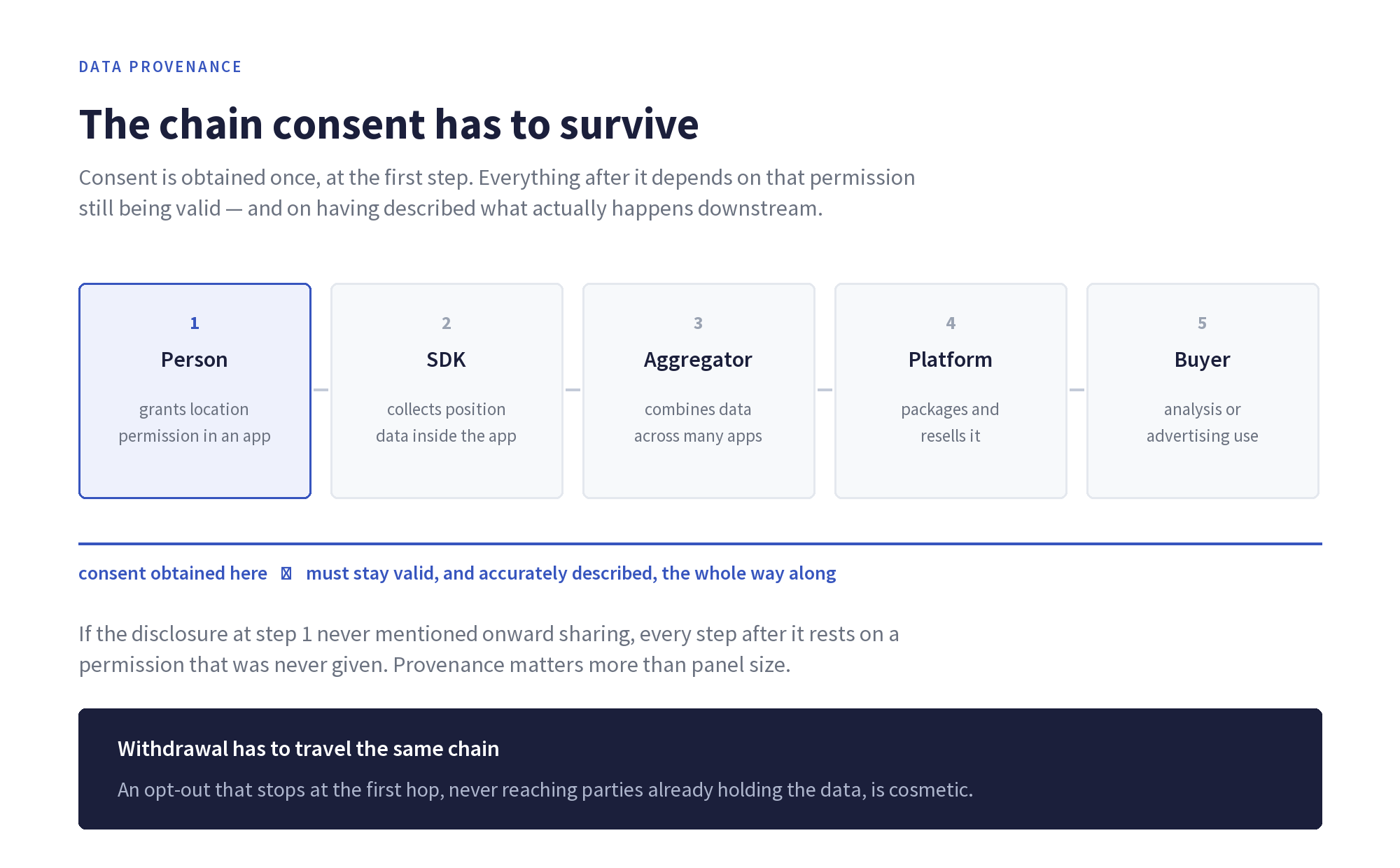
Related: read more about how Tamoco sources consented location data.
James is the head of marketing at Tamoco
Mastering the Art of Protecting Sensitive Information in the Digital Era
In an age where digital connectivity is ubiquitous, this article delves into the critical aspects of data privacy and security. It offers businesses actionable insights and strategies to safeguard sensitive information, with a special focus on complying with GDPR and other privacy regulations. The article also highlights how tools like our paystub generator adhere to stringent data security measures to ensure the protection of financial data.
Introduction:
The digital revolution has transformed the way businesses operate, leading to an era of unprecedented connectivity. While this hyper-connected world offers immense opportunities, it also presents significant challenges in terms of data privacy and security. Recent high-profile data breaches have brought these issues to the forefront, emphasizing the need for robust security measures. This article aims to provide a comprehensive guide for businesses seeking to navigate the complex landscape of data privacy and security. It will explore the implications of data breaches, the intricacies of GDPR and other privacy regulations, and present practical strategies for maintaining data integrity. Additionally, the article will illustrate how our paystub generator tool exemplifies a commitment to the highest standards of data security and privacy.
Understanding the Landscape of Data Breaches and Their Implications
In this hyper-connected digital age, data breaches have become a common headline, causing significant disruptions to businesses and consumers alike. Understanding the landscape of these breaches is crucial for companies to develop effective strategies to safeguard their sensitive data, including financial records managed by tools like paystubs generators.
1.1 The Rise of High-Profile Data Breaches:
Recent years have witnessed an alarming increase in high-profile data breaches. These incidents have affected organizations across various sectors, from retail giants to financial institutions, and even government agencies. For instance, a major credit bureau experienced a breach compromising the personal information of millions of consumers. These breaches not only result in the loss of sensitive data but also lead to financial losses and regulatory penalties.
1.2 Common Vulnerabilities Exploited:
Several factors contribute to the vulnerability of systems to data breaches. These include outdated security protocols, lack of employee training in cybersecurity, and weak points in third-party vendor systems. Often, breaches occur due to simple oversights, such as weak passwords or unpatched software vulnerabilities. Understanding these weak points is crucial for businesses to strengthen their defense mechanisms.
1.3 Consequences of Data Breaches:
The implications of data breaches extend far beyond the immediate financial losses. They significantly impact a company’s reputation, eroding customer trust and loyalty. The long-term damage to brand reputation can be far more costly than the initial financial loss. For instance, when customers entrust their personal and financial data to a service, such as a paystub generator, they expect the highest level of security. A breach in such services can lead to a substantial loss of trust, making it challenging for businesses to regain their clientele’s confidence.
1.4 Addressing the Challenge:
In light of these risks, businesses must prioritize data security. This involves not only implementing advanced technological defenses but also fostering a culture of security awareness among employees. Regular training and updates on security best practices are essential. Additionally, companies providing services like paystubs generators must ensure their tools are equipped with state-of-the-art security features to protect user data effectively.
In summary, understanding the landscape of data breaches is the first step in developing a comprehensive data protection strategy. Recognizing common vulnerabilities and the far-reaching consequences of breaches can guide businesses in strengthening their data privacy and security measures. As we proceed to the next section, we will delve deeper into the complexities of GDPR and global privacy regulations, and how businesses can navigate these to ensure compliance and safeguard their data.
GDPR and Global Privacy Regulations: Navigating Compliance
In the current digital landscape, compliance with data protection regulations such as the General Data Protection Regulation (GDPR) has become a cornerstone for businesses, especially those handling sensitive financial data like paystubs generators. This section explores the intricacies of GDPR and other global privacy laws, and outlines strategies for ensuring compliance.
2.1 Understanding GDPR:
The GDPR, implemented in 2018 by the European Union, represents one of the most stringent privacy and security laws in the world. It imposes obligations onto organizations anywhere, so long as they target or collect data related to people in the EU. The regulation is designed to give individuals more control over their personal data and to unify data protection laws across Europe. Non-compliance can result in hefty fines, making it imperative for businesses, including those operating paystubs generators, to adhere strictly to its guidelines.
2.2 Global Privacy Regulations:
Apart from the GDPR, numerous countries and regions have introduced their own data protection laws. For example, the California Consumer Privacy Act (CCPA) in the United States offers similar rights to consumers as the GDPR. Businesses must stay informed about these laws, especially if they operate internationally or handle data from overseas customers.
2.3 Strategies for Compliance:
Compliance with these regulations requires a proactive approach. Key strategies include:
– Conducting regular data protection impact assessments to identify and mitigate risks.
– Implementing privacy-by-design principles, ensuring that data protection is an integral part of system design and operation.
– Regularly updating policies and procedures in line with evolving regulations.
2.4 Role of Paystub Generators in Compliance:
Paystub generators, which handle sensitive financial information, must demonstrate a high level of compliance with these regulations. This includes incorporating features like data encryption, access controls, and regular audits to ensure data integrity and security. By doing so, they not only comply with legal requirements but also build trust with their users.
Navigating GDPR and global privacy regulations is a complex but essential task for modern businesses. By understanding these laws and implementing robust compliance strategies, businesses can protect themselves from legal repercussions and build a foundation of trust with their customers. In the following section, we will delve into the best practices for data privacy and security, offering practical advice on how businesses can safeguard their data in this challenging environment.
Section 3: Best Practices for Data Privacy and Security in Businesses
In a world where data breaches are increasingly common, it is essential for businesses, particularly those handling sensitive information like paystubs generators, to adopt best practices for data privacy and security. This section outlines key strategies and approaches that can help businesses protect their data and maintain customer trust.
3.1 Establishing Robust Data Security Protocols:
The foundation of any data security strategy is the establishment of robust protocols. This includes:
– Implementing strong encryption methods to protect data both in transit and at rest.
– Regularly updating and patching software to protect against known vulnerabilities.
– Utilizing secure network architectures, including firewalls and intrusion detection systems.
3.2 Employee Training and Awareness:
Human error remains one of the leading causes of data breaches. To mitigate this risk, businesses should:
– Conduct regular training sessions to educate employees about the importance of data security.
– Foster a culture of security awareness, where employees are encouraged to report suspicious activities.
– Implement clear policies for handling sensitive data, including guidelines for using paystubs generators and other financial tools.
3.3 Technological Solutions for Data Protection:
Advancements in technology offer additional layers of security. Businesses should consider:
– Utilizing cloud services with robust security measures for data storage and processing.
– Implementing two-factor authentication to add an extra layer of security to access controls.
– Using advanced threat detection tools to identify and respond to security incidents promptly.
3.4 Regular Audits and Compliance Checks:
To ensure ongoing protection, businesses should:
– Conduct regular security audits to identify and rectify potential vulnerabilities.
– Perform compliance checks to ensure adherence to data protection regulations.
– Continuously evaluate and update security practices in response to new threats and regulatory changes.
For businesses using or providing paystubs generators, adhering to these best practices is not just about compliance; it’s about building and maintaining a reputation as a trustworthy entity in the financial sector. By implementing these strategies, businesses can significantly reduce their risk of data breaches and ensure the security of sensitive information.
In the next section, we will explore the specific role of tools like paystub generators in maintaining data integrity, discussing the security features that are integral to these tools and how they contribute to overall data protection efforts.
Section 4: The Role of Tools like Paystub Generators in Maintaining Data Integrity
In the realm of financial data management, tools like paystub generators play a pivotal role in maintaining data integrity and security. This section highlights how these tools are designed to uphold the highest standards of data protection, providing peace of mind for both businesses and their employees.
4.1 Prioritizing Data Security in Paystub Generators:
Paystub generators handle sensitive financial information, making security a top priority. These tools are typically equipped with advanced security features such as:
– End-to-end encryption to safeguard data from unauthorized access.
– Secure login protocols and multi-factor authentication to ensure that only authorized users can access the data.
– Regular security updates and patches to protect against emerging threats and vulnerabilities.
4.2 Compliance with Regulations:
Paystub generators are not just tools for convenience; they are also bound by legal and regulatory standards pertaining to data protection. Compliance features include:
– Adherence to GDPR, CCPA, and other relevant data protection regulations.
– Regular audits and compliance checks to ensure ongoing adherence to legal standards.
– Features that allow users to control their data, in line with privacy laws.
4.3 Building Trust with Advanced Security Features:
To build and maintain trust with users, paystub generators often incorporate several advanced security measures, such as:
– Data anonymization techniques to protect personal information.
– Role-based access controls to ensure that only individuals with the necessary permissions can view or modify sensitive data.
– Continuous monitoring systems to detect and respond to any unusual activity or potential breaches.
4.4 Case Studies and Testimonials:
The effectiveness of these security measures is often reflected in positive user feedback and case studies. Businesses using these tools can provide testimonials about how the security features of the paystub generator have enhanced their data protection practices, contributing to an overall stronger security posture.
In conclusion, tools like paystub generators are more than just a convenience; they are a critical component in the data security framework of modern businesses. By integrating robust security measures and ensuring compliance with data protection regulations, these tools play a crucial role in safeguarding sensitive financial information.
This comprehensive exploration of data privacy and security in a hyper-connected world underscores the importance of adopting effective strategies and utilizing secure tools like paystub generators. By doing so, businesses can navigate the challenges of this digital era with confidence, ensuring the protection of their data and the trust of their stakeholders.
Conclusion
In conclusion, the journey through the landscape of data privacy and security in a hyper-connected world is both challenging and essential. As this article has highlighted, understanding the nature and implications of data breaches, navigating complex global privacy regulations like GDPR, implementing best practices for data security, and recognizing the critical role of tools like paystub generators in maintaining data integrity are key steps in this journey.
Data breaches have shown us the vulnerabilities in modern digital systems and the profound impact they can have on businesses and individuals. Regulations like GDPR have set a new standard for data protection, demanding diligence and compliance from organizations worldwide. Best practices in data security, from establishing robust protocols to ensuring employee training and awareness, are no longer optional but a necessity. Furthermore, tools like paystub generators exemplify the commitment to data security in the handling of sensitive financial information, playing a vital role in upholding data integrity.
This comprehensive approach to data privacy and security is not just about avoiding penalties or preventing financial loss; it is about fostering trust and reliability in an era where data is a valuable asset. Businesses that embrace these practices and tools will not only safeguard their own interests and those of their customers, but they will also position themselves as responsible and forward-thinking entities in the digital landscape.
As we continue to navigate through this ever-evolving domain, the principles and strategies discussed in this article will serve as a guide, helping businesses and individuals alike to remain vigilant, compliant, and secure in a world where data is both an opportunity and a responsibility.
Related: read more about how Tamoco sources consented location data.
James is the head of marketing at Tamoco
Marketers believe personalization is the way to go for higher revenues. For example, tailoring product suggestions based on a customer’s purchase history can increase sales. But they need lots of data to pull it off. Businesses get caught up in a circle of gathering even more customer information to tailor and fine-tune future customer experiences.
But the more data you have, the bigger the risk you take. Cybercriminals know that even small home-based businesses may have extensive archives of consumer information. Therefore, a company of every size can become an attractive target for hackers.
The Clearcut Dangers of Poor Consumer Data Protection
Data protection laws are tightening radically around the globe, and for good reason. A data breach can expose customers in several ways, endangering a company’s future.
Some argue that data leaks have become commonplace, and customers don’t care much. Don’t fall into the trap of thinking a data breach is a minor nuisance that can be PR-ed and marketing campaigned away. Small businesses may have to close down after a data breach.
Compromised PII (personally identifiable information) can lead to identity theft, and customers may suffer from financial fraud. Businesses may also face lawsuits and fines for data protection compliance violations. Data breaches can severely damage a business’s reputation and wreck customer trust.
On the other hand, good data protection measures hold clear-cut benefits. If you can deliver good data care, it can enhance your brand’s reputation and increase profits.
6 Steps to Better Client Data Protection in Your Office
It can be hard to change office policies in mid-stream. Still, you can take a few strategic steps that will place you on an easier path toward better data protection.
1. First, Secure What You Do
There’s no need to bring the office to a complete halt to implement a new data security strategy. Work with what you have to get started.
2. Realign Your Data to Serve Your Business Strategy
The next step is to take a good look at what data you’ve accumulated and how you store and use it. For example, while you need customer data to analyze their behavior, you should evaluate how well the process serves your business needs.
3. Revamp Data Storage Basics
Encrypted file storage should be a given. Only entrust your data to encrypted file-sharing platforms that protect data in transit and at rest.
Also, secure each device that holds data, e.g., hard drives, laptops and mobiles, with access controls like PINs. Keep devices (and physical hard copies of your data) locked away when unused.
4. Harden Your IT Setup
These IT and network basics are easy to implement and use. In concert with your VPN for multiple devices, form the first line of defense against data theft and cyberattacks:
5. Get Your Employees on Board
No matter how much money you spend on external cybersecurity measures, you will only succeed if your team stays educated. Some of the most devastating data breaches have been caused by social engineering attacks that could have been avoided. Train employees to identify phishing emails that may trick them into giving access to company networks and provide them with the security tools they need.
6. Scale up to More Advanced Security Tools
The previous steps can be executed by companies of any size, even one-person shows. But as your business grows, you should invest in more specialized cybersecurity tools.
The Balance Between the Value of Data and the Cost of Securing It
Businesses require data to improve their products and services for clients. However, storing personally identifiable information can make businesses vulnerable to cybercriminals. Companies should collect and retain only the data necessary to meet their business needs because once they have the data, they have a responsibility to protect it. Following the previous six steps, you can turn this big responsibility into an asset. Well-protected customer data will improve brand reputation and build consumer trust.
Related: read more about how Tamoco sources consented location data.
James is the head of marketing at Tamoco
Have you ever had those annoying pop-ups asking you whether you accept or decline browser cookies each time you enter a new site? That’s a rhetorical question – if you’re on the internet reading this, of course, you did. But what exactly are these cookies, and how do they work?
People have varying opinions about them. Some don’t mind them one bit, while others claim they’re the most intrusive things in existence. Let’s dive deep into the world of browser cookies and see if they’re the monsters some make them out to be.
Crunching down on cookies
First things first, what exactly is a browser cookie? Simply, a cookie is a small piece of data that a website sends to your browser. This data is stored on your device and can be accessed by the website each time you revisit. Think of it as a digital ID card that helps websites remember you.
There are primarily two types: first-party and third-party cookies. First-party cookies are set by the website you’re visiting and are generally considered safe. Third-party cookies, however, are set by domains other than the one you’re visiting. These are the ones that often raise privacy concerns, as they can track your browsing habits across different websites.
Why do websites use cookies?
Cookies help websites remember your preferences. Have you ever wondered how a website greets you by name or recalls your last shopping cart? That’s cookies at work. With cookies enabled, once you log into a site, you don’t have to re-enter your credentials each time you navigate to a different page.
Also, cookies help websites gather data about user behavior. This helps site owners understand what content is popular and what needs tweaking. That was the good part. But what are the negatives that make people think twice about allowing cookies?
Some cookies are bad for you
While cookies can be super helpful, they rightfully raise eyebrows regarding privacy. Some cookies, especially third-party tracking cookies, monitor your online activities across multiple websites. This data is often used for targeted advertising. Have you ever felt like an ad is following you around the internet? Yep, now here’s the work of tracking cookies.
So, should you avoid cookies? Not necessarily. While it’s true that some cookies can be invasive, many are benign and make your online experience smoother. The key is to be informed and make choices that align with your comfort level.
Baking better online privacy with VPNs
You may have heard about this software many times, but what can you do with a VPN? Well, if you’re concerned about online privacy, Virtual Private Networks (VPNs) are a must-have tool in your digital arsenal. While VPNs don’t directly interact with cookies, they offer protection against online tracking.
How do VPNs work?
Every device connected to the internet has a unique identifier called an IP address. Websites and online services you use can see this address, revealing your general location. A VPN hides your real IP address, making it harder for websites to pinpoint who and where you are. By using a VPN to change location on your phone, you can further enhance your privacy, making it even more difficult for services to track your actual geographical location.
VPNs also encrypt your data, turning it into unreadable code as it travels between your device and the websites you visit. This means that even if someone intercepts your data, they won’t have a way to decrypt it.
How can VPNs enhance privacy in the context of cookies?
While VPNs won’t stop cookies from being stored on your device, they can make it harder for advertisers and websites to build a comprehensive profile about you. VPNs disrupt the tracking process by masking your IP address and encrypting your connection, giving you a more anonymous browsing experience.
Cookie management tips
If you’re keen on taking control of your cookie destiny, here are some quick tips:
Conclusion
Like most things on the internet, cookies come with pros and cons. While they can enhance your online experience, it’s essential to be aware of their privacy implications.
By understanding the nature of cookies, using tools like VPNs, and actively managing your browser settings, you can strike a balance between enjoying a tailored online experience and maintaining your privacy. Remember, it’s your digital space; you’re the one who should decide who gets a piece of your cookie.
Related: read more about how Tamoco sources consented location data.
James is the head of marketing at Tamoco
With more and more customers doing online shopping and sharing personal data, whether through ecommerce stores, banking applications, games apps, Facebook, Instagram, or just browsing, consent and preference management are two highlighters that organizations worldwide cannot ignore.
Today, content and preference management are at the heart of modern privacy compliance. As international privacy laws get stricter, consumers are taking control of their data. For this reason, organizations must take consumer consent and preference seriously.
With customers being wary about their digital and online footprints, it has become even more important to focus on consent and preference management.
While customers might use these two terms interchangeably, these are a world apart and have different meanings and implications for data privacy.
In this article, we outline the difference between consent and preference management.
Before understanding the difference between consent and preference management, knowing what these two terms mean is beneficial:
Consent management asks customers or website visitors permission to collect, process, and store data for marketing-related activities. Customers provide consent when they agree to receive emails or notifications, newsletters, and offers.
To ensure website owners and organizations take customers’ consent for everything, the European Union introduced GDPR consent management.
Under this consent management, website owners must provide their users with personal data processing on their domain and seek customer consent for activating cookies that store and process personal data. The law directs websites to renew consent regularly.
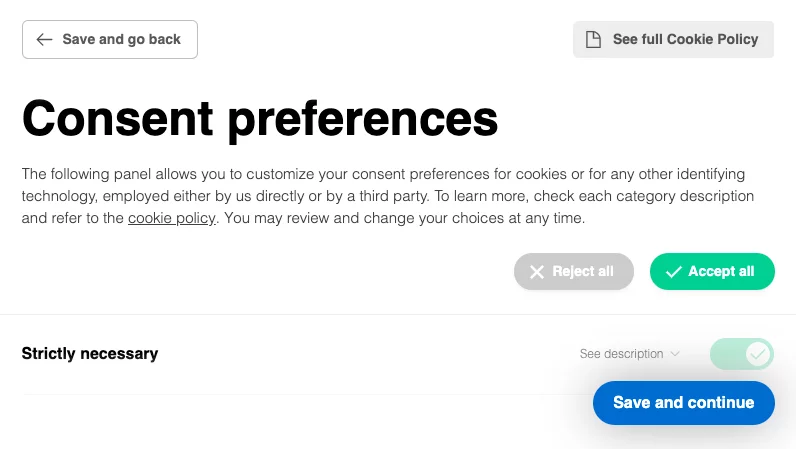
Websites must deploy easy and practical ways to withdraw opt-in for processing and storing personal data.
Ensuring compliance with GDPR law is essential as the average cost of non-compliance is $14.82 million, while the cost of compliance is $5.47 million.
Preference management is the process that empowers customers to choose how companies might communicate with them. This management keeps customers in control and determines the frequency of communication, which helps an organization remain compliant with rules and regulations.
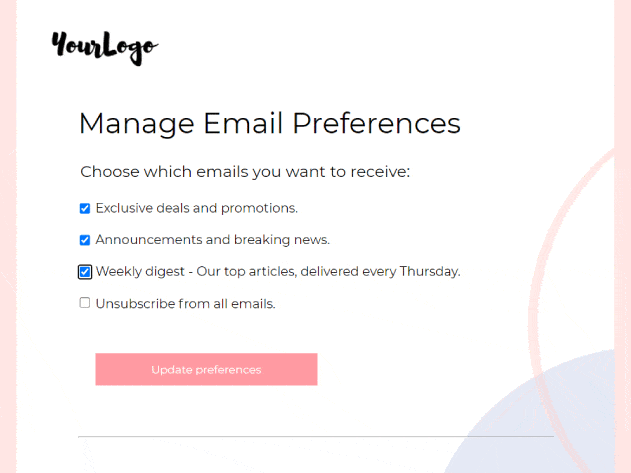
Often, consent management includes preferences about the type of content. Customers choose the content type and updates they want to receive about new products and services.
Preference management flips your brand’s communication and puts customers in control. Customers decide when and how an organization might send updates and not the other way around. Implementing a consulting management service can further streamline how businesses manage user preferences, ensuring that communications are not only compliant with data regulations but also precisely tailored to meet customer expectations.
With 77% of customers choosing, recommending, and paying more for a brand that provides personalized service or experience, preference management is the key to winning customers’ trust.
Here are a few differences between consent and preference management:
Initially, consent management might seem like a big hustle and increase additional work if the company ignores the consent management process. With GDPR fines skyrocketing in the previous years and companies like Facebook and Google being fined for non-compliance, consent management is essential to reduce the financial burden on companies.
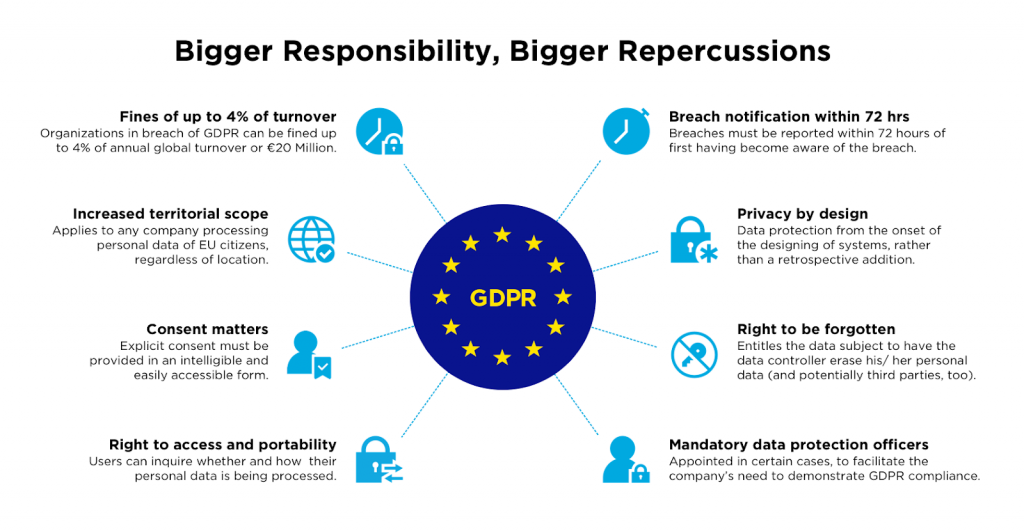
The primary purpose of ensuring opt-in is to reduce fines and increase customer loyalty.
Though companies might not feel the impact of these imposed fines, the cleanup process is likely to hurt organizations.
Apart from rectifying their mistake, an organization might find it challenging to earn back customers’ trust who see the brand in a negative light.
On the other hand, the primary purpose of preference management is to boost sales and increase customer trust. It’s a way organization manages and balances personalization and privacy and fosters communication between customers. With preference management, customers decide to receive communication in their preferred channel.
While consent and preference management keep companies compliant with data privacy laws and empower customers, they affect a business differently.
Consent management ensures the marketing team does not use unethical methods to collect and track the cookies of customers. This ensures that customers trust your organization with their data.
Often, the marketing team cannot leverage the preferences given by customers. Preference management provides the marketing team with an additional layer of data that helps uncover new market segments and increases an organization’s overall growth.
Preference management allows users to control their settings and enables businesses to track where and when they provide consent.
It ensures that the user is content with communication received, allows previous customers to unsubscribe from email, provides opt-in options, and creates a route to subscribe to newsletters.
This helps in creating transparency, which is an essential feature of a winning brand.
Giving customers the power to grant consent determines the trust a customer has in an organization. The higher the level of trust, the higher is the customer loyalty. This results in repeat business, which eventually increases growth.
Preference management empowers companies to send personalized messages and zeroes into what customers expect and want from a brand. When served with content that focuses on customers’ interests, it provides a more positive customer experience.
Typically, customers consider such organizations genuine and caring toward their needs and requirements.
When a brand respects consent and abides by customers’ preferences, it shows that organizations hear their voices. Personalization delivers a first-rate experience that builds connections between different brands and target audiences.
According to research, 44% of customers feel motivated to make repeat purchases when an organization offers personalized content.
The GDPR and California Consumer Privacy Act (CCPA) are the cornerstones of data privacy. Based on these two laws, companies denote and record where and when a customer gives consent.
It helps understand what type of content a company wishes to gain, identify who they are, and why they want that specific data.
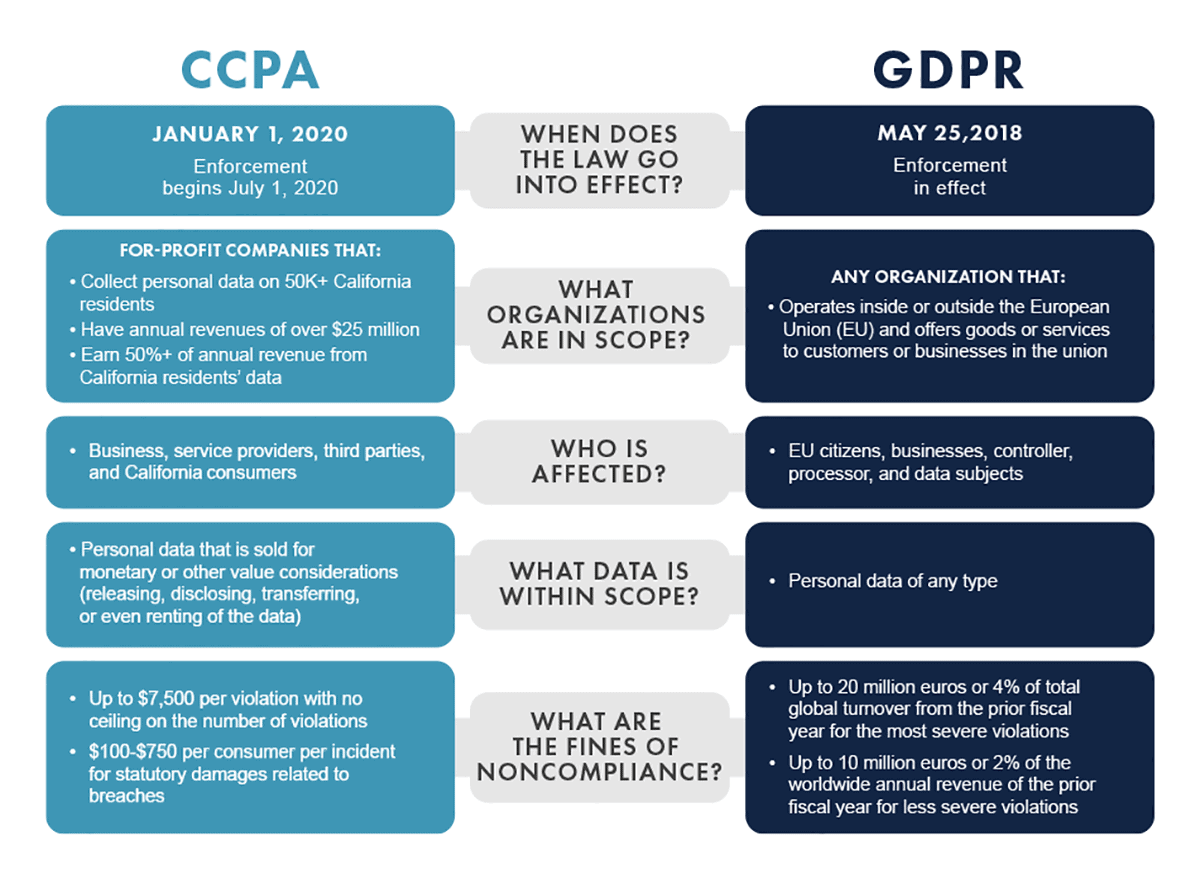
According to these laws, a company must grant withdrawal consent and provide various methods.
Apart from the principles set by GDPR, the CCPA law empowers a company to sell its data to a third-party vendor upon customer consent.
According to a survey, close to 71% of customers want to manage their data, and the same percentage of people share their information if they maintain control over their data usage and tracking.
Customers expect organizations to provide the right to delete and allow them to unsubscribe or change their consent whenever they want.
The trend shows customers want to control their data and see how companies use it to create personalized marketing campaigns.
Most customers think that it’s their data and they have every right to govern what happens to it.
That’s precisely where data privacy laws like GDPR and CCPA come into the picture.
Any industry or website that wants to collect customer data employs consent and preference management strategies.
For instance, retail businesses use consent and preference management to provide customers with product updates. After receiving consent and preference, companies collect search and purchase histories that customers might be reluctant to disclose to outsiders.
Another industry that widely uses consent and preference management is the SaaS industry, which discloses to customers how they plan to use their data while giving customers an option to opt in or opt-out.
With data privacy laws, consent management, and preference management, organizations might find themselves in deep waters trying to manage everything independently.
Complying with the data privacy of different countries while running a successful business can be challenging. That’s why organizations use consent management and preference management systems to get peace of mind.
Apart from ensuring compliance with GDPR and CCPA, these platforms ensure that vendors and third-party businesses do not put an organization at risk of non-compliance.
Tools like Osano provides a single source of truth for all consents and ensures an organization focuses on GDPR compliant consent management process.
The way organizations market to customers is changing rapidly. As new privacy laws get introduced every other month, organizations feel forced to work with customer consent and preference at the core of their strategies.
Today, consent and preference management are no longer optional strategies. It has become an integral aspect of marketing strategies.
Laws and regulations like CCPA and GDPR have made implementation mandatory, and more and more states and countries are implementing their privacy laws.
Six out of 14 most prominent GDPR fines issued between 2020 and 2021 were due to non-compliance with the consent management clause of GDPR.
Companies focusing on consent and preference management are better at showing customers that the company respects their data and information.
Related: read more about how Tamoco sources consented location data.
James is the head of marketing at Tamoco
City-level data privacy challenges are quite distinct from each location, including in their focus, due to the intricate interplay of dense populations, diverse policies, and overlapping jurisdictions.
Urban environments, especially those with their advanced digital infrastructures, may need more tailored approaches to the privacy and management of their data.
Urban Density Amplifies Privacy Risks
In many cities today, the ever-increasing number of individuals and digital devices also leads to an exponential increase in data generation, elevating and prompting the need for location-based data protection, which some local governments seem to be struggling with today.
While this increase in digitalization has become handy to easily facilitate the collection of detailed personal information, making re-identification of anonymized data more feasible, many are still quite apprehensive of its privacy risks.
These scenarios, however, have become quite useful. Some studies, for instance, have shown that combining basic demographic info can uniquely identify a significant people’s group in their datasets, reinforcing some relevant course of action, like efficient resource allocation.
Also, some urban areas now have technologies like AI-equipped garbage trucks to monitor people’s recycling habits, further helping localities in their eco-friendly drives.
However, these positive outcomes did not stop some individuals from raising legitimate concerns about surveillance (breach of privacy) and possible data misuse.
Navigating Complex Legal Landscapes
Cities like New York have a more complex structure that operates under a mosaic of local, state, and federal data privacy regulations and implementing rules. It’s a known complexity that needs the help of a specialized data privacy law firm, like Axiom Law, to help make sure compliance is to be had across its various locales.
Experts like them can help organizations like yours align with local and national edicts and, at the same time, provide guidance on data protection and management action plans.
These legal expertise and representation are quite crucial for businesses to be able to walk through a quite intricate regulatory environment and enable them to implement effective data privacy measures, either for existing compromises or future data breaches.
Cross-Jurisdictional Data Flows Pose Challenges
If you’re working with urban data – whether through smart city initiatives, public-private partnerships, or international platforms – you’re already in an increasingly complex territory. Unlike smaller or rural jurisdictions, cities don’t operate in neat little bubbles.
Your data isn’t just staying in one place. It’s crossing lines – city, state, federal, and sometimes international. So, how do you stay compliant when every boundary has different rules? Here’s what makes this such a minefield – and what you can do about it.
Multiple Gatekeepers, Conflicting Rules
When urban departments, private companies, and foreign vendors all touch the same data, you’re not just navigating policy – you’re juggling different interpretations of privacy itself. For example, New York City has its own tech and data standards layered on top of New York State laws, which are distinct from federal mandates like HIPAA or the FTC Act.
Smart City Tech Isn’t Always Smart About Jurisdictions
Location-based services, AI-powered traffic systems, or shared public Wi-Fi – these technologies generate massive volumes of location data. But they don’t stop at the border of one borough or even one country. If you’re collecting or transferring data across vendors or partners, your responsibilities don’t end when they begin.
International Entanglements
Partnering with global tech firms? Then you’re also on the hook for GDPR (Europe), PIPEDA (Canada), and other international regulations. They’re not easy to get by, however, because they often come with real fines and legal setbacks, apart from loads of extra paperwork.
Balancing Innovation with Privacy Concerns
Today’s integration of advanced technologies in urban settings, like facial recognition and predictive policing, may offer a number of benefits, but also raises a lot of issues about people’s privacy.
Just look at how Portland bans facial recognition technology; this expressly shows the world their concerns about surveillance and potential biases in data-driven systems and digital devices.
This is why cities like yours need to carefully evaluate the deployment of these high-end technologies, making sure that innovation does not come at the expense of individual privacy rights.
Enhancing Transparency and Public Trust
It’s not only a political bandwagon, but transparency is actually quite vital in building public trust in urban data initiatives, wherever you go. Efforts like Sidewalk Labs’ Digital Transparency in the Public Realm aim to inform residents about data collection practices through clear signage and accessible information.
When localities provide their residents with straightforward and competent explanations of how their data will be used and offer opt-in mechanisms, they can help build and create a sense of control and trust in all their projects.
Implementing Privacy-Preserving Technologies
Today, cities already have many alternatives and can adopt some innovations like differential privacy, which can allow for resident data analysis without exposing but safeguarding their individual identities.
Also, many techs like spatial cloaking techniques can obscure precise location data, reducing the risk of tracking and endangering individuals in densely populated jurisdictions.
These approaches and strategies can help urbanized cities to leverage data for planning and services while keeping the personal privacy of their people safely maintained.
In sum, urban centers and cities today are facing many unique data privacy challenges due to their complexity and scale. That’s why addressing these issues may need you to have a multifaceted approach that includes legal expertise, technological solutions, and a commitment to transparency.
When these cities take more steps to effectively and proactively manage data privacy, they can foster innovation while respecting and expressly valuing the rights of their constituents.
Related: read more about how Tamoco sources consented location data.
James is the head of marketing at Tamoco
Phone call recording provides essential benefits that help users maintain documentation of business conversations while keeping evidence safe. You need to address privacy issues before beginning any phone recording session. Improper phone call recording measures can reveal personal data violate privacy rights, and result in legal problems. Every situation demands you to defend your personal privacy rights as well as safeguard the privacy of other individuals.
Think of this situation since almost everyone opposes unauthorized recording of their spoken interactions. That’s why it’s crucial to understand how to record a phone call responsibly. Unethical recording practices result in severe legal complications which also trigger trust breakdowns caused by privacy breaches. The article contains complete instructions with security measures to properly record phone calls. The recording methods enable users to safeguard their privacy rights along with collecting important information.
Legal phone call recording starts by confirming whether the practice is permitted in your jurisdiction. The regulations regarding phone call recording differ between national and state authorities within the same nation. Under recording laws, you need to inform only one person about the recording process in certain areas (one-party consent), yet other zones demand notification from both participants (two-party consent).
According to U.S. federal law, you can record phone conversations if you participate in them since the one-party consent standard applies. Both parties participating in the conversation require knowledge about the recording in the state of California. The laws in the UK mandate consent between all parties involved, particularly if you plan to use recorded material for business needs. Understanding your local legal rules regarding recording phone conversations will help you stay away from legal problems.
The best practice to remain legally protected is to acquire permission from the other person before starting to record their communication. The recording of phone conversations requires two-party consent when you reside in a state that follows this requirement. Every recording can be authorized with a brief request for permission at the start of a conversation. Businesses should advise customers about call recording by incorporating notices in terms of service and initial call introductions.
You should seek consent even though your location allows one-party consent. Professionals working in most business environments must assume their phone conversations could get recorded for quality evaluation purposes. Your honesty regarding the recording creates trust with others along with preventing unexpected situations that create discomfort during interactions.
Secure phone call recording goes beyond legal requirements because it serves to safeguard sensitive information obtained through the recordings. Several essential steps exist to protect your recorded phone calls.
The storage process for recorded phone calls starts immediately after finishing the recording procedure. Unprotected audio files kept on mobile devices or personal computers create security risks that reveal private information. The most secure method of storage involves putting recordings in places that remain inaccessible to others, such as outdated laptops or unsecured cloud storage services. You should store data in encrypted locations between password-protected cloud services with end-to-end encryption capabilities or encrypted local hard drives. Storage solutions with access restrictions maintain the exclusive access of you and your trusted persons to the recordings.
Select cloud storage providers that demonstrate strong privacy protections along with encryption protocols for your data security. Check for security features that include two-factor authentication, which creates additional protection. The level of data protection depends on a cloud service’s compliance with privacy rules from your locatio,n which determines the actual security of your information.
Storing more information increases the potential for unauthorized persons to access it. You should regularly remove old and unnecessary recordings because it maintains vital data security. Leave unused recordings behind you since they no longer serve their purpose. The process of reviewing and deleting files must include scheduled periods for removal based on the recording’s objectives. Your data security improves when you remove unnecessary files since this action minimizes potential breaches.
Automatic deletion of older recordings should be enabled through the features provided by your app or platform. Automated file deletion ensures you avoid manual work and keeps sensitive data from storing longer than required. Your file deletion process should include complete permanent removal of files rather than their placement in the trash folder.
Securing the sharing process of recorded calls represents an essential requirement for any organization. You must never distribute sensitive recordings through either standard email or public file-sharing networks because they lack the necessary security. Unsecured sharing methods create risks for data breaches. Select encrypted file-sharing services as they enable you to protect your recordings through secure sharing links. Dropbox and Google Drive serve as examples of secure file-sharing services, although users must activate both link password protection and expiration timers. The security features enable users to limit access duration as well as set authorization parameters for their recordings.
The secure sharing of recordings is possible through Signal or WhatsApp messaging platforms because they offer end-to-end encryption. The encryption system in these apps protects all messages exchanged between users because it extends across the entire chat environment.
Your recorded calls need to be accessible by only the people who strictly require them. When fewer people are involved in a security system the likelihood of experiencing a breach decreases. Evaluate the need to share a recorded file with each individual before making the sharing decision. Share the file only when necessary and instruct recipients to handle it with proper security measures. Verify that the receiver handles files through an encrypted system before transferring any recorded communication.
The method you choose to share recordings determines the protection of your privacy together with the privacy of everyone who participated in the call. Secure sharing practices combined with restricted access authorization minimize both intentional and unintentional release of confidential information.
The use of voice recognition technology requires your attention when you record phone conversations. Authentication technology runs in numerous call recording applications and services to handle both transcription and conversation analysis tasks. The implementation of this technology proves useful but creates further privacy risks when deployed. These technological systems have the capability to record and store confidential material that may end up in unexpected locations.
Reading the privacy policies of applications and services before use helps you identify and prevent possible risks. Read the terms on how your data gets processed and by what entities will access and store your information. You should choose data-handling services that either do not activate voice recognition features or explain their data processing methods more clearly.
Related: read more about how Tamoco sources consented location data.
James is the head of marketing at Tamoco
The smart home era is here. From thermostats that adjust to your ideal temperature, to security cameras that show you who’s at your door, these connected devices bring convenience and automation into your daily life.
But as homes get smarter, so do the risks. You’ve likely heard horror stories about hacked cameras or stolen personal information. At the heart of this conversation is one crucial topic – data privacy.
If you’re building a connected home or already have one, you’ve got good reason to care about how your data is being handled. We’ll break down how enhanced privacy protections are reshaping smart home security, and why it’s essential for you to take privacy seriously.
The Current State of Smart Home Security
Before you start going all crazy over smart home tech and reading reviews on advanced burglar alarm installation services, you need to know where things stand. Smart home technology generally comes with basic security measures like password protection and encrypted communications. For those interested in understanding more about security solutions, Mammoth Security offers insightful information on protecting connected devices.
These measures are a good start – they shield your network and devices from more obvious threats. But they aren’t bulletproof.
Most smart home ecosystems rest on vast networks where devices from different manufacturers all need to sync up. It only takes one weak link – a poorly secured smart plug, for example – for hackers to access your entire home network.
And then there’s the challenge of practices like reusing passwords across multiple devices, or skipping updates that patch vulnerabilities. The result? Even robust systems are rendered vulnerable.
You’re essentially putting the locks on your doors but leaving a back window wide open. Not the ideal for modern data security, is it?
Data Privacy in Smart Home Technology
Here’s something worth thinking about. Every smart device in your home collects data – whether it’s tracking your energy usage, recording voice commands, or storing your security footage in the cloud. That data has to be stored somewhere, and it’s often in the hands of device manufacturers, third-party apps, or cloud service providers.
Now, ask yourself this – who controls that data? How is it being used?
This is the crux of the privacy issue in smart homes. Without clear guidelines on how your data is stored or shared, sensitive information could be sold to advertisers or worse, fall into the wrong hands. You’ve likely consented to this in user agreements you barely skimmed.
Understanding data privacy means knowing how to control what data is collected and ensuring it’s used ethically. For smart home owners, tackling this issue could mean the difference between enjoying the perks of a connected household and dealing with invasive breaches.
Enhanced Data Privacy Protections
The need for stronger privacy protections hasn’t gone unnoticed. Over the past few years, advancements in privacy practices and new regulations have started shifting the landscape. And you’re benefiting from it.
Here’s what’s happening:
The Benefits of Enhanced Data Privacy Protections
Improved privacy doesn’t just mean checking off compliance boxes – it directly impacts the safety of your smart home. Here’s how these protections benefit you:
Prioritize Your Privacy and Security
Your smart home should empower you, not expose you. Prioritizing privacy and security lets you take control of your digital and physical safety. The advancements in data privacy protections are a step in the right direction, but true security starts with being informed and proactive.
Take the time to understand how your devices operate, read those privacy policies, and adjust settings to suit your comfort level. With stronger privacy measures in place and a commitment to staying vigilant, you can enjoy the full benefits of smart home technology without compromising your peace of mind. A connected home should work for you – not against you.
Related: read more about how Tamoco sources consented location data.
James is the head of marketing at Tamoco
The General Data Protection Regulation (GDPR) is a European data privacy regulation that imposes strict requirements on companies that collect or process personal data of EU residents. While achieving full GDPR compliance can be a complex process for many companies, mobile app developers can take some simple steps to get their apps GDPR-ready quickly and easily.
Conduct a Data Audit
The first step to GDPR compliance is to conduct a thorough audit of all personal data collected, processed or stored by your app. Document what data you collect, where it’s stored, how it’s used, who has access, and for how long you retain it. This allows you to understand your data flows and pinpoint any GDPR compliance gaps.
Minimize Data Collection
GDPR requires data minimization – collecting only what’s necessary for specific purposes. Audit your app to strip out any unnecessary data collection. Remove fields that gather excessive user info, disable tracking pixels by default, and anonymize data where possible. Only collect and retain the minimum needed.
Update Privacy Policies
Apps must provide clear and transparent privacy policies explaining what data is collected and how it’s used. Ensure your policies are updated to accurately reflect your data practices and user rights under GDPR, such as data access, rectification and deletion. Consent mechanisms should also be incorporated where applicable.
Facilitate User Rights
Under GDPR, users have the right to access, correct, delete or download their personal data upon request. Build mechanisms into your app to easily retrieve and export user data. Allow users to edit or delete data. Honoring these requests quickly and efficiently is key for compliance.
Review Consents
Apps need explicit, freely given consent to process sensitive data. Review existing opt-in consent flows to ensure they meet GDPR standards – clear, plain language explanations of processing activities with simple affirmative actions (no pre-ticked boxes). For children, parental consent is required. Make sure consents are verifiable and easy to withdraw.
Secure Data
GDPR requires processors to implement appropriate technical and organizational measures to protect data. Use encryption, anonymization and pseudonymization where possible. Only collect necessary data and securely delete it when no longer needed per retention schedules. Restrict internal access to data and train staff on security protocols.
Document Compliance
Maintain detailed records demonstrating your GDPR compliance activities – data audits, privacy policy updates, consent flows, data inventories, breach response plans, etc. This documentation helps verify that processes are compliant and can simplify demonstrating compliance to regulators.
Stay Current
GDPR compliance is an ongoing process. Monitor legal and regulatory updates to ensure your app evolves as guidance changes. Review policies and processes regularly. Implement data protection by design for new development – ensure compliance is built into apps from the start.
Leverage Expert Help
Given GDPR’s complexity, specialized legal guidance can help identify and resolve compliance gaps efficiently. Work with knowledgeable privacy attorneys and consultants to audit data practices, develop compliant consent flows, create data inventories and implement accountable data governance models tailored to your app environment.
By taking focused steps to minimize data collection, honor user rights, ensure security and document efforts, app companies can achieve GDPR readiness quickly without major disruptions. Layering expert guidance into the process further simplifies and speeds compliance. With the right approach, mobile apps can prepare for GDPR efficiently.
Related: read more about how Tamoco sources consented location data.
James is the head of marketing at Tamoco


