
Categories
Advertising & Marketing Business Data

Why Using A Customer Data Platform Will Take Your Customer Experience to the Next Level

Why Using A Customer Data Platform Will Take Your Customer Experience to the Next Level

There’s no shortage of marketing tools that capture and analyze customer data. The problem? When businesses analyze customer data, each data set is usually treated as a standalone. But siphoning through data set after data set can be costly and inefficient. 

So, how do marketers combine different data sets into a single customer view? 

They use customer data platforms (CDPs). 

What are CDPs?

CDPs are data platforms that capture data from various sources and display it in a single unified customer database. In other words, they consolidate and integrate customer data into one central platform. This way, businesses can pull insights on a specific customer or prospect during various points of the customer journey. 
(Image Source)

Like all marketing tools, businesses use CDPs to understand their customers’ unique preferences and behaviors. 

But what sets CDPs apart from other tools is their ability to help businesses create customer-centric experiences.

CDPs give businesses the data they need to create relevant messaging — all in one place, in real-time. This helps them create messages that are custom-tailored to their customers’ preferences. When customers feel like a company knows them, they’re more likely to stick around. 

Let’s take a closer look at how you can use CDPs to take your customer experience to the next level.

Building a sales process 

Using a customer data platform can be invaluable to building a sales process that entices your customers to say “yes” without resorting to slimy tactics. 

Below, we’ve listed a number of ways businesses can use CDPs. 

1. Map out the buyer’s journey

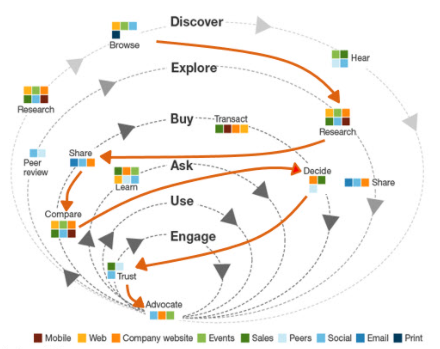
Buyer journeys aren’t simple straight lines that lead to a sale. They zig, zag, turnaround, and zig again. 

Today, a buyer’s journey could start on one channel and toggle between several steps. Knowing how that journey ebbs and flows gives your organization a chance to ensure no customer slips through the cracks.
(Image Source)

That’s why it’s essential to map out your company’s buyer’s journey. 

Every step and interaction a customer goes through during the buyer’s journey produces customer data. 

Businesses that study these interactions and look for patterns can predict future buying habits. Understanding this behavior shows you what customers align with and what turns them away. 

To sum up: Understanding what actions customers complete before or after purchasing helps you nurture leads and create more enjoyable customer experiences.

2. Craft customer-centric sales funnels

Mapping out the buyer’s journey and analyzing customer behavior gives you a competitive advantage. 

When you can predict customer behavior, you’ll be able to:

  • Understand buying habits
  • Share relevant offers
  • Personalize content 
  • Build long-term customer relationships 
  • Speak to customers in their preferred communication style 

You’ll also be able to craft customer-centric funnels. 

Customer-centric funnels use the data you mapped in your buyer’s journey to take customers through a personalized sales experience. 

Each stage of the funnel is personalized for your customers. Some people will need more nurturing before making a purchase, while others won’t need much coaxing at all.

For instance, some customers will need a whole series of offers while others will buy after just two. 

Funnels also take some of the pressure off your sales team and create passive business revenue. 

If done well, they also help you build long-term customer relationships and repeat sales. 

3. Analyze detailed customer profiles

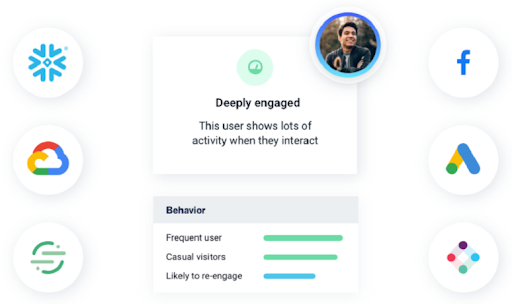
The most valuable part of a CDP is the personalized customer profiles. These in-depth, single customer view profiles are what set CDPs apart from other systems. 

Profiles detail each person based on data pulled from an array of channels. This means wherever your customer is — you are. Whether they’re in person or online, you have a compilation of their behaviors and preferences. 

This helps you craft unique experiences you know a customer will love. 

In the end, customers want to be seen as individuals, not as lead prospects. It can get cloudy when you’re analyzing data. Sooner or later, prospects look like sales targets on a spreadsheet. But CDPs have the distinct ability to create comprehensive profiles that feel human.

Every data point serves a purpose, is cleaned, and deduplicated. Next, the datasets are grouped together by theme. Finally, the data generates a unified customer profile. 

In a CDP customer profile, you’ll see details such as:

  • Their behavior 
  • Their engagement 
  • How they feel about your business
  • If they’re a frequent user
  • If they’re likely to re-engage 
  • Their likes and dislikes

(Image Source)

Personalizing marketing content and promotions 

Understanding customer behavior and preferences is essential to personalizing the content that enhances the customer experience. 

CDPs help businesses such as SaaS content marketing agencies personalize content and marketing promotions in a number of ways. 

1. Relevant messaging 

Customers don’t engage with campaigns that aren’t personally relevant. The data you collect from a CDP helps create relevant messaging your customers will connect with. Relevant messaging through target campaigns increases customer experience and loyalty.

For instance, Millennials prefer different messaging than Baby Boomers. Baby Boomers prefer different messaging than Gen Zers.

2. Content optimization

Understanding your customers also helps you optimize content to match a customer’s search intent. This helps you produce the right content at the right time.

Picture this:

You own a simple skincare brand, and you’re looking to increase your product base. Before you start getting creative in a lab, you analyze customer data in your CDP.

After noticing a series of patterns, you realize that your customers are searching for:

  • Sun protection sets
  • Bath bombs
  • Jade rollers
  • Beard oil

Not only does this show you what products to create, but it also shows you which target phrases to optimize your content around.  

You use those target phrases to plan out content briefs, research secondary keywords, and prepare SEO plans. 

By the end of your preparation, you’ve planned out three months worth of:

  • Topics to target
  • Secondary keywords
  • Frequently asked questions to answer
  • Content scores to target
  • Sales copy
  • Blog article outlines
  • Social media content 

(Image Source)

Along the way, you continue to keep an eye on your customer data. If you see a change in pattern, simply adjust your content as needed. 

This commitment to custom tailoring content to customers’ preferences enhances their experience with your company.

Segmenting customers 

While every customer has their own preferences and behaviors, it’s common for many to exhibit common patterns. 

CDPs give you tools to define your audience by segments based on these shared attributes and behaviors. Segments are based on rules, or they’re built using machine learning and AI. With these tools, you can enrich customer profiles with data you wouldn’t be able to gather on your own.

With the segmenting features, you can:

  • Predict customer churn 
  • Deliver relevant recommendations based on buying history
  • Identify customer advocates and frequent buyers
  • Identify similar patterns
  • Identify upsell and cross-sell opportunities 
  • Segment your customers using common attributes 
  • Tailor messages to those segments

Businesses can use CDP segmentation tools to optimize the entire customer journey from discovery to advocacy. 

To analyze and segment profile data, look for a CDP that has:

  • Prebuilt code
  • Visualizations that feel intuitive 
  • Out of the box features
  • 24/7 customer support 

An example of audience segmentation 

Let’s imagine that your business sells digital courses on personal and career development. You just set up a CDP, and you’re looking forward to trying the audience segmentation features. 

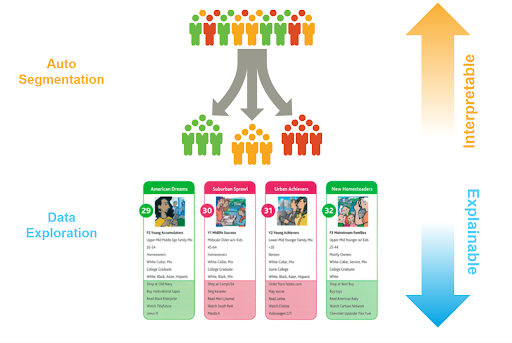
After identifying customer patterns and behaviors, you notice you have three main types of customer patterns:

  1. Frequent buyers that mainly buy career development courses
  2. Infrequent buyers that mainly buy personal development courses 
  3. Moderate buyers that buy a mix of both
 

(Image Source)

This insight helps you segment your customers into the following customer avatars:

  1. Career development customers 
  2. Personal development customers
  3. Career and personal development customers 

Later, you improve your marketing strategy to cater to these three customer avatars. You have three different kinds of social media campaigns, email newsletters, landing pages, websites, and paid ads. 

You can also repurpose content over time by launching a podcast or producing videos, for example. After this: This helps you produce the right content at the right time.

For your career development customers, you:

Focus your content on career advancement, job skills, and networking tips.

For your personal development customers, you:

Focus your content on personal growth, coping skills, and building self-confidence.

For your career and personal development customers, you:

Focus your content on how personal growth contributes to career growth.  

At this point, your planned content strategy is laser-focused and serves your three most common types of customers. 

Over time you keep an eye on behaviors and make adjustments when needed. You also keep an eye out for new customer avatars and buying habits.

Isn’t a CDP just a CRM?

CDPs and CRMs both work with customer data, but the two are pretty different. 

You may have wondered, “Why do I need a CDP? Isn’t a customer relationship management tool (CRM) the same thing?”

It’s actually not. 

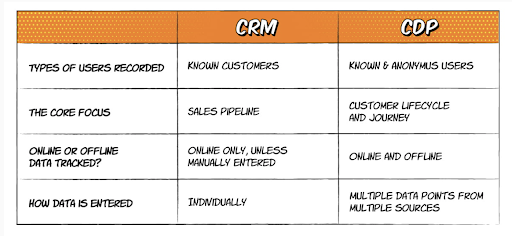
While CRMs contain data you already know (i.e., name, email, and zip code), CDPs collect data you wouldn’t know over a specific time. 

But there are more differences between the two tools. 

Here are some major differences between a CDP and a CRM.

1. Data capacity 

CRMs were intended to keep track of customer and prospect interactions to automate the process for sales teams. They’re great for sales and marketing teams that need to pull customer information quickly. 

CDPs are great at handling large amounts of data from various channels. 

2. Known data 

CRMs only contain known data — they won’t be able to pull anything on potential customers you’ve never met before. 

CDPs work with both known and unknown data making them more valuable than most martech tools. 

3. Storage information 

CRM data stores simple information into a few fields — almost like a flashcard. It includes basic customer information such as name and contact information. 

CDPs have detailed information about a customer’s buying patterns, online and offline activity, and behaviors.

4. Data format

CRMs can’t handle data in a free-flowing manner. The system can only recognize data if it’s formatted in a specific way (i.e., a CSV file). 

CDPs take information from several sources and act as a central hub for customer data. They can handle both simple and robust information while also making sense of complex data. This includes online and offline data and behaviors. 

5. Monitoring and engaging 

CRMs are helpful for monitoring and engaging with customers and prospects throughout all phases of the buyer’s journey. They work well at managing contact information and also have automated workflows and reports. Solopreneurs and small teams often use CRMs. 

CDPs are helpful for tracking all aspects of customer behavior on and offline. They pull information from various sources for customers you know and don’t know alike. They help you segment audiences and refine your messaging. Startups, mid-size, and large companies use CDPs.  
(Image source)

Which tool is better for customer experience — a CRM or a CDP?

While CRMs are helpful for engaging with customers at various parts of the customer journey, they’re still limited on information. 

The more detailed information a company has about their customers, the more insight they have as to what those customers crave.

First, you have to know what their pain points are. Then, you have to craft messages that align with customer needs. But a CRM can’t help you with that. It can help you manually look up customers and engage with them directly, but it doesn’t use machine learning or artificial intelligence to scour customer behaviors.  

That’s why, in the end, CDPs are better tools for enhancing the customer experience. 

Ready to transform your customer experience to the next level? 

Customer experience affects every aspect of success, making CDPs invaluable to a business. 

With a CDP, you’ll understand how your customer thinks, what they’re looking for, and what they like. You won’t need three tools, and multiple data set extraction tools. Instead, your CDP will pull information from various channels for you. 

Not only does this save you time, but it also helps you understand how to reach your customers in a profound way.

From knowing how to craft messages to building long-term relationships, a CDP is every business’s trusted tool for up-leveling the customer experience. 


Related: read more about location data for advertising and marketing.

Categories
Business

How to Optimize Productivity in the Workplace

Keeping employees engaged takes reflection on the strategies used to run your business. Business management is connected to workplace culture. Unfortunately, these close ties mean that if one area is lacking, the other will follow. To prevent slips in productivity, here are some ways to ensure that your employees remain satisfied and on-task at work. 


Improve Workplace Culture

People are creatures of habit. When we repeat an action, a thought, or a combination of the two, our minds begin to associate with these things to the extent that they become second nature. At work, we showcase our habitual natures by repeating a task or thinking the same things about the workplace. While these habits help produce outcomes, they can be destructive. If one’s thoughts are negative, the actions they take towards work will also be negative, albeit unintentionally. If employees regularly feel that they are not being acknowledged for their efforts at work, soon enough, their work ethic will suffer, and so will the company. Understanding that this is the effect of negative thinking and poor workplace culture, we can piece together ways to improve productivity. Employees are more likely to be motivated and increase their productivity if the workplace culture is improved upon. Consider presenting the culture and the value of your organization during the onboarding of the employees. It is worth showing your employees that you value them; this will increase their motivation and enthusiasm.


Set Goals Effectively

Depending on your business’s size and scope, the way you go about goals will vary. For larger organizations, integrating strategy developments such as objectives and key results (OKRS) can be an effective way to engage the company. For smaller businesses, relying on SMART goals is often a more practical approach to achieving business aims. Consider the specifics of your organization and adopt strategies that emulate your setup and dynamic the best. Don’t forget to take the feedback of customers that you collect using online surveys or tools such as Get Weave Communications into consideration – this way you’ll be able to tailor your services to meet the clients’ expectations. Look into HCM management as another way to harness business success for your company, especially with the rise in remote work culture. 


Integrate Employee Rewards 

The millennial workforce is exceptionally responsive to task-reward strategies for workplace productivity. With the help of performance management software such as factoHR, managers can now easily create objectives for employees and evaluate their performance. A job well done can be acknowledged in many ways. Business leaders might consider gift cards, employee of the month posts, acknowledgment during a meeting, or paid time off as a few ideas for work rewards or employee rewards. At the very least, incorporating consistent positive feedback will motivate employees to continue producing the ideal results needed. Without considering your employees regularly, they will start to feel like machines, and their work ethic will dwindle. Remember to see the person behind the employee and make efforts to engage positively for increased productivity. To boost productivity, you can consider implementing a time reporting system, so your company will have more organized and well-prepared reporting mechanisms.

Use Team Management Software

If you’re noticing signs that your business needs digital tools to enhance productivity, invest in business management software. Several businesses worldwide are relying on Mobile Device Management (MDM) solutions to improve their productivity and streamline their remote management. Stay on track of goals using team software that allows everyone in the office to connect at all times. You can check off assignments and tasks using these systems, and everyone can see what is happening that day on the dashboard. Using online software to store data and communicate will also subsequently boost business security. Communicating through instant messaging is a common feature found on these software programs and makes work productivity flow faster and more efficiently. We like Asana for the business management of smaller teams—and don’t worry about learning a new system, you can get Asana consulting to help you adjust quickly. Larger companies may need to use regular video chatting to optimize productivity. Designate a specific amount of time each week where business meetings can take place online. Deliberately mapping out this time will allow employees to plan and get more work done in time for the chats later that week. Even better, you can use time management software to keep things organized.

Organized workflows with responsible behavior towards deadlines help complete tasks prior to the deadlines and keep a stress-free work environment. Organized tasks and team meetings let remote employees adjust their schedule accordingly to set off enough time for their personal care and quality sleep.

Improving workplace productivity requires that business leaders take a look at how well they are treating their employees. Efforts to improve workplace culture and instill a positive attitude in the company will be most effective at increasing the work productivity taking place as a whole.  

Categories
Business

How to Keep Track of All Your Business Expenses

When you run a business, whether large or small, one of the most important aspects of your success is the way you handle your finances. As a business, you’ll have expenses—there’s simply no way around it. However, the way that you manage them can have an impact on your profit. 

From paying your taxes to managing your payroll and keeping track of your travel expenses, there are a number of reasons why expense administration is paramount to the smooth running of your company.

Stay organized

While your individual home expenses may consist of tracking expenses through keeping all of your receipts, this won’t fly when it comes to your business expenses. Not only is it terribly hard to keep track of numerous receipts, but it can also be a nightmare to go through all of them when it’s time for tax season or staying aware of how much your business is spending. This is why automating how you track your expenses and using an online bill pay service is a game-changer. 

Use apps for tracking expenses

Along the same lines as the above-mentioned tip, using a receipt scanner and software helps you have all your business expenses in one place. Platforms like Spendesk even offer virtual employee debit cards to help keep track of your teams’ business expenses.  You can easily keep track of your money and where it’s going, which can go far in how you run your company and save for emergencies. From categorizing expenses to keeping track of the little things, being organized with your finances is key to the success of your business. Apps are a great way to achieve this. Learn more about your business’s debits and credits here.

Consider hiring a professional

If you simply don’t have time to take care of your business finances because you’re busy managing teams and networking with clients, hiring a professional can go far in helping you control business expenses. While it does mean making an investment, the benefits found in hiring someone to handle your finances can make a world of difference for you. Through their expertise, they can make sure the company is saving, only spending what’s necessary, and profiting as you should be. Hiring a professional accountant or best accounting firms investing in cloud-based bookkeeping software will provide you with an in-depth analysis of your expenses.

Have a business credit card

Most large businesses that have been around for a while already have a dedicated account for their expenses. If you’re a small business just starting out, chances are you’re still using your personal credit card. Maybe it’s been easier that way. However, this can become confusing and even detrimental to the success of your company as it grows because you’ll have all of your money and expenses lumped in one place. There are apps and websites that not only make it easy to open a business account, but to manage it all from one place. This way, keeping track of your business expenses is streamlined and you’ll know where your company money is and what you’re spending it on. 

Review expenses and accounting every so often

Whatever option you choose, it’s a good idea to go back to it and reevaluate how things are going. In some instances, what works for one company may not be the best for yours due to different kinds of products or services and ways of operating. With your financial health being one of the most important aspects of your business, it’s important to get it right. Even if you have hired a professional, it’s still a good idea to check in and make sure they’re helping you get your money’s worth.Learn more about efficient project accounting tactics and how it impacts your business.

The Bottom Line

Your financial health as a small business is important. Haphazardly keeping track of your expenses simply won’t cut it in this day and age. Fortunately, with the help of today’s technology and financial professionals in your area, you can easily track your expenses and make sure your small business is making a profit. 

How to Keep Track of All Your Business Expenses

Categories
Business

3 Tips to Finding the Best Candidates When Hiring

A chain is only as strong as its weakest link and, when it comes to growing a successful business, you can’t afford to have a link that’s anything less than strong. The first step to building an unstoppable team for your company is to hire the right candidates from the get-go.  That’s why you need a Core HR solution.

With these three tips, you’ll be well on your way to a chain that’s truly unbreakable. 

#1 Get Creative with Recruiting

Don’t let your recruiting efforts fizzle on your website. While a posting on your careers page is a must, make sure you’re also expanding your recruitment horizons by placing job listings on online platforms like:

  • LinkedIn – LinkedIn connects millions of enthusiastic professionals, industry veterans, and recent grads in an easy-to-search digital networking space. Take advantage of its premium features and messaging capabilities to reach out directly to the professionals that catch your eye (like in dating, sometimes you have to make the first move) you can use a LinkedIn scraper to obtain their email addresses. 
  • Social media – Platforms like YouTube, Twitter, Instagram, TikTok, and more are practically overflowing with young professionals showing off their talents, skills, and passions. For candidates that break the mold, reach out to smaller influencers, and see who bites. And who knows? They might be a great catch.  

#2 Cast a Wide Net

A person is far more than their college GPA and branded resume. Sometimes, a piece of paper doesn’t do a candidate justice. While straight-arrow, by-the-book candidates are highly valuable, try to diversify your team by sprinkling in some creative thinkers with unorthodox backgrounds. Hiring is a two-way street. If you want the best, you must be the best. Stay patient, leverage tools like Core HR solutions, and don’t hesitate to partner with a staffing agency to refine your strategy.

Consider out-of-the-box candidates like:

  • Older professionals with deep-rooted IT skills in another field—their years of experience in collaboration and unique know-how can do wonders for your team.  
  • People with non-traditional educational paths. Maybe they went to trade school and are brilliant welders with a penchant for writing. Perhaps they’re high school grads who taught themselves how to code. Whatever it may be, a lack of a standard college education doesn’t have to be a flaw—it can be what sets them apart. Here is an article by Lensa which talks about high paying jobs that do not necessarily need a qualification or a college degree. 

However, make sure you’re supplementing your interviews and resume checks with some good ol’ vetting. No matter how shiny your new hire’s CV or how strapping their suit, you can never go wrong with a background check and a quick look at their tradeline. Or take some inspiration and use pre-employment assessments during the hiring process.

 s

#3 Know How to Sell Yourself

If you want to hire the best talent in your industry, or you are looking at hiring inside sales representation you’ll need to foster a company culture that shines brighter than the rest, especially if you’re a smaller business. If you don’t have the capital to offer the pay and benefits that larger companies can, you must know how to sell yourself to highly coveted candidates, just like you would to potential investors. It’s also a great idea to have an employee onboarding process and employee onboarding software to start off as you mean to go on.

While some professionals may turn away from a growing company, you just need to focus on the ones that are attracted to your immense potential. To make them see the light, you must offer:

Don’t Settle for Anything Less Than Excellent

Hiring talent is a two-way street. If you want to hire impressive candidates, you’ll need to impress them too. No matter what, building your A-Team takes time. Be patient, don’t settle, and you’ll get there eventually. Happy hiring. 

Categories
Business

Tactics to winning at online roulette

Intro

Roulette is one of the most famous and accessible games that is popular among players all over the world. Despite its random nature, there are many strategies that can help increase the probability of success. These methods do not guarantee a win, but they do allow you to be more aware of the game and reduce the risks. With the right approach, the game becomes not only interesting, but also more controllable.


For those who want to try their hand at roulette, there are several proven tactics to help you make more informed decisions when choosing your bets. One such place to play is Casino Intense, which provides a wide range of gaming options and a thoughtful player experience. In this article, let’s look at the most effective methods for those who want to increase their chances of success and understand popular roulette strategies.

Basic principles of the game

Roulette is a game based on chance, where the results depend on the spinning wheel and the number that falls out. The most common version of the game is European roulette, where there are 37 numbers, including zeroes, which gives an advantage of 2.7% in favor of the platform. The American version has an additional double zero (00), increasing the casino’s advantage to 5.26%. It is important to realize that despite the simplicity of the rules, each spin is independent and the results cannot be predicted.


To play effectively, you need to understand the main types of bets that can be placed on roulette. There are two main types of bets: outside bets (e.g. red/black, even/odd) and inside bets (bets on specific numbers). Outside bets have a higher probability of success but lower payouts, while inside bets (on numbers or groups of numbers) offer higher payouts but a higher risk of losing. The choice of strategy should be based on the balance between risk and potential profit, as well as the player’s comfort level with different types of bets.

Popular strategies

There are many strategies in the game of roulette that help minimize the risks and make the game more controllable. Each one has its own characteristics and is suitable for different styles of play.


Here are a few popular strategies that can be useful:

  1. Martingale system: With this strategy, you double your bet after every loss, which allows you to recoup all losses after a win. It is suitable for equal opportunity bets such as red or black.
  2. Fibonacci System: This is based on the Fibonacci sequence of numbers. After a loss the bet is increased according to this sequence, and after a win the bet is rolled back two steps. This system is less aggressive than Martingale, but still has risks.
  3. D’Alembert System: In this strategy, the bet increases by one unit after a loss and decreases by one unit after a win. It is a more stable approach, but also does not exclude the possibility of losses.
  4. Reverse Martingale (Password system): Unlike traditional Martingale, here the bet is doubled after each win, not after each loss. This allows you to increase your profit in case of a successful series, but requires care when playing on long series.
  5. James Bond Strategy: This system involves fixed bets on several segments of the table: a large bet on numbers 19-36, a medium bet on 13-18, and a minimum bet on zeroes. This covers a significant portion of the table, increasing the probability of winning, but requires a high initial investment.
  6. Betting on orphan numbers: These numbers are those that are on separate areas of the table that are not combined with others. Betting on orphan numbers can be risky, but with luck, they yield large payouts.


Each of these strategies has its pros and cons, and it is important to choose the one that is right for you.

Additional tips for winning

To increase the probability of success, it is important not only to follow the strategy, but also to consider a few additional aspects of the game. One of them is choosing the right version of roulette. For example, European roulette has a lower platform advantage than American roulette due to the lack of a second zero. It is better to avoid games with double zeros if the goal is to reduce your opponent’s mathematical advantage. Using such a strategy allows you to control your funds more effectively and reduce long-term losses.


Bankroll management is no less important. Determine in advance the amount you are ready to spend and stick to it. This will help you avoid impulsive decisions and prevent significant financial losses. Dividing your bankroll into several parts for different game sessions or for different stakes helps you to keep your balance and not to risk everything at once. It is also a good idea to start with free versions of the game to familiarize yourself with the rules and practice your chosen strategy without real losses.

Risks and limitations of strategies

Roulette strategies cannot guarantee a win as the game remains random. Methods such as Martingale or Fibonacci can lead to significant losses with long series of failures. For example, Martingale faces the problem of reaching betting limits on the table, which removes the ability to keep doubling down and limits its effectiveness in the long run.


In addition, the mathematical advantage of the platform makes winning difficult in a long-term game. Despite the illusion of control, strategies do not change the underlying probabilities. Progressive systems, despite their popularity, can result in significant losses when there are no wins for long periods of time, increasing financial risks.

Conclusion

Roulette stands out for its simplicity and the possibility of applying different strategies that can help increase the probability of winning. However, none of the tactics can completely eliminate the randomness that determines the outcome of the game. Strategies such as Martingale or Fibonacci can be useful, but they do not guarantee a win and involve risks, especially with long term failures. It is important to be able to control your bets and manage your bankroll wisely to reduce potential losses.


Understanding the risks of each strategy helps to avoid large financial losses. Luck will always play its part, so it is important to approach the game with the right attitude, enjoying the process and not just aiming to win.

Categories
Business

Gratowin Casino gaming providers

Introduction

The variety of modern gaming services allows users to find entertainment that suits their preferences. GratoWin com stands out with a wide range of categories, each of which is designed for comfort and convenience. This approach makes access to your favorite entertainment fast, which is important for those who value their time. Regardless of preferences, everyone will find something suitable among the available offers.

Each category is filled with quality content that meets high standards. Games are focused on different levels of difficulty to suit both beginners and those with considerable experience. Developers are constantly working on improving features and adding new formats. This creates favorable conditions for comfortable leisure and choice according to personal interests.

Main categories of games

GratoWin Casino includes many categories, each of which is designed for different preferences. Classic and modern formats allow you to choose what is closest in style and theme. Each of the games is designed to suit a variety of tastes, so that users can get maximum enjoyment. Let’s take a closer look at the main types of entertainment available on the platform.

Slots

Slots are one of the most popular categories due to their simplicity and variety. Among them you can find classic models with minimalistic design and modern machines with bright graphics and original functions. Bonus rounds and freespins add dynamics to the process, making it more interesting. Such games are suitable for both beginners and those who prefer more complex mechanics.

Table Entertainment

This category includes familiar variants such as roulette, blackjack, poker and baccarat. Each format offers different rules and approaches, making them versatile. They will suit both those looking for simple options and those who like more complex strategies. The virtual format allows you to choose between automated processes and real-time games.

Live dealer section

Games with live dealers create an atmosphere close to traditional gaming clubs. Interacting with dealers and other participants adds to the interactivity. The section features popular variants including roulette, blackjack and baccarat. This format is suitable for those who value live interaction in the process.

Bingo and Keno

These numerical games offer a fun process and simple rules. Participants only need to select numbers and wait for them to fall out. They are suitable for those who prefer a leisurely pace. A variety of themes allows you to choose a design to your liking.

Game providers on the site

Developers cooperating with GratoWin Casino provide a high level of quality and variety of game content. Among them you can distinguish such companies as NetEnt, Evolution Gaming, Pragmatic Play and Play’n GO. These brands are known for their attention to detail, elaborate mechanics and original themes. Constant updating of collections allows to add new formats and maintain the interest of users.

The assortment includes both classic designs and modern projects with unique features. Providers such as Yggdrasil, Big Time Gaming and Quickspin bring additional features to the process, including non-standard bonus rounds and modern mechanics. Collaborations with major studios give access to a variety of genres, from simple slots to complex table entertainment. Such cooperation helps to create a rich selection for those who appreciate original solutions.

Advantages of providers on the site

The game providers collaborating with GratoWin Casino create content that combines quality and variety. Each developer specializes in their unique approaches, which allows them to cover different categories. For example, NetEnt and Pragmatic Play are famous for highly detailed slot projects, while Evolution Gaming leads the way in creating live dealer games. This approach provides a wide range of choices for all skill levels and interests.

Many studios develop products with a focus on modern technology and adaptation for mobile devices. This means that the entertainment retains its functionality regardless of the device chosen. Developers such as Yggdrasil and Quickspin stand out for their original mechanics that make each project unique. The level of graphics, sound and additional functionality is at a high level.

Another advantage is the regular addition of new formats and updates. Studios working with the platform often launch projects with promotions and bonus features, which makes them in demand. Joint cooperation with such developers as Big Time Gaming and Play’n GO allows to maintain interest and add exclusive novelties. This creates a steady stream of updates for users and keeps them interested.

Conclusion

The variety of categories and high quality development make GratoWin Casino an attractive choice for those looking for a comfortable and affordable way of entertainment. The providers cooperating with the platform create unique content that meets different preferences. This allows users to find a suitable format, be it table games, live dealers or slots with original mechanics. And the constant updating of the assortment keeps the interest and opens new opportunities.

Combining a variety of approaches in the creation of content forms favorable conditions for regular recreation. The level of technical implementation, the quality of graphics and functional features confirm the professionalism of developers. All these aspects make the site a convenient place to spend leisure time and search for interesting formats. This approach helps to create a positive impression and leaves a desire to return again.


Categories
Business

10 Questions to Ask Before Buying the First Lift Truck for Your Business

Investing in a lift truck isn’t just about moving goods from point A to point B. It’s about lifting your business to where it needs to be. Choosing the right truck can streamline workflows, enhance workplace safety, and significantly impact your enterprise’s overall efficiency and profitability.

Before making this important decision, however, it’s essential to thoroughly evaluate your needs and understand the options available to your business. To help you navigate this crucial purchase, we’ve outlined ten critical questions that will guide you in making a smart and informed investment. These will help you identify the lift truck models that best meet your requirements and ensure that your choice supports your business’s growth and operational goals.

1.  What Is the Purpose of My Purchase?

Identify the primary reason for acquiring a lift truck. Are you replacing an old model, expanding your fleet, or making your first purchase? Clear objectives ensure you choose a model that meets your needs without spending on unnecessary features. Share your goals with potential vendors to receive tailored recommendations.

Timing is also crucial. Lead times for acquiring new lift trucks can vary significantly. If you have urgent needs, engage with vendors early to minimise delays.

2.  What Are My Operational Requirements?

Lift trucks must suit your working environment and tasks. Evaluate these factors:

  • Surface type: Smooth floors suit cushion tyres, while rough outdoor terrain demands pneumatic tyres.
  • Exposure: Consider enclosed cabins or weather-resistant components for tasks that will be done in harsh weather conditions.
  • Space constraints: Narrow aisles or low ceilings require compact or specialised configurations.

Tailoring your lift truck choice to your environment ensures safety, efficiency, and longevity.

3. What Powertrain Is Best for My Operations?

Your choice of powertrain affects performance, costs, and environmental impact:

  • Electric: Quiet, emission-free, and ideal for indoor use. However, they may have limited load capacity and runtime due to the need for charging.
  • Internal Combustion (IC): Diesel or propane-powered models offer higher capacities and longer runtimes, making them suitable for outdoor use. The trade-offs are noise, emissions, and costs associated with fuel use.
  • Hybrid models: Dual-fuel models offer greater flexibility for varied applications.

Select a powertrain that aligns with your operational demands and environmental considerations.

4. What Style of Lift Truck Do I Need?

Lift trucks come in various styles designed for specific tasks:

  • Counterbalance trucks: Versatile for indoor and outdoor use.
  • Reach trucks: Ideal for high-rise storage.
  • Pallet trucks and Stackers: Simplify material movement and stacking.
  • Articulated trucks: Pivot easily in tight spaces.
  • Rough terrain lift trucks: Handle uneven outdoor surfaces.
  • Telescopic lift trucks: Feature extendable booms for versatile lifting.
  • Side-loaders: Specialise in moving long or bulky loads.

Discuss aisle width, load height, operator position (sitting or standing), and specific load types with your vendor to pinpoint the most suitable model.

5. What Are My Load Requirements?

Specify your load parameters:

  • Weight: What is the maximum weight the lift truck must handle?
  • Dimensions: Are the loads typically bulky, requiring special lift truck attachments?
  • Height: What is the highest point the lift truck must reach?

Providing detailed specifications to your vendor will help identify the proper chassis and accessories. For example, handling irregular loads might require attachments like side shifters, rotators, or clamps.

6. What Will Be the Typical Duty Cycle?

Duty cycle refers to how often and for how long the lift truck will be in use. For example, a single shift (8 hours per day) operation has a duty cycle of approximately 33%.

The duty cycle impacts:

  • Battery or fuel requirements: Electric lift trucks may need larger batteries or faster charging solutions, while IC lift trucks may need adequate tank capacity for longer duty cycles.
  • Maintenance schedules: Higher usage will require more frequent servicing.

Aligning the lift truck’s features with your duty cycle ensures operational efficiency and cost-effectiveness.

7. What Are My Financial Options?

Balancing upfront and ongoing costs is crucial for long-term value. Account for the total cost of ownership, including fixed costs (purchase price, depreciation) and variable costs (fuel, maintenance, replacement, and emergency repairs) over the lift truck’s lifecycle.

If your budget allows, consider acquiring more recent models as new lift trucks offer the latest technology, reliability, and warranty coverage. However, they also tend to come with higher upfront costs and potential lead times.

If your budget is tight, you could explore acquiring used lift trucks. They are more affordable but require thorough inspection for wear and tear. Certified pre-owned options with warranties can be a safer choice. Alternatively, you could also consider lift truck rental as an option for short-term needs or to bridge the gap during peak periods. Rentals provide flexibility without the long-term commitment of ownership, allowing you to test different models to find the best fit for your operations.

8. What External Support Will I Need?

Lift truck ownership often involves partnerships with external service providers. These may include:

  • Safety trainers: To ensure compliance with local regulations.
  • Maintenance teams: For regular servicing and repairs.
  • Technology providers: For telematics or fleet management solutions.

Partner with vendors who offer comprehensive support tailored to your business needs.

9. How Will I Ensure Compliance and Safety?

Different lift truck classes require specific operator certifications. Additionally, local regulations may mandate safety features or written safety programs. Ensure you are prepared to meet these requirements to avoid legal and operational issues.

10. What Is the End-of-Life Plan for the Lift Truck?

Consider the life truck’s resale value and disposal requirements. Some manufacturers offer trade-in programs or recycling options. Planning mitigates future costs and simplifies the replacement process.

A well-chosen lift truck isn’t just a tool; it’s an investment in the efficiency and success of your business. By addressing these questions, you can make an informed decision that aligns with your operational needs and financial goals.

Categories
Business

How Volunteer Programs Can Strengthen Organizational Outreach

A volunteer program is an organization’s most efficient strategy to reach communities, gain more influence, and accomplish the intended objectives. Volunteers are a package of energy, skill, and people if you are a nonprofit trying to deploy resources or a business that wants to improve corporate social responsibility. In addition to their donations, volunteers act as loyal voices to the cause and are good will gong. This article delineates how volunteer programs can significantly add value to organizational advocacy and create sustainable value for volunteers and their organizations.


Building Stronger Community Connections


“Volunteer programs act as a connector between an organization and the society in which it operates. Community members can easily participate in your endeavors because they know the main goal is their welfare. Such programs demonstrate to the public that they matter. They are appreciated in a particular organization for the specific organization, besides showing that the organization is willing to make a difference.” stated Nely Hayes, Marketing Manager at ERoofing. For instance, an organization can get volunteers from the local community, have cleaning exercises, organize health education, and organize fetes where they distribute meals, which can spark interactions. This engagement allows volunteers to own up to the projects, and it aids in directing the existing and proposed projects to meet the needs of society and preferences.


Expanding Organizational Reach


“Volunteers can take messages beyond an organization’s existing scope by connecting to other people interested in the promoted cause. Whenever volunteers discuss their activities on social media, mention them in conversations with friends or relatives, or invite people to volunteer, they become the organization’s word-of-mouth marketers. Such publicity is organic and unforced and could reach a wider audience, calling for the organization to have more takers. Further, volunteers can help organizations locate hard-to-access individuals and groups, ” says John Beebe, CEO and Founder of Classic Car Deals. For instance, those wishing to volunteer can do so in a way that will allow them to overcome language differences to help an organization reach out to many people. This increased number of covered people enables the organization to achieve its mission more effectively and broadly.


Increasing Workforce Capacity


“The volunteer program is characterized by several practical advantages, one of which is enhanced organizational capacity in terms of workforce. Volunteers can be of great value by undertaking specific functional positions like event support, clerical, or program implementation. This enables organizations to handle large projects and attend to many people without necessarily leading to increased staff, ” reported Sam Hodgson, Head of Editorial at ISA.co.uk. For instance, while fundraising for a cause through a dinner dance or other related events, volunteers may be used to receiving entries, coordinating people, or assuming the responsibility of public relations. Such strategies empower volunteers to perform these duties, freeing organization staff to plan and execute strategic operations.


Enhancing Organizational Credibility


This means that its credibility increases whenever the community actively supports a given organization in its causes through volunteering. “The engagement of volunteers in programmatic and organizational activities makes people trust the organization because it functions according to the principles of society. This credibility is significant with nonprofit organizations that often depend on the support of the public. Volunteer programs also show accountability by giving volunteers a first-hand look at what the organization does. Whenever the donors and shareholders notice the benefits of volunteering, they feel like contributing more to the organization through cash or word recommendations,” explained Michael Jensen, CMO, Forsikringssiden


Providing Fresh Perspectives and Innovation


“Through volunteers, new approaches to Tasks and different skills, together with perspectives from various people, are brought into the work area. They should come up with a vision that helps organizations see things that are required to be done differently, suggest how processes should be enhanced or improved upon, and provide innovative ideas that can be used to solve issues,” commented Gerrid Smith, Chief Marketing Officer at Joy Organics. For example, a volunteer familiar with marketing may bring ideas on advertising events that are better than the current approach. In contrast, a young volunteer will have different ideas regarding the information dissemination approach possible within the social media platforms. For this reason, organizations must pay attention to what volunteers say about their programs and service delivery.


Strengthening Volunteer Engagement and Retention


“It is not simply sufficient to find workers who volunteer their time – a successful volunteer program creates dedicated and passionate supporters of a cause. Several things like meaningful roles, training, and recognition to the volunteers make volunteers happy to work with the organization, enhancing volunteerism. The types of people involved become more enamored with a specific campaign to the point where they are willing to come back as volunteers, spread the word about it to their acquaintances, and even do other things for the organization, such as donating money or speaking on its behalf. Recruiting from the volunteers themselves is cheaper than sourcing from new people; volunteers are usually loyal and passionate about the cause.” says Brett Gelfand, Managing Partner at Cannabiz Credit Association


Leveraging Volunteer Contributions for Fundraising


“Volunteers can serve as valuable players in many fundraising campaigns. They encourage more people to support their cause by donating, sponsoring, and getting people to participate in their hosting event. Volunteers can also contribute to fundraising events by adding extra hands, ideas, and resources to accomplish goals.” says Gemma Hughes, Global Marketing Manager at iGrafx. For instance, several volunteers could arrange a charity walk or a bake sale, which could take a lot of money and bring the community on board. Besides, the volunteers can also introduce new funders or corporate benefactors, widening the funding base.


Measuring and Showcasing Volunteer Impact


“Volunteer programs must be evaluated and publicized for their worth to secure new volunteers. Quantitative outputs of the program, such as volunteering hours, tasks accomplished, or the number of beneficiaries, all support this. Volunteers have access to this information to prepare reports for their usage, graphical presentations, or encouraging stories, among other things. By disseminating such results through newsletters, social media, or annual reports, existing volunteers are encouraged to keep volunteering, and the supporters and funders of these volunteering efforts are assured of the yearly impact volunteering is making toward addressing society’s needs.” remarked Ben Flynn, Manager at Homefield IT 


Encouraging Corporate Partnerships


“Volunteer programs can also serve as useful corporate recruitment tools. CSR is important for many organizations, and companies look for ways that their staff members can make a positive impact in their spare time. Joining other businesses to undertake projects means access to extended resources, target market, and publicity.” says Dean Lee, Head of Marketing Manager at Sealions. For instance, a partnership may entail sponsoring some events with the company, collaborating to offer community programs funds, or encouraging employees to give their time. These partnerships form good mutual offerings because companies improve their CSR initiatives while the organization gains more assistance and recognition.


Conclusion


Volunteer programs are one key strategy of organizational outreach for improving organizational operations. They strengthen community relations, increase penetration, offer crucial human resources, and enhance legitimacy and creativity. Volunteers are valuable assets that can make organizations much more effective when involved, quantified appropriately, and utilized to support fundraising and partnerships. Effective and efficient volunteer management can enhance an organization’s effectiveness in delivering its mandate, build key relationships that keep the community tied to the organization, and create volunteerism as a culture.


Categories
Business

The Environmental Benefits of Using Water-Based Adhesives in Manufacturing

Explore how water-based adhesives are transforming manufacturing processes while significantly reducing environmental impact. As industries worldwide shift towards sustainable practices, these eco-friendly bonding solutions offer superior performance without compromising the planet. Learn how manufacturers are cutting VOC emissions, reducing energy consumption and maintaining high-quality standards through innovative water-based adhesive technologies.

The manufacturing sector’s growing emphasis on environmental responsibility has sparked a revolution in adhesive technology. Water-based adhesives are emerging as a game-changing solution, offering manufacturers a way to maintain production efficiency while significantly reducing their ecological footprint. This shift represents a crucial step toward sustainable manufacturing practices that benefit both industry and environment.

Reducing Carbon Footprint Through Innovative Chemistry

Water-based adhesives are revolutionizing manufacturing processes with their environmentally conscious formulation. As you learn about it through resources like Technical Adhesives, these solutions offer exceptional bonding strength while eliminating harmful volatile organic compounds (VOCs). Their unique composition allows for easier application, faster drying times and reduced energy consumption during the manufacturing process.

The innovative chemistry behind these adhesives also enables improved substrate compatibility and enhanced durability, making them an ideal choice for environmentally conscious producers across various industries.

Lower VOC Emissions for Healthier Workplaces

The transition to water-based adhesives marks a significant improvement in workplace safety and air quality. Unlike traditional solvent-based alternatives, these adhesives release minimal volatile organic compounds during application and curing.

This reduction in harmful emissions creates a healthier working environment for employees while simultaneously meeting increasingly stringent environmental regulations. The improved air quality not only benefits worker health but also reduces the need for expensive ventilation systems and air treatment equipment, leading to additional cost savings for manufacturers.

Energy Efficiency and Cost Savings

Water-based adhesives demonstrate remarkable energy efficiency throughout their lifecycle. These products typically require lower processing temperatures compared to their solvent-based counterparts, resulting in reduced energy consumption during manufacturing.

The efficient drying and curing processes further minimize energy requirements, while their storage and transportation demand fewer special handling procedures. This comprehensive efficiency not only decreases operational costs but also contributes to a smaller carbon footprint, making them an economically and environmentally sound choice for modern manufacturing facilities.

Enhanced Product Safety and Recyclability

The environmentally compatible nature of water-based adhesives plays a crucial role in enhancing product recyclability across manufacturing sectors. Unlike traditional adhesives, their unique chemical composition facilitates cleaner material separation during recycling processes, streamlining end-of-life product management.

This advantage has proven especially beneficial in packaging and consumer goods manufacturing, where lifecycle sustainability is paramount. The enhanced recyclability comes with an added bonus: these adhesives achieve superior safety certifications, particularly important for food-grade packaging and direct consumer contact applications, helping manufacturers meet the most demanding regulatory standards.

Future-Proofing Manufacturing Operations

The adoption of water-based adhesives positions manufacturers at the forefront of sustainable innovation in their respective industries. As environmental regulations continue to tighten and consumer demand for eco-friendly products grows, these adhesives provide a viable solution that meets both current and future sustainability requirements.

Their ongoing development and improvement ensure that manufacturers can maintain competitive advantages while contributing to environmental preservation. The versatility and adaptability of water-based adhesives make them an essential component of future-focused manufacturing strategies.


Categories
Business

Unlocking Global Roaming: Innovations in Mobile Services

In today’s interconnected world, people want to use their cell phones without any problems when they travel more than ever. The development of global roaming was influenced by technology improvement and emerging business strategies that turned it from an inconvenient, costly affair to a simple service.

The Evolution of Global Roaming

1. Historical Context

In the past, international roaming meant that one would incur huge expenses and receive confusing phone bills. Travelers would normally be charged huge amounts of money for making voice calls, sending texts and using data. As a result, they experienced a bill shock upon reaching their motherlands. Because of this, a lot of people preferred not to use their mobile phones while traveling internationally; instead they used Wi-Fi or bought new SIM cards.

2. Regulatory Changes

The roaming landscape has been greatly influenced by regulatory bodies all over the world in the last few years. An excellent illustration is the resolution made by the European Union to eliminate additional charges on people who cross borders with member countries while calling home. For those traveling across European countries, using a Europe Sim Card can provide a more affordable solution for staying connected. This historic decision set the pace for other decisions and also made non-EU MNOs reconsider their roaming strategies.

Innovations in Mobile Services

1. eSIM Technology

One of the most significant innovations in global roaming is the rise of embedded SIM (eSIM) technology. Unlike traditional SIM cards, eSIMs are programmable and allow users to switch carriers and plans without needing a physical SIM card, and services like Ohayu allow people to choose from various countries and plans. Travelers benefit greatly from this kind of flexibility because they can conveniently choose a domestic package as soon as they arrive in a foreign country.

  • Advantages:
    • Convenience: Users can activate a new plan via their mobile device, eliminating the need to visit a store.
    • Cost-Effectiveness: eSIMs enable users to choose from various local carriers, often at more affordable rates than traditional roaming.

2. Wi-Fi Calling and Messaging

For travelers who want to steer clear of the extra costs that come with roaming, there is now an alternative. These users are able to make calls and send messages over the internet without any extra cost on their side.

  • Integration with Apps: Many major mobile networks now offer apps that allow users to communicate over Wi-Fi, ensuring they stay connected regardless of their location.
  • Global Wi-Fi Networks: Partnerships with global Wi-Fi networks enable users to access high-speed internet in airports, hotels, and public spaces, further enhancing connectivity.

3. Global Data Plans

Nowadays, there are various global data plans by different mobile companies for travelers to access the internet in several countries without having to pay a lot. By using these plans, one can easily keep in touch and not have to be concerned about fluctuating expenses.

  • Example: Major providers like T-Mobile, Verizon, and AT&T have introduced plans that offer unlimited texting and data in various countries, making it easier for users to stay connected.

4. International SIM Cards

Even though the eSIM technology is becoming more popular, there are still people who prefer using international SIM cards when traveling. Such SIM cards enable one to connect to neighboring networks within several nations, often at competitive rates.

  • Prepaid Options: Many companies offer prepaid international SIM cards, allowing users to control their spending and avoid unexpected charges.
  • Coverage: International SIM cards can provide extensive coverage, especially in regions where local networks may be unreliable.

5. Mobile Virtual Network Operators (MVNOs)

The way MVNOs offer competitive rates and customized plans for travelers has changed international roaming. These operators usually rent network space from the big service providers and therefore charge clients less.

  • Targeted Services: Many MVNOs focus on specific markets, such as business travelers or international students, providing customized packages that meet their unique needs.

Challenges and Considerations

While innovations in global roaming have made it more accessible, challenges remain. These include:

  • Network Compatibility: Not all devices support eSIM technology, and travelers may face compatibility issues in certain regions.
  • Data Security: Relying on public Wi-Fi networks raises concerns about data security and privacy, making it essential for travelers to use secure connections.
  • Customer Support: Navigating different mobile services and providers can be complex, necessitating reliable customer support for troubleshooting.

The Future of Global Roaming

The advancement in technology gives hope for a better global roaming system, with the help of some new emerging technologies. Such emerging technologies include the 5G that will facilitate improved communication on mobile phones by availing very high data rates all over. Moreover, it is possible that artificial intelligence as well as machine learning could assist in enhancing network systems and also make them more individualized.

In addition, with an increasing number of individuals moving around and working away from their countries, there will be an even higher need for cheap and effective international data usage. This implies that mobile operators will have to adjust by improving their services on a continuous basis and satisfy all users, both locally and internationally.