
Categories
Data

How Big Data Is Changing The Finance Industry

The finance industry is a highly competitive space. It faces a new generation of disrupting banks and regulations. It’s an industry that needs to utilise big data to drive personalisation, boost customer loyalty, security and fuel everyday investment decisions.

The financial services industry has always been at the forefront of technical innovation. The availability of new datasets has provided a powerful way to understand behaviour and offers new directions for the financial industry to be predictive.

Big data application in financial services goes beyond predicting share prices. New data types are revolutionising the space.

We’re going to break down some examples of how big data is being used in financial services.


Personalisation

Personalisation has long been a priority when dealing with consumers. This is true both inside the finance industry and across other verticals with a strong consumer presence.

Disruptor banks have begun to establish themselves in the finance sector. One thing that these banks have done well is personalisation.

By understanding users spending habits and behaviour, they can offer more personal spending products and recommendations.

For example, in the world of digital banking, if a bank had the right data sets around its customers, it could provide services that truly bring value to the end customer. If a bank understands what their customers spend, where they go and where they work they can, for example, suggest that a travel card could save them a lot of money each month.

It’s in these areas that financial services can learn from disruptor banks. With the right dataset, the banking experience can be personalised for customers. This will allow financial services to boost customer loyalty and drive cross-selling of their products much more effectively.


Security

There are few industries where security and fraud are more of a threat than in the financial services.

As technology has advanced those in the space must be smarter and better adapted to the fast-changing tactics of those looking for weak points in sometimes outdated systems.

Adding location intelligence to the equation adds an extra layer of security for customers and allows financial institutions to instantly provide checks based on where a customer uses its products.

Location offers a new way for security teams to identify fraud. Location data can help to educate security systems on customer behaviour and can form a strong base from which to detect irregularities in financial behaviour.

Financial services continually process an incredible number of transactions. A location overlay which includes operational rules can help to determine when to flag records as fraudulent.

These processes enable financial services to provide better safeguards to their consumers and clients.


Investment

The rise of big data carries enormous potential for investors. Many have implemented predictive systems that are designed to understand data sets, digest vast amounts of data and then inform investment decisions.

These data sets have proved successful, but accurate location data is rarely used to optimal effect in this area. Location intelligence provides a more detailed understanding of trends and ingesting these precise datasets can help investors to stay ahead of the competition.

Understanding how populations move and behave en mass is readily available in the online world. Location offers something slightly different. It helps to understand how consumers move in the offline world.

Using location allows minimal lag between an aggregated understanding of consumer trends and investors being able to forecast the performance of portfolios and financial markets.

This allows investors to act quickly and decisively. Location is a fantastic indicator of market, brand or individual behaviour. With the progress made in accuracy by some in the space, this will prove to be one of the next steps in predictive analytics for the financial sector.


Insurance

For insurance location underlies everything. Many insurers can immediately benefit from quality location data to better model risk and dramatically improve their underwriting and pricing.

In insurance, nearly every data point has a relation to location.

Crime data – understanding crime risk in specific locations including historical data and predictive solutions can provide significant advantages to insurers.

Catastrophe – using data analytics insurers can mitigate the risks involved with catastrophes based on a customer’s location.

Behavioural data – using new kinds of behavioural data, such as location, can allow insurers to understand consumer behaviour better. This helps to predict risk and assist with pricing.

These datasets are now available in large quantities. Precise location allows for more accurate insights and the ability to generate this data, as well as store and process it, has changed the game for the insurance industry.


New revenue

For financial businesses, consumer data also holds the key to new revenue. It allows companies to maximise revenue from existing channels.

For example, using precision data marketing financial companies can identify products and services that are a much closer match for specific customers. This provides more value for both customers and branded partners.

Understanding customers behaviour allows companies to understand which type of person is more valuable for their business.

Using this data, it’s possible to build lookalikes and use this to drive more targeted marketing activity to customers that represent a greater potential for higher revenue.

[mkdf_separator class_name=”” type=”normal” position=”center” color=”#E8E8E8″ border_style=”solid” width=”100%” thickness=”3px” top_margin=”50px” bottom_margin=”20px”]

Add data to your business

[mkdf_button size=”” type=”” text=”Get started” custom_class=”” icon_pack=”font_awesome” fa_icon=”” link=”/contact-data” target=”_self” color=”” hover_color=”” background_color=”” hover_background_color=”” border_color=”” hover_border_color=”” font_size=”” font_weight=”” margin=””]
[mkdf_separator class_name=”” type=”normal” position=”center” color=”#E8E8E8″ border_style=”solid” width=”100%” thickness=”3px” top_margin=”20px” bottom_margin=”0px”]
Categories
Audiences & Segmentation

Using ASO to Grow Your Mobile App Audience

Your mobile app has launched or is getting close to it. This is excellent news, but the work doesn’t end there. Teams must also find ways to grow the app’s visibility and get users. The key to growing a mobile app’s audience is through App Store Optimization (ASO). When putting together an ASO strategy, it’s critical that teams remember several key points, including:

  • Using mobile data
  • Understanding how the algorithms work
  • Selecting relevant and high-volume keywords
  • Developing appealing creatives
  • Testing their app pages
  • Launching paid campaigns


The Importance of Using Mobile Data

Mobile data is essential when putting together a solid ASO strategy. This is because there is only a 20% overlap between web and mobile keyword volume estimates. What this means is that using web data to guide an ASO campaign can sabotage it, leading to wasted resources and efforts.

Developers may be tempted to use free tools that look similar to Google keyword planners, but many of these use web keyword scores, which don’t translate well for discoverability in the app stores.


What Users Search For

Users search differently on the web than they do on the app stores. App store search is feature-driven, rather than research-based. For example, while a user might search for “How to edit a PDF?” on the web, they would instead search “PDF converter app” on the app stores.

When you prepare an ASO strategy, you’ll need mobile data from an ASO platform like DATACUBE. Otherwise, your data will not correctly reflect the terms users are searching for, misguiding your strategy.

With the right mobile data, you can target the proper terms that will help your app’s audience grow.


How Each Stores’ Algorithm Works

Mobile data is only a piece of the ASO puzzle. Understanding how the app store algorithms work is also necessary. This is because the Apple App Store and Google Play Store crawl metadata differently, requiring different approaches. One thing they do have in common is that they both look at an app’s click-through-rate (CTR) when determining rankings.

How the Stores Index Your App

On iOS, Apple’s algorithm will crawl your app based on keywords in the:

  • Title
  • Subtitle
  • Keyword Bank

Apple merchandises apps based on their targeted keywords when determining what phrases to index it for.

For Google Play, the algorithm looks at the:

  • Title
  • Short Description
  • Long Description

There is no declared keyword bank on Google Play. Instead, Google Play’s algorithm examines the metadata fields from left to right, top to bottom and pulls keywords and phrases from there. The closer a keyword is to the front of a line or sentence, the easier it is for Google’s algorithm to pick it up.

Including keywords in prime areas will help with indexing on the Google Play. This will then increase your chances of reaching your audience who is searching for apps just like yours. This is what makes understanding stores useful to app growth.


Setting Up Your App’s Metadata

Once you have access to mobile data and have an understanding of how each app store works, you’ll then want to start researching the app’s space. When getting started, it’s essential to determine what keywords are high-volume and relevant. DATACUBE is an ASO platform that can help you research the keywords you want to target and decide if they’re aligned with your target market.

You’ll also want to research your competitors and see what keywords they rank well for, find related keywords you can target and see what performs best for other apps in your field.


The Metadata Fields

Apple provides users with the title and subtitle at 30 characters each, plus a keyword bank of 100 characters. It’s vital to use as much of that space as possible to have the maximised number of keywords.

Google Play has no keyword bank so that an app will rank for the keywords included in within its title, short description and long description. It’s essential to enter the keywords and phrases precisely as you want to target them, as the algorithm does not account for variations of keywords.

Make sure the title, subtitle and descriptions are readable and not keyword-stuffed as this could hurt conversion. If your app uses the right keywords correctly, you’ll have a higher chance at reaching and converting more users, ultimately growing your audience.


Designing Creative That is Optimized for Conversion

Click-through-rate is also crucial for improving an app’s keyword rankings as well as measuring conversion. Given that 70 per cent of installs come directly from search, an app’s search presentation should be appealing, helping encourage users to install it.

Screenshot Best Practices

An app’s screenshots should include call-to-actions that utilises high-volume keywords to inform users of the app’s features. The text should be concise and digestible, quickly getting to the core message while using popular keywords.

The screenshots should be up to date and optimised for the devices they’re viewed on including image upscaling if necessary. Outdated screenshots can look poor when viewed on devices with better image quality, turning potential users away and hurting conversion.

[vc_row el_class=”newsletter-sign-up-box”][vc_column][vc_column_text]

The monthly tends in app development that matter.

A monthly newsletter helping developers and app makers be more productive, stay inspired and keep up with all the latest trends in the app world.

[/vc_column_text][vc_empty_space][contact-form-7 404 "Not Found"][/vc_column][/vc_row]


Screenshot Guidelines

Apple allows up to ten screenshots, while Google Play allows up to eight. The app’s listing should utilise each of them to provide as much information about the app and its features as possible. The screenshots on iOS can also be used for Search Ads A/B Testing to determine which creative elements convert best. By launching two search Ads campaigns with different creative sets, you can compare the results to determine how well each set drove conversions and apply that information to the app’s live listing.

Preview videos are another way to help increase conversion. Apple and Google Play each allow videos, although the guidelines are different for each store.

Videos on the Apple App Store can:

  • Only show in-app footage
  • Must be between 15 to 30 seconds long.

The Google Play Store’s videos can:

  • Link directly to YouTube
  • Run any length, but should be between 30 seconds and 2 minutes long
  • Show content from outside the app


A/B Testing

A/B testing is important for determining how effective creatives and metadata are. ASO is an iterative process, and to continue growing, it’s critical to understand that what worked a year ago, may not work today. A/B testing can help your team find what’s working now, helping it stay relevant and grow.

Splitcube is an app A/B testing that emulates the app stores, allowing teams to test creative and keywords. Splitcube can also heat-map user behaviour, tracking how users search and which apps, and elements, they are most likely to click on. As your creatives are important for converting users, testing them before deployment helps ensure the ones you use will help grow your mobile audience best.


Paid Campaigns

Reaching as many users as possible is key to increasing your audience. Paid marketing campaigns help a wider audience see your app through advertisements and paid placement in the search results.

Paid campaigns can include:

  • Search Ads
  • Google Ads
  • Social media marketing

To improve your audience within the App Store, Search Ads is essential.

Utilising a paid campaign like Search Ads will place your app at the top of certain search results. You can select the keywords and demographics you’re targeting to help your app reach the audience you want to see it. Targeted advertisements can help put your app front and centre before users who are most likely to be interested, which can be made even more effective with the use of creative sets.

The first three apps in search results receive about 41% of the clicks from those searches, making them valuable spots to be placed in. With paid campaigns, your app can appear in that top spot, which can help increase the number of users that view your app and convert. Search Ads boasted a 50% conversion rate and average CPI of $1 in 2017, making it an affordable and efficient form of paid marketing.

Paid marketing campaigns also help improve your organic indexation. Running campaigns such as Search Ads can increase your click-through-rate, which will help improve your app’s rankings within the store to reach and convert even more users.


Conclusion

App Store Optimization makes it possible to grow an app’s audience continually. This involves:

  • Using mobile data
  • Understanding how each stores’ algorithm works
  • Researching metadata
  • Designing optimised creatives
  • A/B testing
  • Utilising paid campaigns

By taking this approach, teams can help their app consistently grow and thrive.

This is of course only the tip of the iceberg for App Store Optimization. ASO is an iterative process, one that requires consistent upkeep and revisions to keep up with changing consumer trends and developments.

To continually expand a mobile app’s audience, one must revisit their ASO strategy on an ongoing basis. By continuing to iterate while using best practices, teams can ensure they are providing the best outcome for their app’s growth.

Related: read more about how location-based audience segments are built.

Categories
Mobile Apps & SDK

App Design vs Functionality – Which Is More Important – App UX and UI

Finding the right balance between design and functionality when creating your mobile app can be a challenge.

The last thing you want is a dull and boring design; you want an app with stunning aesthetics that dazzles users and makes you stand out from your competition.

On the other hand, you don’t want your app design to come at the expense of the user experience.

In this article, we’ll discuss how design and functionality go hand in hand and which one you should invest in when building a mobile app.

Functional mobile app design – enhancing the experience

Ideally, design and functionality should work together. You should design your app in such a way as to enhance the user experience.

For example, you should design the menu in such a way as to make it easy for your users to navigate the app and access the most important features, without distracting them with too many options.

Minimalism and functional design

When creating an app design with functionality in mind, you have to find the right balance between minimalism and enough features.

Some people will try to spice up with their app with all kinds of shiny features. Too much choice can be a source of distraction for visitors and prevent them from finding the essential information.

On the other hand, some will aim for a minimalist design, opting for a sleek design with plenty of white space. However, getting too caught up with creating a minimalist design can sometimes cause you to leave out relevant information.

Let’s look at some popular sites to make this point. Google’s homepage is an excellent example of how minimalism can work. The site was designed for a single purpose – inputting a query into the search engine – and that’s precisely what their homepage is designed to do.

But if we look at something like Amazon, it is far from a minimalist website. But, all of their features all work together towards a single goal.

Think about Amazon’s features. You can read reviews, find recommended and related products, look at product information and details, add products to your wish lists or shopping carts, and much more.

However, these features are all designed with one goal in mind – nurturing you towards to purchasing a product.

Functionality over design

There may be times when you only have the resources to invest in either the app’s functionality or its design. At that point, you’ll have to decide what is more important for your users.

Think about it this way: A poorly designed app may not entice new users the same way an app with a stylish design would. On the other hand, an app that is stylish but is difficult to use and figure out will probably have a low retention rate.

When comparing the two, functionality should generally be your main priority. If your app isn’t good at fulfilling any purpose, it won’t matter if it is aesthetically pleasing.

Taking inspiration from the web

Many successful websites don’t have much when it comes to design, but they are successful because they are so great at fulfilling their purpose and function. They know how to optimise their site, introduce a PWA or go for a mobile app.

Take Google, for example. Their main website is still mostly a search box in the middle of an almost-empty page.

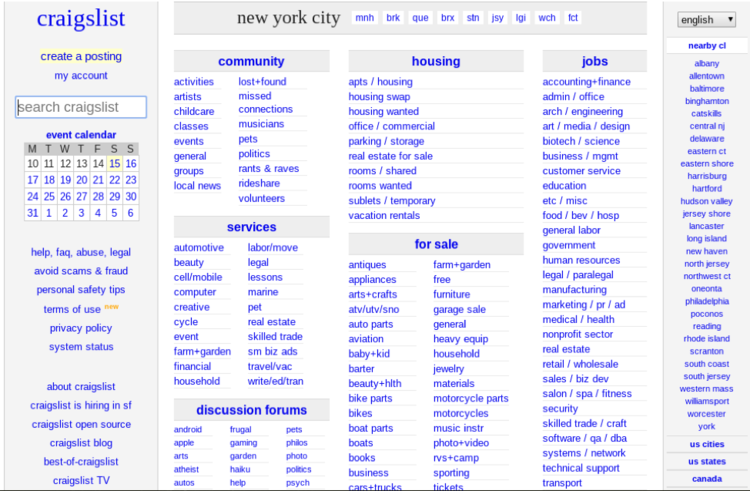
Craigslist is one of the most popular free advertising sites (it’s number one in the Shopping > Classified category according to SimilarWeb), and its design hasn’t changed much for a long time. It’s outdated and it is as a bit of an eye-sore, but it serves its purpose.

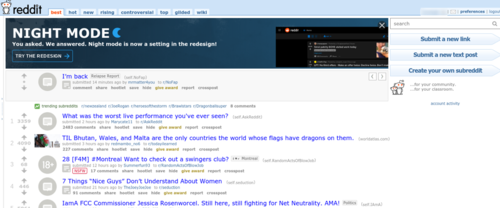
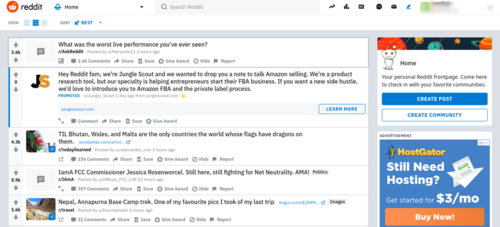
Reddit is another example. Both their website and their mobile app feature a simplistic design, without many bells and whistles. However, Reddit is one of the most popular social media sites – according to Alexa, it’s the fifth most popular site in the United States across all categories.

Reddit doesn’t need to be aesthetic. It’s designed for reading, and their simple design is best for that purpose.

Reddit’s recent redesign cleans up the site, gives it a modern look and makes it more aesthetically pleasing without interfering with its simplicity, functionality and ease of use.

The same main essential functions are still in place – threads from SubReddits you are subscribed to appear on the left side of the page, the button for creating a new post is on the right side, your profile and inbox are in the upper-right corner, and homepage search filters are in the upper-right area.

Even the old site, which looks quite outdated, is still preferred by many users and can be accessed at old.reddit.com.

This shows you that you can update your design without changing the way users navigate and use the site.

Of course, if you are focusing on functionality over design, your app has to be useful and fulfil a real need.

That way, even though users may not be dazzled at first glance, they will still stay around once they see the benefits of using your simple app.

Design over functionality

If you focus on design and neglect functionality, it will be a lot harder to bring in functionality in later on.

Good design won’t help you if the user experience is terrible. Users may be impressed initially, but they’ll get frustrated and delete the app if there are too many distractions or it is hard to figure out how to get things done.

While the design can always be updated, it will be hard to fit functionality into an app design that wasn’t built for it. At that point, you’ll have to make fundamental changes, which may end up ruining the work that you have already done. Make sure you check multiple UX designer portfolios before you focus on design. 

The case for design

For app developers design is still essential. Google, Craigslist, and Reddit were all unique innovations when they came out.

They didn’t have to set themselves aside from the rest because their function already distinguished themselves. 

However, you need to stand out from your competitors and build up a brand image, and a great way to do that is through your design.

If the function were the only thing that mattered, all e-commerce websites would look exactly the same, and all blogs would look like one another. There would be nothing to differentiate from one to the next.

That’s not to say that design should be your top priority. As mentioned above, functionality should generally be given priority.

However, if you do have the resources available, it’s worth setting aside at least some of your budget and effort into creating a unique design. It doesn’t have to be fancy; it just has to be something that reflects your brand image. You can also try gamification in business as a strategy to improve your design.

What to consider when redesigning your app

As mentioned, if you have limited resources, it’s best to focus on functionality first.

Some organisations will redesign their app in an attempt to bring back users when download and usage rates are going down.

At that point, you have to take into consideration the effects of creating an entirely new experience. This could make it difficult for existing users. These users may be used to the old design and might not welcome new changes.

Let’s go back to Reddit as an example. The new design is more aesthetically pleasing, but it doesn’t affect the primary functions of the app.

The app displays topics on the left-hand side. Clicking on a title will take you to the threat, where you can browse through comments and leave your own.

To create a new post, click on the button on the right side. You can find your inbox in the top-right corner.

You can still upvote or downvote threads on the left side of the home page. And so on.

Not only that, but Reddit gave users who prefer the old version the ability to continue using it. This way, everyone is happy. New users see an aesthetically pleasing design and old users can stick to what works for them.

What to avoid

Snapchat, on the other hand, changed the functionality of their app with their latest redesign.

The redesign moved stories together with messages. The order of the stories also got changed, making it harder for many users to find stories of the people who interested them most.

There was also the introduction of the Discover feature, where users could discover news updates about pop culture and stories from celebrities.

This led to many users complaining about how they prefer the old version. According to TechCrunch, 83 per cent of user reviews bashed the new design.

Unfortunately, there was no option for sticking with the old version; the redesign update affected all users.

According to the Verge, the redesign cost Snapchat millions of users in just a single quarter.

Conclusions and key takeaways

So, what can you take away from this article? Here are some points to consider:

● If you can only afford to focus on one, focus on functionality first.

● Where possible, create a simplistic design at the beginning that sets you apart from your competitors without allocating the majority of your resources to it.

● The design can always be updated once your app is functional.

● When upgrading your app, be wary of entirely redesigning its look. Instead, try to retain its core features, functions, and navigational settings.

Function and design go hand in hand. The need for one doesn’t negate the need for the other. It’s all about setting priorities and allocating your resources accordingly.


Related: read more about how our data is collected and processed.

Categories
Location Intelligence

The Challenges Facing Location Data & Location Intelligence In 2020

What is location data and location intelligence

In 2019 the number of connected devices will continue to grow to its highest ever. With more devices and increased sensors, the amount of data generated will explode.

It will be more accessible than ever before to use data to inform everything from business intelligence to advertising. Location-based data will be more accurate than ever before. These factors will mean it be used more commonly in areas where big data can have a profound effect.

Across a wide range of industries location data and location intelligence is helping to maintain a competitive edge. It is being used to deliver insights that have previously been inaccessible.

Location intelligence is the practice of using location data to achieve business outcomes. The process uses mobile devices and sensors to visualise and enrich understanding of how devices move in the real world.

The growing amount of precise data available will provide some challenges for those in the industry.

Privacy concerns will remain front and centre as they have done for most of 2018. Data quality is still an issue that many providers need to address. Businesses will need to find an effective and seamless method of consuming and getting the most value from location data.

Here’s what we think will be the biggest challenges facing the location data and location intelligence industry.


Challenges in location data

With this in mind, what are the biggest challenges that location faces in 2019?


Consent and privacy concerns

2018 saw the introduction of GDPR in Europe.  In the US the upcoming CCPA act data privacy will still be front and centre in the data community. We are quickly moving towards a world where each individual will have control over their data.

Businesses using location data will need to take a similar approach. It’s pivotal to allow the individual to take control of their data. Companies must inform users of how their data is used. They must provide clear opt-in and opt-out solutions so that transparency can be placed at the centre of the big data revolution.

Businesses that utilise location data will need to be clear on how they collect and use consumer data. Location data providers need to have a clear opt-in process that allows consumers to understand how their data is used.

Data providers should provide solutions at the point of collection which allow them to manage consent preferences all the way through to the point of data use.


Data quality and standardisation

Many businesses look at a lack of accuracy in the location data that fuels location intelligence as a big challenge for the industry.

With the growth of geodata, many new providers have offered sub-par datasets with limited accuracy. These providers often have little transparency in how their data is collected and how accurate it is. For the proper application of location data, businesses need to be able to verify the data collection methodology.

The most accurate providers will be able to verify their first-party data sets. They can provide a detailed explanation around data collection. Accuracy in location data can be useless when it is just a metre out.

To avoid these poor data sets, location intelligence solutions should actively verify and remove inaccuracies in the data. The space requires a clear and transparent process for data users to see the entirety of the process, from collection to use.

For example, Tamoco is providing an extra data set which provides a clear and transparent rating for every data point collected. Our visits dataset demonstrated the accuracy of each datapoint. It can be used by business to filter out inaccuracies. It also provides transparency, allowing the end data user to understand data collection and data methodology.


Being ready to consume the data

More industries are looking to benefit from location intelligence. It will be more critical than ever for these businesses to be ready to consume the dataset.

For some, the use of location data to understand movement patterns will be a new data source. Providing a dataset that is ready for instant consumption will be a crucial challenge for many location intelligence providers.

Another challenge will be creating a solution that allows business to combine and manipulate location data alongside current datasets. This will maximise the effect that location intelligence can have on business functions.

There will be a move towards integrated solutions that will work as a service for location intelligence. With standardisation, it will become easier for companies to ingest large amounts of location data.


Effectively cleaning and normalising the data.

Many businesses that are interested in location data have concerns when processing data. Location data can be a challenge to clean and normalise for a business’ analytics or other functions.

These challenges usually involve transforming the data into a workable format. Verifying the data is up to date, and accurate is another issue for companies using location data.

A related but slightly different challenge is being able to understand when the data is appropriate for specific analytics.

At Tamoco we are working closely with our partners to create a data source that is thoroughly verified and cleaned. Our sensor driven approach makes us industry leading concerning accuracy and provides a more precise base to clean our data for customer use.

In 2019 location data providers will need to work closely with their customers to understand the data cleansing process. They must provide standardised documentation and solutions that help partners to get the most from the data.

The potential for location data remains enormous. In 2019 challenges in data collection and processing will need to be addressed. Fine-tuning a robust process that addresses security concerns will be the highest priority. Developing and managing the standardisation of location data will be another.

Related: read more about what location intelligence makes possible.

Categories
Location Intelligence

Location Data And Location Intelligence In 2026 – What To Expect

What is location data and location intelligence

In 2019 the number of connected devices will produce more data than ever before. As this increases the data will become fundamental to many industries and businesses.

Data will fuel everything from city planning to advertising and marketing. Location-based data will be more accurate than ever before, and it will be used more in areas where big data has already had an initial impact.

Across many industries, location data and location intelligence is proving to be a powerful tool for companies looking to maintain a competitive edge. It is being used to deliver insights that have previously been inaccessible. In 2019 accurate and precise location data will be leveraged to generate new insights and power better understandings of behaviour and movement.

Location intelligence is the practice of using location data to achieve business outcomes. This uses mobile devices and sensors to visualise and enrich understanding of how devices move in the real world.

These interactive data sets are used alongside a business’ current solutions to create a powerful competitive edge and optimise business functions.

With strong roots in advertising location data and location intelligence are increasingly being utilised in new verticals from finance to planning and construction. In 2019 location data will be more commonplace, and location intelligence solutions will be fundamental to the success of many different businesses.


The future of location intelligence in 2019

With the rise of location data and location intelligence businesses will see new use cases and more powerful datasets.

Changes that we expect to see in the space will include the following:


Combining datasets

The next step for location data sets is combining with extra information to enhance the value for data users.

In 2019 data providers will provide more detail around datasets as standard. Demographics and other metadata will add value out of the box. As well as this there will be an increased number of businesses that will combine their datasets with identifiers in the location data to improve functionality and create new ways of understanding existing datasets.

This also means that it should be clear and transparent which data sets are used. Providers should have a standardised way that business can filter and understand which data points should be ingested and used alongside the correct datasets.

In 2019 location data will be more transparent and more accessible to use alongside existing customer datasets to maximise business functions. By linking location data businesses will instantly have a more detailed view of their customers or relevant segments.


More uses

Location intelligence is beginning to gain prevalence outside of the marketing industry.

A considerable majority of marketers (82%) are now planning on upscaling their use of location data over the next two years.

As location data use in marketing reaches a critical point, we will begin to see it adopted more readily in other industries and feature in new use cases.

As more organisations document and formalise their use of location intelligence the value of these datasets will become more apparent and are adopted outside of the traditional verticals, such as marketing and advertising.

While marketing and advertising are still the most common use case for location data and location intelligence; there is a dramatic increase in both the number of industries that say they will invest more in the technology and those that already have.

Expect to see location data involved as a fundamental part of any effective BI strategy. Understanding device movement with precision will fuel predictive capabilities. Location intelligence will be widespread in everything from City planning through to logistics, automation and investment.

New use cases will emerge. Location data will be used to understand global trends for journalistic purposes to understanding environmental changes and populations.


Data accuracy and quality

New industries will require better accuracy and a better way of consuming the insights that location data can provide.

In 2019 we will move away from talking about postcodes and large scale geofencing. Instead expect to see granularity, three-dimensional location and precise location intelligent solutions.

Businesses must take advantage of a focus on accuracy in the industry and start visualising and analysing datasets at a deeper geographic level.

Many businesses are currently using geographic boundaries such as postcodes or large geofences around more extensive areas.

The technology is now much more granular than this and businesses should be aware of the new and custom functionalities that the leading location data solutions can provide.

Expect to see more detailed datasets that include variables to filter out inaccuracies and other data points that are not useful for the end data user. These processes will become automatic in 2019, and the best providers will be able to boast systems that can automatically detect these outliers in the data.


Analysing the data

As big data becomes fundamental to many organisations, more datasets will be available.

More data types mean better unification is needed for customers because of this 2019 will see the emergence of LaaS (Location as a service).

Ready to use location platforms will empower businesses to leverage the unique insights that location data offers. It will allow them to visualise and digest insights easily. It will support manipulation of data and provide functionality to integrate these into current business functions and solutions.

These platforms will be closer to real-time than before and provide more granular insights that will allow businesses to act immediately on these insights.

The experts in precise location

Get in touch to get ahead with location intelligence or to see how you can use location data to benefit your business.

[contact-form-7 404 "Not Found"]

Related: read more about what location intelligence makes possible.

Categories
Business Data

5 Amazing Ways Big Data is Transforming the Education Sector 

Big data and Education are closely interconnected as it helps school, colleges, universities, institutions and many more educational organizations to make the overall decision about in the organization’s overall outpace, scholastic outreach, and much more. 

Big data analytics in education will not only help in academic performance but also increases the efficiency and effectiveness of the faculty as well as technology. 

The educational Sector these days prefer big data in education as it makes sure to reduce business expenditure which will eventually be beneficial for the organization. 

Not only the present time, but data for education will enable you to predict different trends that will be adopted in the future in the respective industries. It leads the employees to have better planning which will help in the overall development of the education sector. 

Image Source: IntechOpen 

As rightfully said by Chris Lynch, an American Writer of Books “Big data is at the foundation of all the megatrends that are happening.” So, your educational institution and students will for sure benefit from big data. 

Importance of Learning About Big Data

Big Data helps all learners, students, professors, teachers and individuals involved in the educational sector to understand the overall strategies as well as the individualized learning process.  

Image Source: Springer Open 

Let’s get familiar with the importance of studying/researching big data in the education sector: 

  • Big data helps to map student learning by measuring the teaching-learning process of the classroom. 
  • According to Salt Lake Tribune data for education not only helps teachers and students but is also equally significant for financial and administrative management. 
  • In general, the cost-saving process will be quick, simple, efficient and easy to adapt with not much confusion. 
  • You can do individual manual searches or studies based on the initial search as per your own preferences and requirements. 
  • Along with big data and affordable writing services, you can increase accessibility and save costs. 

The list simply goes on and on so we have concluded the importance of learning about education data analysis in the best five points. 

Ways Big Data is Transforming the Education Sector

Even today many people think and assume that big data is significant when it comes to only business. But this is not a precise piece of information. 

Not only in business but big data is important for the financial market, detection of fraud, newly adapted smart traffic system, the healthcare industry, the government sector, media and much more. Along with all these sectors the Education sector is one of the most important sectors. 

As we already know about the importance of big data, let’s get familiar with all the ways big data is transforming the education sector. 

Find Out Strengths of Students 

Learning about big data doesn’t only solve short-term problems rather it focuses more on long-term things. It will help students to analyze, influence, discover and ascertain long-term goals. This will eventually help them out in the future. 

Big data can be helpful for students and teachers as it will help them gain better information about all the possibilities that are likely to appear in the upcoming days. This way they will get better to sort of thing and tackle all of the hassles that come through their path. 

Not only about the overall prospects but big data will also help them have a better understanding of themselves. 

Improve the Grading 

When an educational institution decides to let big data foreplay in their institution, they will be able to gain information about all the tracks and records of the students. 

This way the teachers will be able to gather all the fields that interest students through which creativity and collaboration will increase in the learning process. Students can gain what they want and teachers can get the proper feedback through which they can help students improve. 

Not only this but it has a long positive impact as this way they can gain all the necessary skills which will eventually help them in their career path. Hence, this way big data will help to transform the overall education sector. 

Targeted International Recruiting 

The application process is considered one of the most important factors in the education sector. More the number, the better as when more students enroll for better education more amazing students will gain quality education. 

This education will eventually help them to gain better jobs which will eventually improve their lifestyle and increase the overall economy of a nation. 

The application process can be made better using big data analysis in education by analyzing and guessing all the possible and essential factors. When analyzed better things can also be planned in a better way. 

Minimizes the Dropout Rate 

As everyone will get what they need, especially the students will be satisfied. This will eventually decrease the dropout rate of students from schools, colleges and universities. 

Sometimes even bad results discourage students, but that’s not the case once the education sector starts using big data. It is said that the analysis made with the help of big data will help both teachers and students understand problems and find out solutions without any hassle. 

There is less rate of error found after using the big data, not only that it will eventually help students to improve their overall academic performance. Hence it will improve their rank and performance which will eventually result in a deduction of the dropout rate. 

The Efficiency of Technology in Education 

In the 21st era, technology plays an important role as it provides opportunities for people to change their overall life. One without technology information can actually be a brick on the wall. Due to the use of big data in education, all the individuals involved in this sector will gain basic knowledge about it. 

Not only the teachers and students but other sectors of an educational institution like finance and administration can utilize them properly. 

This will eventually lead to bringing effectiveness, completeness and overall productivity in the overall education sector. Moreover, along with great learning, they will also get creative by predicting all the future aspects. 

Hence there are hundreds of way big data can transform the education sector, but we along with our research team has read and selected the 5 best ways. We made sure to include the most important ones so it turns out to be helpful for our readers. 

Wrapping Up: 

This is the end of our article ‘5 Amazing Ways Big Data is Transforming the Education Sector‘ We hope this article helped you learn about the importance and the way big data can bring positive impact in the education sector if used properly. 

Moreover, if you have any more points that are valuable, feel free to share it with us in the comments section below. 

Big data can actually be a precious gift in the education sector in the upcoming days if used properly. So, make sure to use the big data properly and shine out!

Categories
Business

The best guide to outbound lead generation for 2026

Your outbound lead generation is manually targeting, finding, and acquiring leads or customers. Quite simply stated, does going to a customer your service or products, regardless of if the customer shows an interested party or otherwise? 

The methods used to create outgoing referrals include making cold calls, bulk emails, sending out direct mail, and using and showing commercials. 

Outbound and inbound lead generation

Below, we’ll look at the three main differences between outbound and inbound lead generation. 

№1. Interaction control

The key distinction is in who controls where and when all actions, i.e., sharing and consuming information or content, occur.

Inbound flow strategies enable prospective clients to select the way they engage and interact with your channel by choosing which medium of information they prefer to engage with and the right time for them. For instance, SEO, Social media marketing, etc. 

Lead generation refers to the strategy that lets you, a business, choose when prospective clients receive phone calls, emails, and see ads.

№ 2. The value of marketing assets

Exit drives have a much quicker life span than incoming drives. For instance, in Outbound Lead Generating, ageless Content can produce Leads long-term after they’ve already occurred, thereby giving you a significant long-term ROI for your marketing endeavors.

Outbound leads generated, on the one hand, are short-lived due to high-risk content and high cost. Most of the resources created are not utilized once the company’s launch of the marketing campaign is complete.

№3. Campaign Cost Profile

Lead inbound campaigns cover a wider time frame of time and lower costs. The traffic is earned, not purchased, so there’s no requirement to purchase a return on investment method.

Standard Outbound cost profile cost is high and has short timelines. High costs are due to needing management of rejection risk as well as the relatively greater expense of delivery vehicles used such as soft callers, ads, etc. Lead costs tend to remain the same but can occasionally go up. If the creatives are not up-to-date, then the content will become dull for your intended audiences. You want an SEO firm that will stand by you, will work hard, helps you develop your business, and delivers outstanding quality results.

Outbound lead generation strategies worth trying in 2026

Below, we’ve compiled five basic strategies for attracting potential customers that everyone should try.

№1. Cold emails

A Cold letter is a message you give to a prospective client who doesn’t yet have heard of or know a great deal from your company. A Cold Case Letter builds an opening to begin to build a relationship for years to come. 

An effective cold email contains the following: 

№ 2. Social Media

Using networking social networking sites to market a product or a service to prospective clients can be a great strategy. Prospective clients would be more probable of seeing a message on social networks rather find it easy to contact and communicate efficiently than open an e-mail.

№3. Syndicated content

A portion of this content that is reposted on sites apart from the original site is called syndicated Content. The aim is simply to gain new clients and increase content exposure. 

№ 4. Events

Choose from a variety of events that inform potential buyers about your product:

  • Online courses;
  • Webinars;
  • Live broadcasts; 
  • Seminars;
  • Exhibitions;
  • VIP Impressions;
  • Conferences;
  • Product Launch Parties;
  • Festivals;
  • Networking Session.

№ 5. Paid advertising

Meaning you’re purchasing ad space, commonly known as Pay-per-click ads, where a publisher is paid when the ad is pushed. Advantages included front Page Impressions, a targeting focus, big branding features, constant and instant targeted driving, and measurable traffic, and easy-to-measure analytics.

When you find that leads acquisition drives are consuming you too long, you can use managed search and retrieval (SEO) Services from a reliable SEO agency. That way, you will have more time to get to the bottom line of your core activities at the same time as having your SEO affiliate generate qualifying leads and leads for you.

Categories
Business

What To Learn To Become A Professional Analytic

Professional analytics collect, clean, and analyze data to aid business choices. To work as an analyst, you need to analyze data effectively and draw conclusions from massive amounts of information. Opportunities abound in this field. The reason for this is the massive investment in big data by businesses of all sizes and sectors. If you’re interested in becoming a data analyst and learning more about the job and the industry, keep reading.


Required Soft Skills

People who work in this sector need to have a strong intrinsic motivation to study new things and figure out how they work. Analysts must remain abreast of industry developments even after moving up the ranks. Current and future analysts make use of analytical essay ideas, gaining inspiration and new reasons for their logical conclusions. Disclosing analytical essay topics also helps train systematic thinking. Messy information is useless to everyone. Analytics experts who want to extract value from data must have the skills to translate and display data clearly and straightforwardly.


An excellent expert in business analytics may be defined as capable of effectively conveying ideas and information. To ensure that all parties comprehend insights and can put suggestions into effect, it is essential to deliver results in a clear and straightforward way. Speaking clearly and effectively in front of an audience is a prerequisite for anybody working in analysis.


Analytics experts address issues and advance businesses by using a variety of methods. So being a problem solver by nature is also one of the requirements for a data analyst. Professionals in the field of business analytics must constantly exercise critical thinking. They’re supposed to sift through all the information and emphasize the bits that will assist in making choices. Reading books on the topic is a must.


Let’s move from soft skills to hard ones. What makes an excellent professional on a knowledge level? Read on to find out.

Gain A Foundation In Data Analytics

Learning SQL, Python, R, Spark, and Hadoop will help you crunch numbers. Tableau, Matplotlib, and ggplot2 will teach you how to create stunning visuals that bring data to life. These are the initial steps toward becoming a professional. 


How to become a data analyst? Specialized programs may be an exceptional method to pick up these foundational skills. They provide a solid grounding on all these platforms. This experience allows a student to get some hands-on practice with the following:

  • data administration
  • formulation of statistical tests
  • syntax of programming languages
  • purifying data
  • graphical representation of info.

Exercise Your Data Analytics Skills With Project Work

Learning to use fundamental resources is essential to pursue a career in the field. To be successful, data analysts need to be abreast of the most recent developments in data analysis technology. Writing a research paper, browsing through thematic websites, and reading new professional literature are habits of a pro. Develop sample projects that include all aspects of data analysis. Your work should include things from the initial company and market exploration to defining the specifics of the data to be gathered and cleaned. 


Finally, visualize the findings you’ve uncovered. Try putting them into a dashboard that will let others engage with your information. Take on various practice projects to hone your skills and showcase your knowledge of data mining across several formats.


How to get a data analyst job? One of the most crucial tasks is figuring out how you will show your expertise. Building a professional portfolio is important. A good place to start is by posting the code you’ve created to demonstrate your skills. One method to present skills and impress prospective employers is to complete a perfect data project. Select a topic that piques your interest, formulate a related query, and see if you can find an answer using data.

Reasons To Become A Professional Analytic

It’s work that fulfills you. This job is rewarding since you solve challenges and see your ideas come to fruition using a computer. With great demand comes hefty compensation. Companies have a hard time filling open positions for data analysts because of the high demand for their services. An average data analyst salary is around $52000. Also, career options may be adjusted to fit your needs. You may work from home, for a startup, an agency, or a huge corporation. There are a number of flexible settings.

Conclusion

It may be challenging for professionals to determine where to best direct their development efforts. Despite the dynamic nature of the sector, a thorough grounding in a few areas is essential for any professional’s success. We hope that our article and presented examples helped you discover crucial steps to a successful career as a data analyst.


Categories
Advertising & Marketing

Top 5 traits of a good SEO consultant in London

Every business wants to be in the top positions in the search results. You will reap enormous benefits if you can get there, you’ll get more customers and improve your bottom line almost instantly.

But this is hard, and many businesses struggle to achieve this.

You can work in house to reach this goal, or you can outsource this work to an SEO consultant in London.

But how do you know if a consultant can really get you to that top spot? Here are 5 traits to look out for to help you answer that question.

How long have they been working as an SEO?

Always ask this question. A great SEO consultant will have worked on many sites over a number of years.

Look for around 10 years minimum. This will be enough to have experienced a lot of what Google can throw at you.

Reviews, reviews, reviews

Why not check reviews of the SEO consultant you are looking to hire? Knowing that other businesses have worked with this consultant can rest your mind.

You can see what the results of those working relationships were and use this information to understand if the professional will be a good fit for your project.

A genuine passion for SEO

You really want to work with a consultant that is passionate about the industry they work in and the services they deliver.

Does the consultant you are looking to hire regularly attend conferences? Do they have a social media account where they are engaging with the SEO community?

The founder of SEOtagg in London is regularly attending these conferences and posting tips and tricks on his Twitter account. This shows the passionate site to his SEO work, and is what leads to great results for his clients.

Do they guarantee results?

Of course you can’t guarantee this. But a good SEO will tell you what you can expect and offer some kind of guarantee around this.

This could be as simple as just showing ranking growth. But it can’t hurt to ask your SEO consultant that guarantees they can give you.

Will they talk to you in person?

Another greta way of telling the truly great SEOs form the average is to have a call with the head consultant.

James says that he personally introduces himself to every potential client, ensuring transparency and ensuring that he can provide what the client needs.

These calls are often the most revealing part of the onboarding process, and they ensure that both client and consultant are on the same page for the project going forward.

There you have it, look for these traits next time you are in the market for a great SEO consultant in London.

Related: read more about location data for advertising and marketing.

Categories
Business

Strategies for Boosting Business Efficiency: Practical Tips for Optimal Growth

In today’s fast-paced and competitive business environment, efficiency is key to success. Business owners and managers are always looking for ways to streamline processes and maximize productivity. However, implementing strategies for boosting business efficiency can be a daunting task.

Here are some of the practical tips you should know to optimize growth.

Analyze your current workflow to identify areas where you can optimize productivity

It’s time to take a step back and examine how you approach your daily tasks. Analyzing your current workflow can help you identify areas where you may be losing precious time and energy.

Perhaps there are certain tasks that you could delegate to someone else or automate with the use of technology. Technology consulting services can provide expert guidance in identifying the right tools and strategies to optimize your workflow. Or maybe there are opportunities to streamline your process by reorganizing the order in which you accomplish certain tasks.

By critically examining your workflow, you can pinpoint areas where you can optimize productivity and ultimately work smarter, not harder.

Automate processes to free up time for more important tasks

In today’s fast-paced world, business owners and employees often struggle to keep up with an overwhelming workload. That’s why many organizations are turning to automation as a solution.

By automating repetitive tasks, such as data entry or scheduling appointments, companies can free up valuable time that can be devoted to more important tasks. This not only improves productivity but also allows employees to focus on the work that truly matters.

So, if you’re looking for a way to streamline your workflow and boost efficiency, automation might just be the answer.

Utilize customer relationship management (CRM) software

Running a business can be challenging, but utilizing customer relationship management software can make all the difference in managing customer data and improving customer experience. With a CRM systems, businesses can store and analyze customer information, track interactions, and streamline communication.

By having a deeper understanding of their customers, businesses can tailor their services, personalize customer interactions, and create a more positive customer experience overall. This way, they can build and maintain strong customer relationships, leading to increased satisfaction, loyalty, and profitability.

Invest in digital tools that streamline communication

Clear communication is crucial for keeping everyone on the same page. Investing in digital tools that streamline communication is a smart move for any company looking to improve efficiency and productivity.

With the right tools, employees can easily collaborate on projects, clients can provide real-time feedback, and customers can receive the prompt support they need. Whether it’s a messaging app for internal communication or a customer service platform for responding to inquiries, these digital tools can help your team work smarter, not harder.

Plus, by ensuring everyone is on the same page, you can reduce misunderstandings and errors, leading to better outcomes for everyone involved. For instance, cloud-based phone systems like Kixie and Aircall are essential for business growth by enhancing customer experiences through efficient communication. When you compare Kixie with Aircall, you’ll see that Aircall excels in providing consistent customer experiences, thanks to its robust call management features and seamless integration.

Develop an effective training system to ensure everyone is on the same page

In any organization, ensuring everyone is on the same page is crucial, and an effective training system can play a huge role in achieving this. A well-designed training program can help streamline processes, improve productivity, and increase employee job satisfaction.

From onboarding new hires to providing ongoing professional development opportunities, a training system can ensure everyone is equipped with the knowledge and skills needed to do their job effectively. Technically, a comprehensive training system enables organizations to ensure everyone is working towards the same goals, reducing the risk of miscommunication and confusion.

Increase visibility with analytics tools that provide actionable insights into your operations

Businesses today are constantly trying to stay ahead of the game and increase their visibility to reach a wider audience. One way to do this is through the use of analytics tools. By utilizing these tools, businesses can gain valuable insights into their operations and understand where improvements can be made.

These actionable insights can provide a roadmap for success and enable businesses to make informed decisions that will lead to increased visibility and, ultimately, improved profitability. With the right analytics tools in place, businesses can gain a competitive edge and be well-positioned to thrive in today’s rapidly changing market.

Implement a rewards system

When it comes to recognizing employees who consistently go above and beyond in their duties, implementing a rewards system can be a game-changer for both the individual employee and the company as a whole. One such system is Terryberry employee recognition software. This software is especially ideal for businesses wishing to improve employee engagement, motivation, and performance to increase productivity and efficiency. It provides a central location for employee recognition, making it easier and more streamlined for managers to recognize and reward employees for their hard work.

Rewarding hard work and dedication shows appreciation and serves as motivation to continue to produce quality work. With the implementation of a rewards system, employees will feel valued and encouraged to work harder. At the same time, businesses can take their efficiency to the next level and achieve optimal growth, leading to increased productivity and overall success.

So why not invest in recognizing the hard work of your employees? It’s a win-win situation for everyone involved.